 Sofa VoyageSuomeksi
Addis Ababa
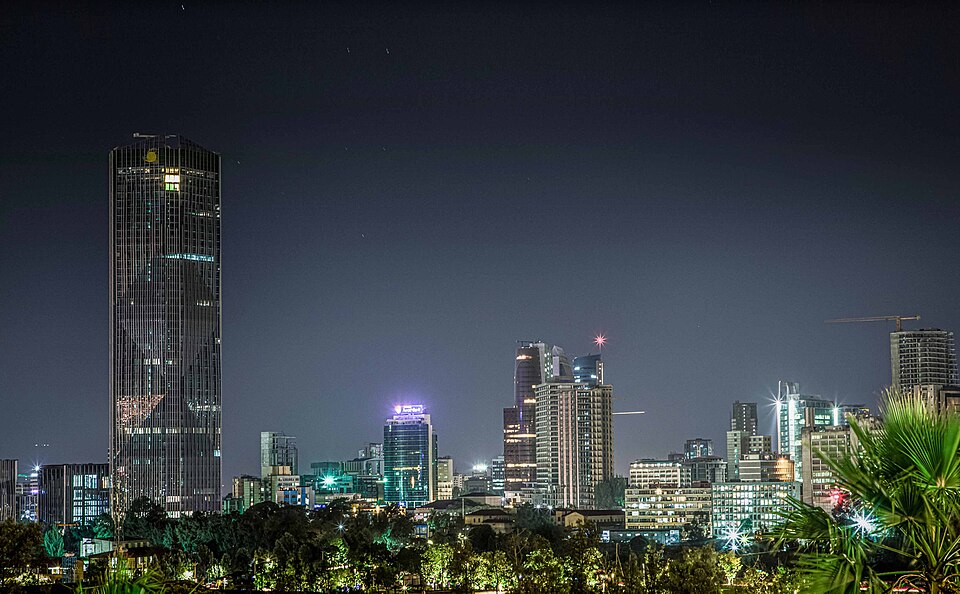
Welcome to Addis Ababa, the capital and largest city of Ethiopia, whose name means new flower. At 2,355 metres it is the highest capital in Africa. The city was founded in 1886 by Menelik the Second, and at first it was a resort town: its many mineral springs drew nobles who settled here for good. It became the imperial capital in 1889. Often called the political capital of Africa, it is home to the headquarters of the African Union, and it lies just a few kilometres west of the East African Rift. Let us explore its churches, museums and markets.
Sights
Holy Trinity Cathedral
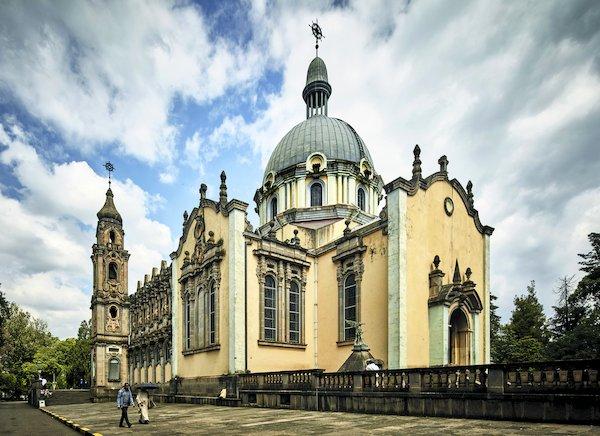
Photo: Gize12 · CC BY-SA 4.0 · Wikimedia Commons Before you stands Holy Trinity Cathedral, known in Amharic as Kidist Selassie, the highest-ranking Ethiopian Orthodox cathedral in Addis Ababa. It was founded on 22 December 1931 under Emperor Haile Selassie, but construction stopped during the Italian invasion. Completed in 1942, it was dedicated to commemorate the Ethiopian victory and the resistance fighters against the occupation. Building began with the blessing of a replica of the cathedral's Tabot, a replica of the Ark of the Covenant. Many prominent Ethiopians are buried here.
National Museum of Ethiopia

Photo: Ninaras · CC BY 4.0 · Wikimedia Commons Step into the National Museum of Ethiopia, which guards the country's artistic and archaeological treasures. Its most famous resident is Lucy, the partial skeleton of an early hominid of the species Australopithecus afarensis. Down in the basement you can also meet Selam, a fossil found between 2000 and 2004 and estimated to be 3.3 million years old. The museum grew out of the Institute of Archaeology, founded in 1958, and its first displays were objects from French excavations in the north of the country.
Addis Mercato
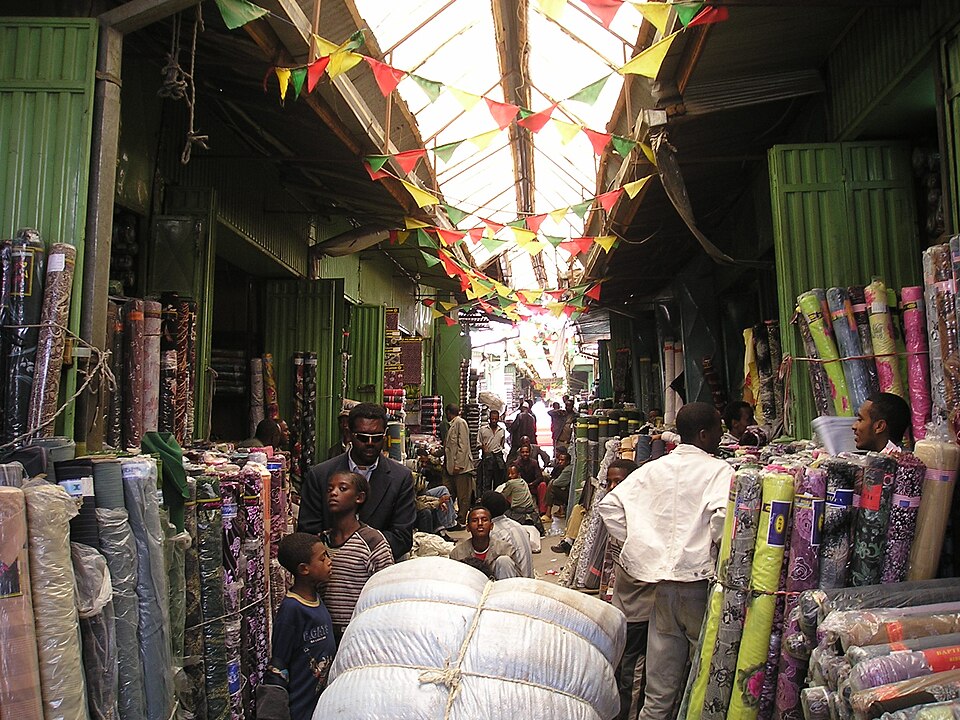
Photo: JanManu · CC BY-SA 3.0 · Wikimedia Commons Get ready for the bustle of Merkato, the largest open-air market in Africa, covering several square miles. An estimated 13,000 people work here in some 7,100 businesses, and the main goods passing through are locally grown farm products, above all coffee. Its history has a darker side. The market owes its location to the Italian occupation of the 1930s, when the occupiers moved the old market westwards under segregationist policies and reserved the former market area for Europeans.
St. George's Cathedral
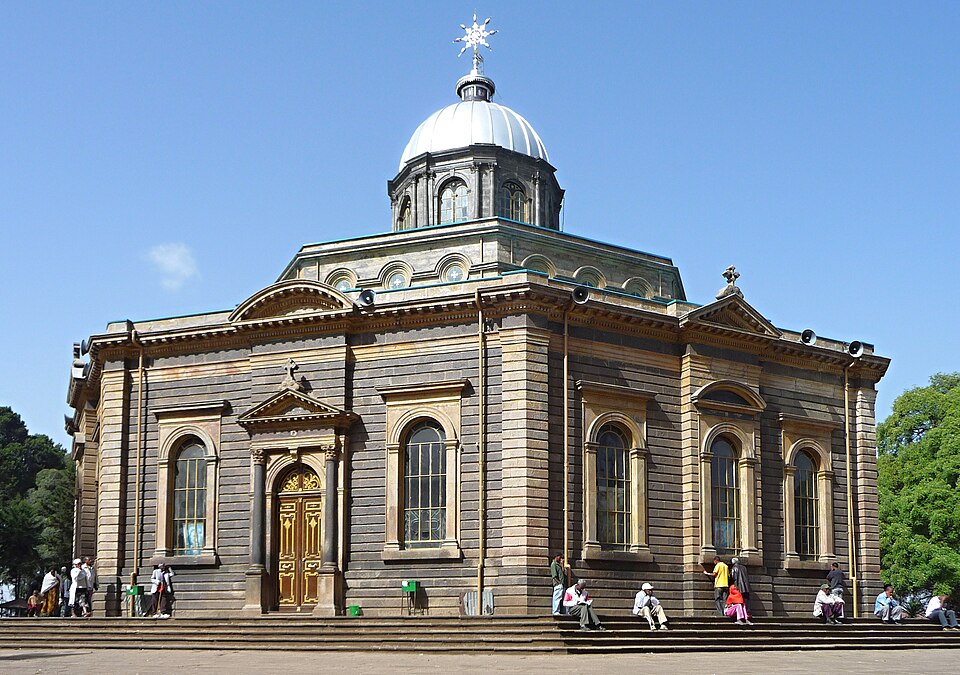
Photo: Ondřej Žváček · CC BY 2.5 · Wikimedia Commons Here is Saint George's Cathedral, noted for its distinctive octagonal shape, at the northern end of Churchill Road. It was built in 1911 by the Italian engineer Sebastiano Castagna, on the ruins of a 15th-century church. Its name honours a famous moment: the church's Tabot was carried to the Battle of Adwa, where the Ethiopians defeated the Italians. Empress Zewditu was crowned here in 1917 and Emperor Haile Selassie in 1930. Inside the museum you can see an imperial throne and even giant helmets made from lions' manes.
Lalibela
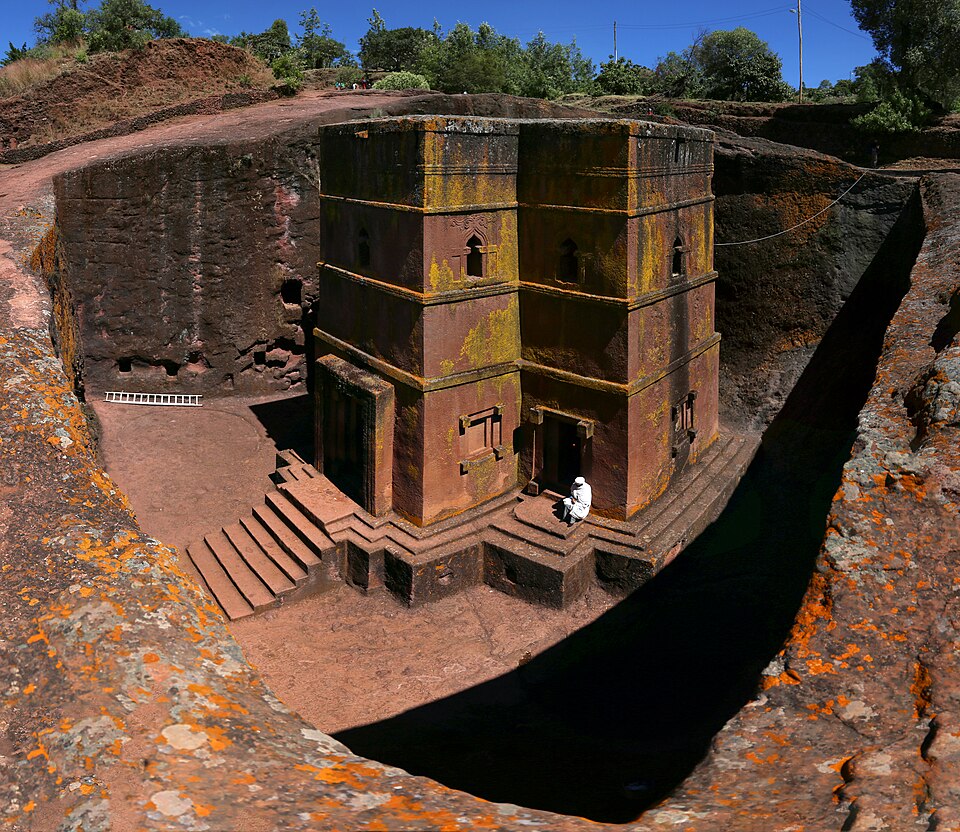
Photo: Sailko · CC BY 3.0 · Wikimedia Commons Far to the north, at roughly 2,500 metres above sea level, lies Lalibela, one of Ethiopia's holiest places for many Christians and a centre of pilgrimage. It is famous for its rock-cut monolithic churches, traditionally dated to the reign of King Gebre Meskel Lalibela of the Zagwe dynasty. Here is the fascinating part: the layout and names of the main buildings are widely seen as a symbolic representation of Jerusalem. The rock-hewn churches were declared a World Heritage Site in 1978, and at festivals such as Timkat they fill with processions and music.