 Sofa VoyageSuomeksi
Aden
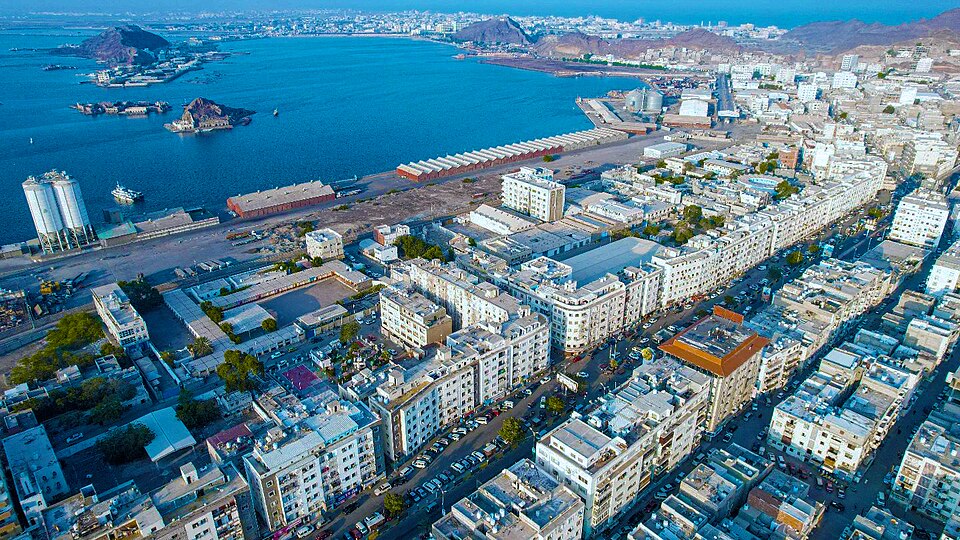
Welcome to Aden, an ancient port city in the south of the Arabian Peninsula, on the north coast of the Gulf of Aden near the eastern approach to the Red Sea. Its location makes it a gateway between the Red Sea and the Arabian Sea, linking Africa, Asia and the Middle East. Aden was under the British Empire from 1839 until independence in 1967, and it was then the capital of South Yemen until union with North Yemen in 1990. Its oldest district, Crater, the original port, lies inside an ancient volcano. Let us begin there.
Sights
Crater
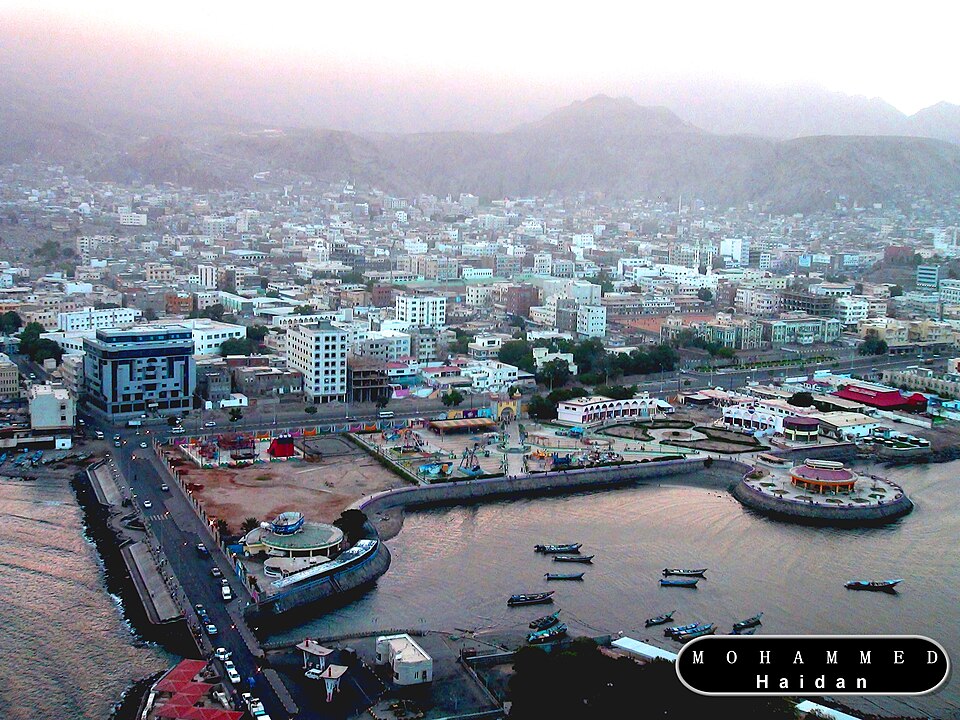
Photo: Mohammed haidan · CC BY 3.0 · Wikimedia Commons Welcome to Crater, the oldest district of Aden and the city's original port. Its official name is Seera, but the British called it Crater, for a simple reason: the whole district sits inside the crater of an ancient, inactive volcano, whose rim forms the Shamsan Mountains. In 1967, in the closing days of British rule, Crater became the focus of fighting during the Aden Emergency, sometimes called the last imperial war.
Cisterns of Tawila
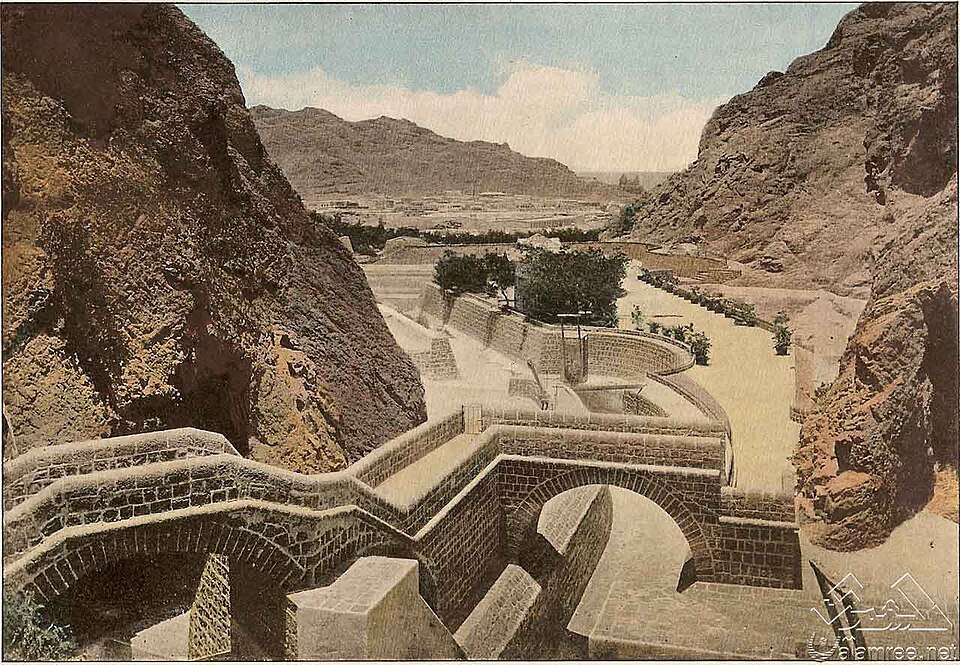
Photo: العمري · Public domain · Wikimedia Commons Step into Wadi Tawila, just southwest of Crater, to see the Cisterns of Tawila. These connected tanks of different shapes and sizes were designed to collect the rain rushing down from the Shamsan massif and to protect the city from floods. There were originally about 53 tanks, but only 13 remain. Together they can hold about nineteen million gallons. Look for the Coghlan Tank at the centre of the site, and the large, round Playfair Tank at the lowest point, outside the main site.
Sira Fortress
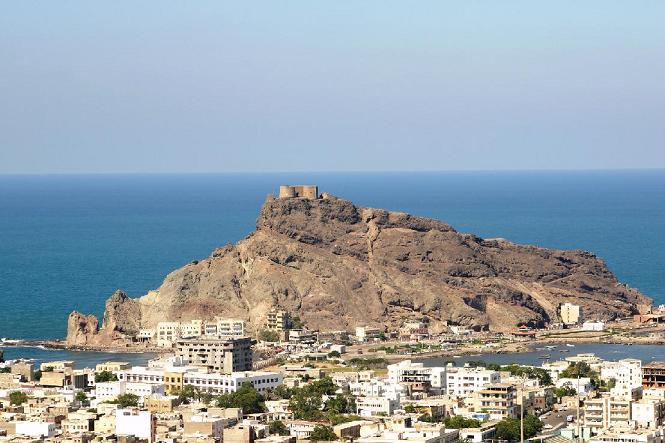
Photo: Amspost · Public domain · Wikimedia Commons Rising above the old harbour is Sira Fortress, set on Sira Island, a tall and rocky volcanic outcrop. The original fortress dates from the 11th century, though much of its history is unknown, as few archaeological studies have been made here. It proved its strength against later attacks by the Portuguese and the Turks, and the British continued to develop and garrison it after they arrived in 1839. Reaching the top takes about a fifteen-minute climb up rather steep stairs.