 Sofa VoyageSuomeksi
Algiers
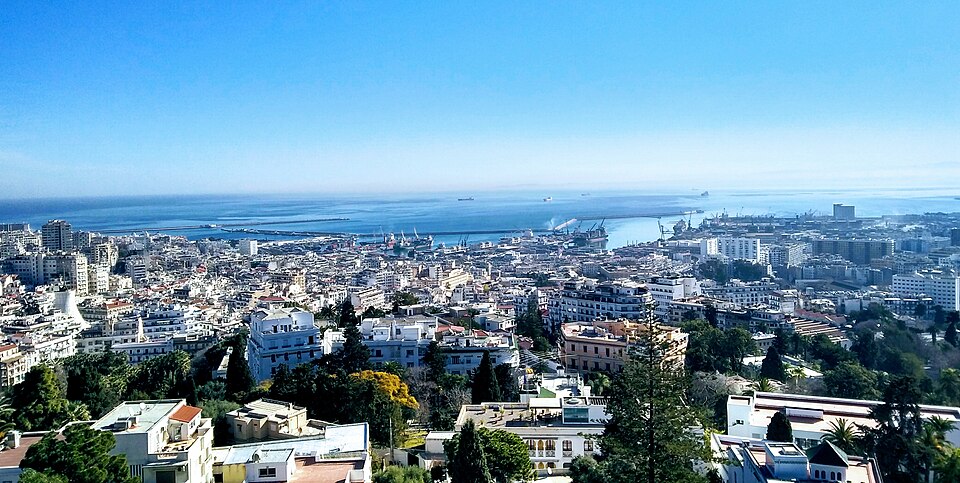
Welcome to Algiers, the capital and largest city of Algeria, stretching along a bay on the Mediterranean Sea and framed by the Mitidja Plain and mountain ranges. People often call it al bidha, the white, for its whitewashed buildings. Its story begins as a Phoenician trading settlement, and the city was formally founded in 972 by Buluggin ibn Ziri. From 1516 it was the capital of the Ottoman Regency of Algiers, then of French Algeria, and during the Second World War it briefly served as the administrative centre of Free France. Today it blends colonial and indigenous influences in a striking way. Let us climb into its streets.
Sights
Casbah of Algiers
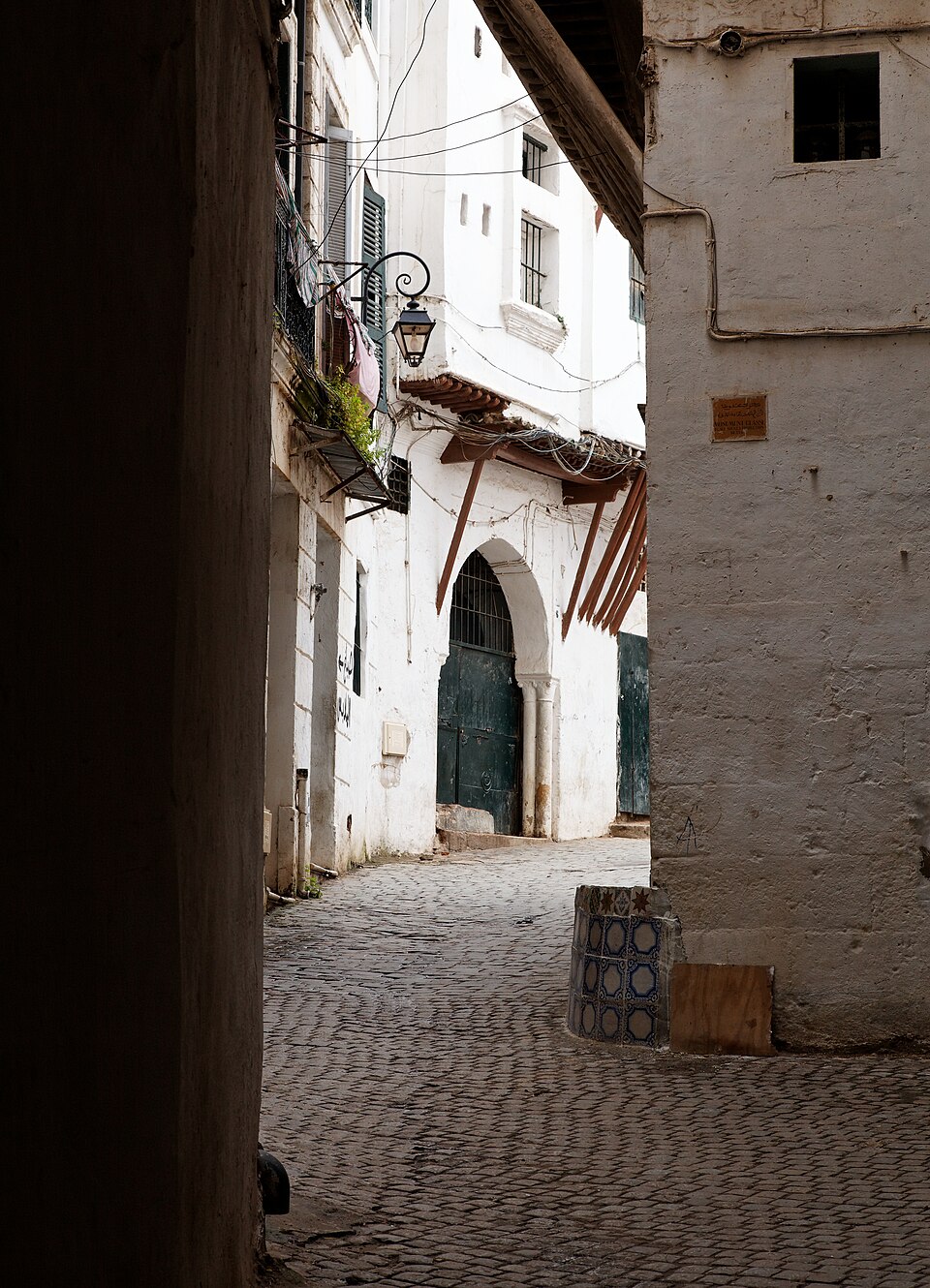
Photo: toufik Lerari · CC BY-SA 2.0 · Wikimedia Commons Welcome to the Casbah, the old town of Algiers, whose name means citadel. Its winding urban framework was laid out in the 10th century by Berbers under the Zirid dynasty, on a site that had already been a Phoenician port and later a Roman town. The Casbah reached its peak under the Regency of Algiers, when it was the seat of political power. During the Algerian War it became a stronghold for independence fighters of the FLN. Listed by UNESCO since 1992, it remains a symbol of Algerian culture and a home to ancestral crafts.
Maqam Echahid

Photo: Boumediene15 · CC BY-SA 3.0 · Wikimedia Commons High on the heights of Algiers stands the Martyr's Memorial, a concrete monument to the Algerian War. It opened on 5 July 1982, the 20th anniversary of independence. Look at its shape: three standing palm leaves that join at mid-height, sheltering an Eternal Flame beneath them. At the edge of each leaf a statue of a soldier represents a stage in Algeria's struggle for independence. Surprisingly, the monument rises on the site of an ancient military fort, and from here it overlooks the Hamma district and its famous botanical garden.
Notre-Dame d'Afrique
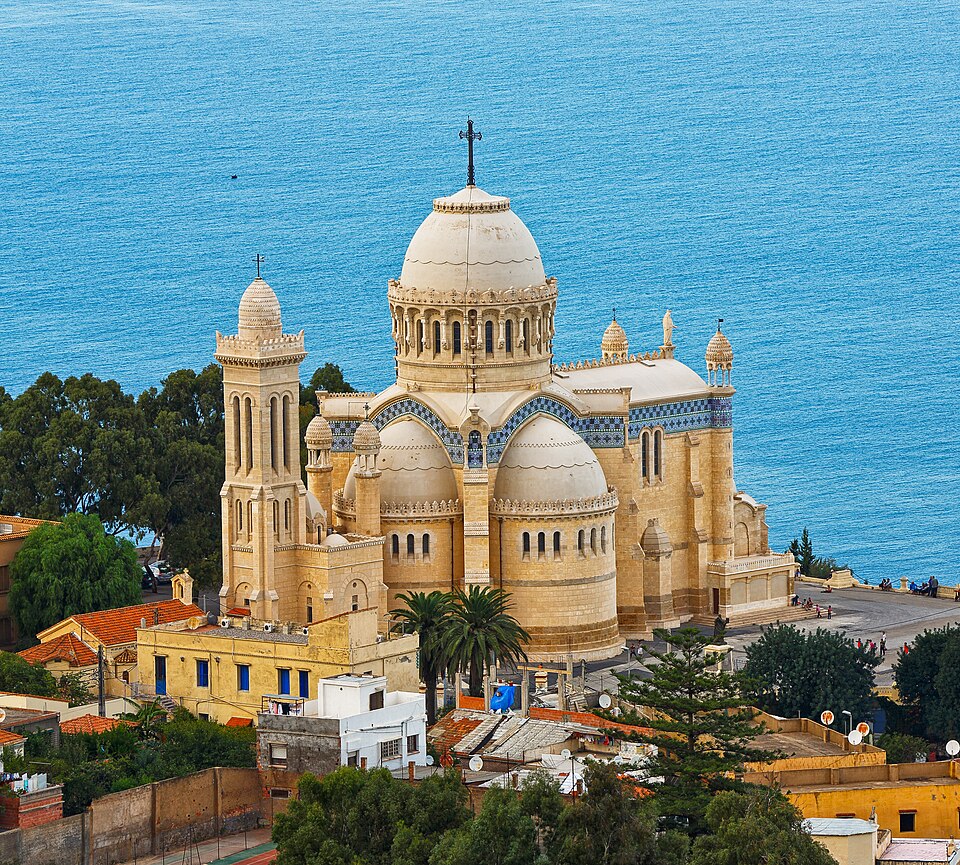
Photo: Chettouh Nabil · CC BY-SA 4.0 · Wikimedia Commons Perched above the city is the Basilica of Our Lady of Africa, a Catholic church that gave rise to the modern devotion to Our Lady of Africa. On a single day, 15 April 1876, Pope Pius the Ninth issued two decrees for the shrine. One allowed the venerated image of Mary inside to be crowned, a ceremony carried out by Archbishop Charles Lavigerie of Carthage at the end of that month. The other raised the sanctuary to the rank of basilica, on the basis of what was called an immemorial custom.
Djamaa el Djazaïr

Photo: Rachid Hamatou · CC BY-SA 4.0 · Wikimedia Commons Now look up at the Great Mosque of Algiers, opened in April 2019 in the Mohammadia district. Its minaret is the tallest in the world, soaring 265 metres into the sky, and the mosque ranks as the third-largest on Earth after the great mosques of Mecca and Medina. Step into the prayer hall, which covers 22,000 square metres and can hold 120,000 worshippers. Above you, a dome 50 metres across reaches a height of 70 metres, while the mihrab to the east is carved from white marble.
Ketchaoua Mosque

Photo: Rachid Hamatou · CC BY-SA 4.0 · Wikimedia Commons At the foot of the Casbah, on the first of its many steep stairways, stands the Ketchaoua Mosque. It was built under Ottoman rule by Hayreddin Barbarossa in the early 17th century. Its history is full of turns: under French rule, Muslims were evicted in 1831 and the building became the Cathedral of Saint Philippe. The old structure was demolished between 1845 and 1860 and a new cathedral rose in its place. After independence in 1962 it became a mosque once more. Notice its unusual fusion of Moorish and Byzantine architecture.
Botanical Garden Hamma
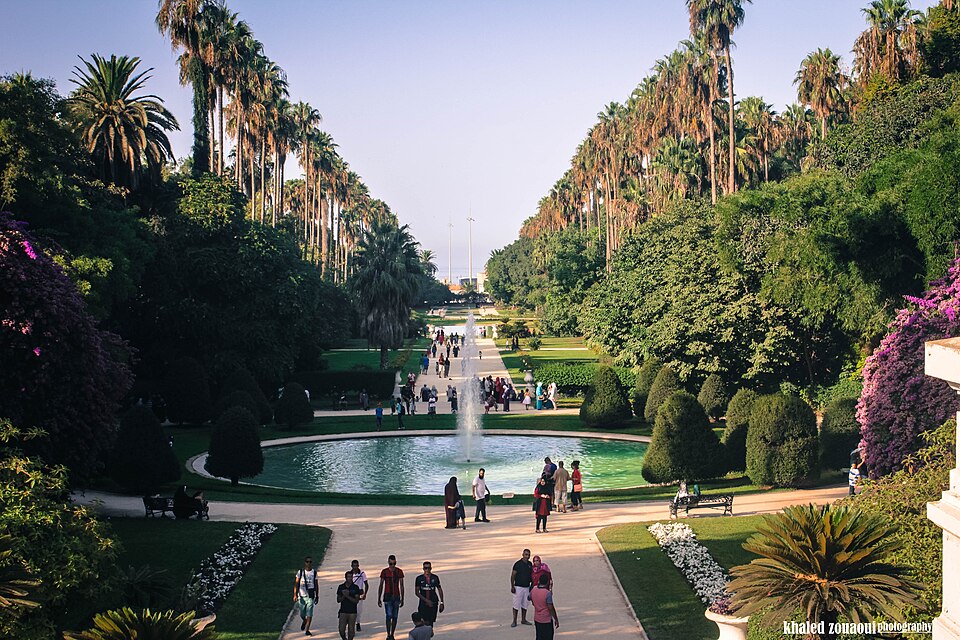
Photo: Khaled zouaoui · CC BY-SA 4.0 · Wikimedia Commons Wander now into the Botanical Garden of Hamma, a green oasis of 32 hectares established in 1832. It began when French officials decided to drain the marshes at the foot of the Arcades hill, creating a garden of just 5 hectares meant as both a model farm and a test garden. It soon grew westwards and became the government's central nursery, supplying trees to public bodies and settlers. Here is a curious detail: from 1833, the garden also produced carmine, a red dye. Many animal species were introduced here as well.