 Sofa VoyageSuomeksi
Amsterdam

Welcome to Amsterdam, the capital and largest city of the Netherlands, in the province of North Holland. Its very name means the dam in the Amstel, because the city grew up at the mouth of the Amstel river, which was dammed to control flooding. What began as a small fishing village in the 12th century became a major world port in the Dutch Golden Age of the 17th century. Its stock exchange, founded in 1602, is considered the oldest modern one in the world. And a surprise: although Amsterdam is the capital, the government sits in The Hague. Let's follow the canals into the city.
Sights
Rijksmuseum

Photo: Trougnouf (Benoit Brummer) · CC BY 4.0 · Wikimedia Commons Before you stands the Rijksmuseum, the national museum of the Netherlands, devoted to Dutch art and history and the largest art museum in the country. It was actually founded in The Hague in 1798 and only moved to Amsterdam ten years later, first into the Royal Palace. The grand building you see was designed by Pierre Cuypers and opened in 1885. Inside, 8,000 objects are on display, chosen from a collection of one million, including masterpieces by Rembrandt, Frans Hals and Johannes Vermeer.
Anne Frank House

Photo: Dietmar Rabich · CC BY-SA 4.0 · Wikimedia Commons On the Prinsengracht, close to the Westerkerk, stands the Anne Frank House. During the Second World War, when Germany occupied the Netherlands, the Jewish diarist Anne Frank hid from Nazi persecution here with her family and four other people, in hidden rooms in the rear of this 17th-century canal house, later known as the Secret Annex. She did not survive the war, but her diary was published in 1947. When developers wanted to demolish the block, a foundation was set up to protect it, and the museum opened in 1960, preserving the hiding place.
Van Gogh Museum
Photo: Koeweiden Postma [1] · Public domain · Wikimedia Commons On the Museum Square you reach the Van Gogh Museum, devoted to Vincent van Gogh and the artists of his time. It opened on 2 June 1973, in buildings designed by Gerrit Rietveld and Kisho Kurokawa. Step inside and you are surrounded by the largest collection of Van Gogh's paintings and drawings anywhere in the world. Its popularity is remarkable: in 2017 it welcomed 2.3 million visitors, more than any other museum in the Netherlands.
Royal Palace of Amsterdam

Photo: Deerpeter · CC BY-SA 4.0 · Wikimedia Commons On the west side of Dam Square rises the Royal Palace, one of three palaces placed at the disposal of the Dutch monarch by Act of Parliament. Yet it was not built for royalty at all. It went up in the mid-17th century as Amsterdam's new city hall, after the old one burned in a fire in 1652. A curious detail about that fire: the coins of the city's treasury were eagerly saved by the helpful public. The building only became a royal palace in 1808, when the Netherlands was under the rule of Napoleon Bonaparte.
Canals of Amsterdam
Photo: Andrés Barrios · CC BY-SA 4.0 · Wikimedia Commons Let's glide along the canals, the reason Amsterdam is called the Venice of the North. The city has more than 100 kilometres of canals, about 90 islands and 1,500 bridges. The three main canals, the Herengracht, Prinsengracht and Keizersgracht, were dug in the 17th century during the Golden Age, and they form rings around the old city, lined with 1,550 monumental buildings. The canal ring became a UNESCO World Heritage Site in 2010. And here is a fun fact: Amsterdam has many more bridges than Venice, even in its old centre alone.
Dam Square
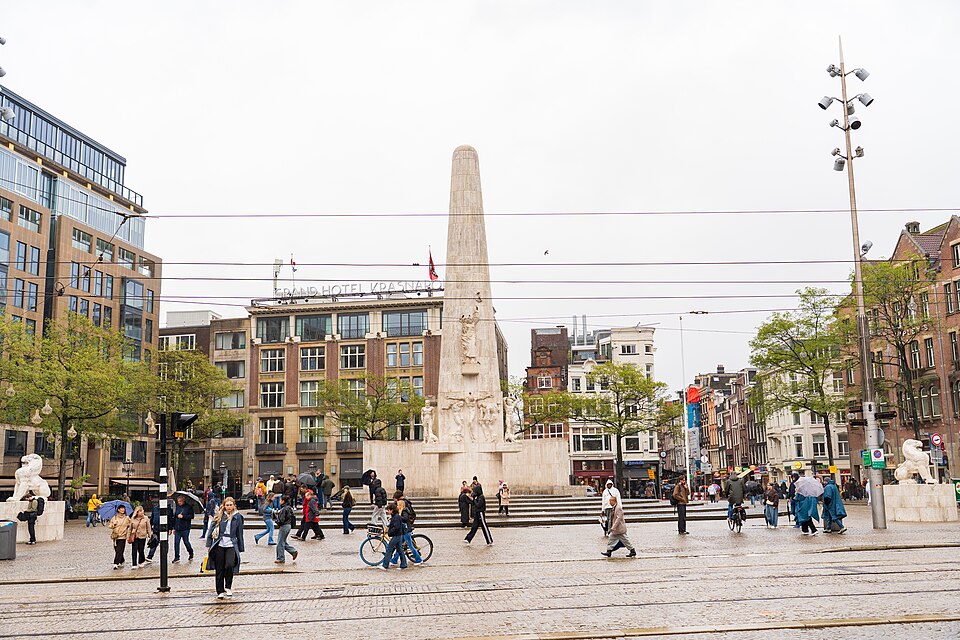
Photo: Deerpeter · CC BY-SA 4.0 · Wikimedia Commons You are standing on Dam Square, one of the best-known places in the whole country. This is the very spot where the original dam crossed the river Amstel, the dam that gave the city its name. The square is roughly rectangular, about 200 metres long and 100 metres wide, and lies around 750 metres south of Centraal Station. On its west side stands the Royal Palace, which served as the city hall from 1655 until it became a royal residence in 1808.
Vondelpark
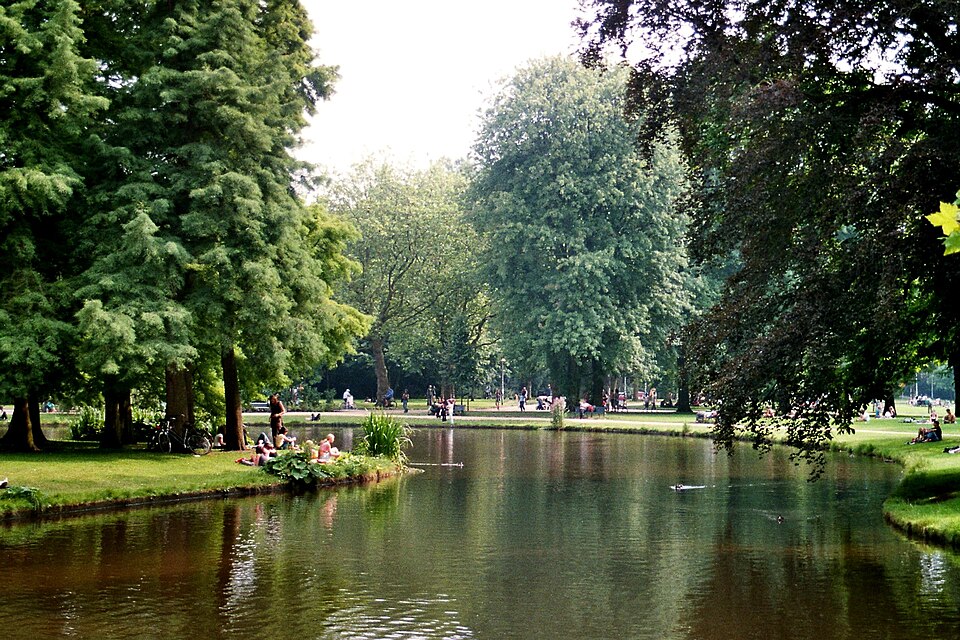
Photo: Dguendel · CC BY 4.0 · Wikimedia Commons Take a breath in the Vondelpark, a green park of 47 hectares close to the Museum Square. It opened in 1865 as simply the New Park, created by a group of citizens who bought grassland and marshes at the edge of the city, and the architect Jan David Zocher designed it. Members of their association came in for free, while other citizens paid to enter. Later it was renamed after the 17th-century poet and playwright Joost van den Vondel. Today around 10 million visitors stroll here every year, and there is even an open-air theatre.