 Sofa VoyageSuomeksi
Antananarivo

Welcome to Antananarivo, the capital and largest city of Madagascar, often known simply as Tana. It sits 1,280 metres above sea level in the centre of the island, making it the highest national capital among the island countries. The city was founded around 1610, when the Merina King Andrianjaka took the hill village of Analamanga and built a fortified royal dwelling there. Later King Andriamasinavalona renamed it Antananarivo, City of the Thousand, in honour of Andrianjaka's soldiers. Today all eighteen Malagasy ethnic groups are represented here. Let us climb the hills and begin our tour.
Sights
Rova of Antananarivo
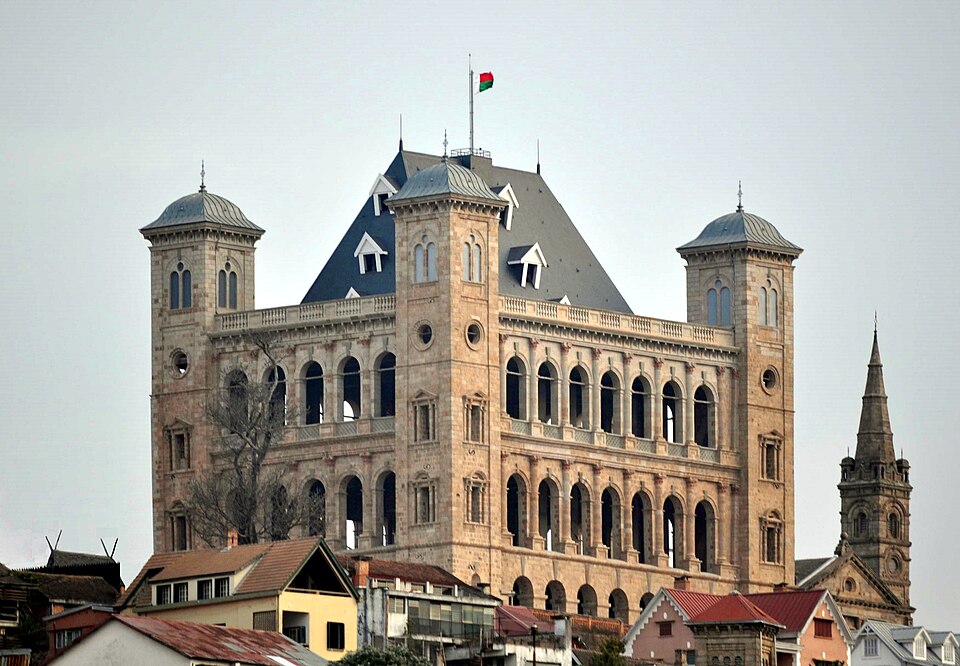
Photo: Hery Zo Rakotondramanana · CC BY-SA 2.0 · Wikimedia Commons High on the top of Analamanga hill stands the Rova of Antananarivo, the royal palace complex of the Kingdom of Imerina and later of the rulers of the Kingdom of Madagascar. King Andrianjaka is believed to have built the first fortified royal structure here, and Merina monarchs ruled from this hill until the monarchy fell in 1896, constantly restoring and adding buildings. On the night of 6 November 1995, a fire destroyed or damaged every structure in the compound, shortly before it was due to become a UNESCO World Heritage Site. The chapel, the tombs and several other buildings have since been fully restored.
Ambohimanga

Photo: Lemurbaby · CC BY-SA 3.0 · Wikimedia Commons About 24 kilometres northeast of the capital rises Ambohimanga, a hill crowned by a walled royal settlement. It is considered the most significant symbol of Merina cultural identity and the best-preserved monument of the precolonial Merina Kingdom. As one of the twelve sacred hills of Imerina, it has kept its spiritual character for at least four hundred years, and pilgrims still come here to worship. It was from Ambohimanga that King Andrianampoinimerina ended a long civil war and reunited Imerina. He then moved his court back to Antananarivo, but declared Ambohimanga the kingdom's spiritual capital.
Andafiavaratra Palace
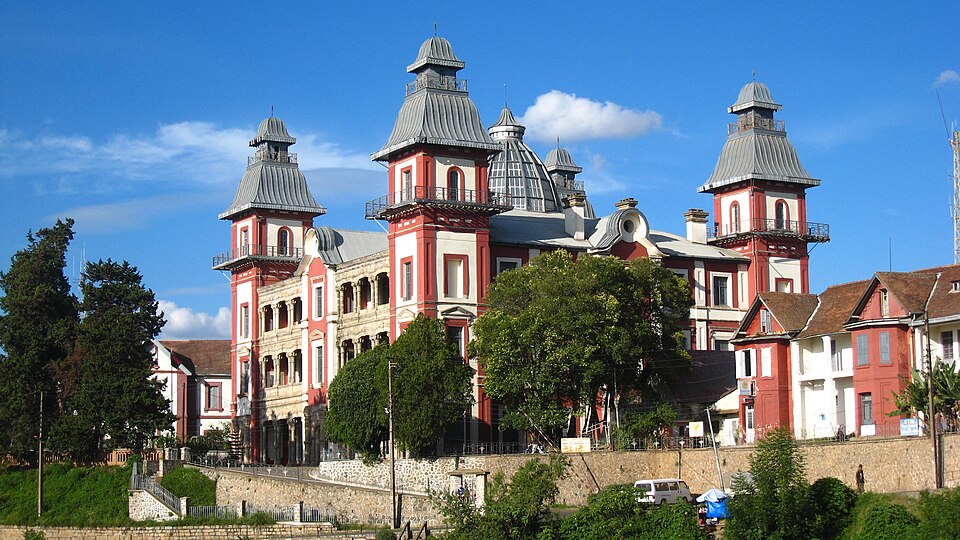
Photo: Maky (Alex Dunkel) · CC BY-SA 3.0 · Wikimedia Commons Before you is the Andafiavaratra Palace, standing on the highest hilltop of Antananarivo. It was the residence of Rainilaiarivony, the Prime Minister who governed the island kingdom in the late 19th century. The palace is now a museum, and it holds a precious rescue story: an estimated 1,466 historic objects of the Kingdom of Madagascar, saved from the 1995 fire at the nearby Rova, are kept here.
Lake Anosy
Photo: Sascha Grabow www.saschagrabow.com · CC BY-SA 3.0 · Wikimedia Commons Below you shimmers Lake Anosy, an artificial lake in the south of the city. It was once a swamp, until in the time of King Radama the First the Scottish missionary James Cameron shaped it into a heart. A narrow isthmus leads to a small islet in the centre, first chosen as the site of a blacksmith's workshop so that sparks would not reach the wooden and thatched houses of the day. Today the islet holds the Black Angel, a monument from 1927 to the Malagasy soldiers who died fighting for France in the First World War. In October the jacarandas along the shore bloom violet.
Immaculate Conception Cathedral
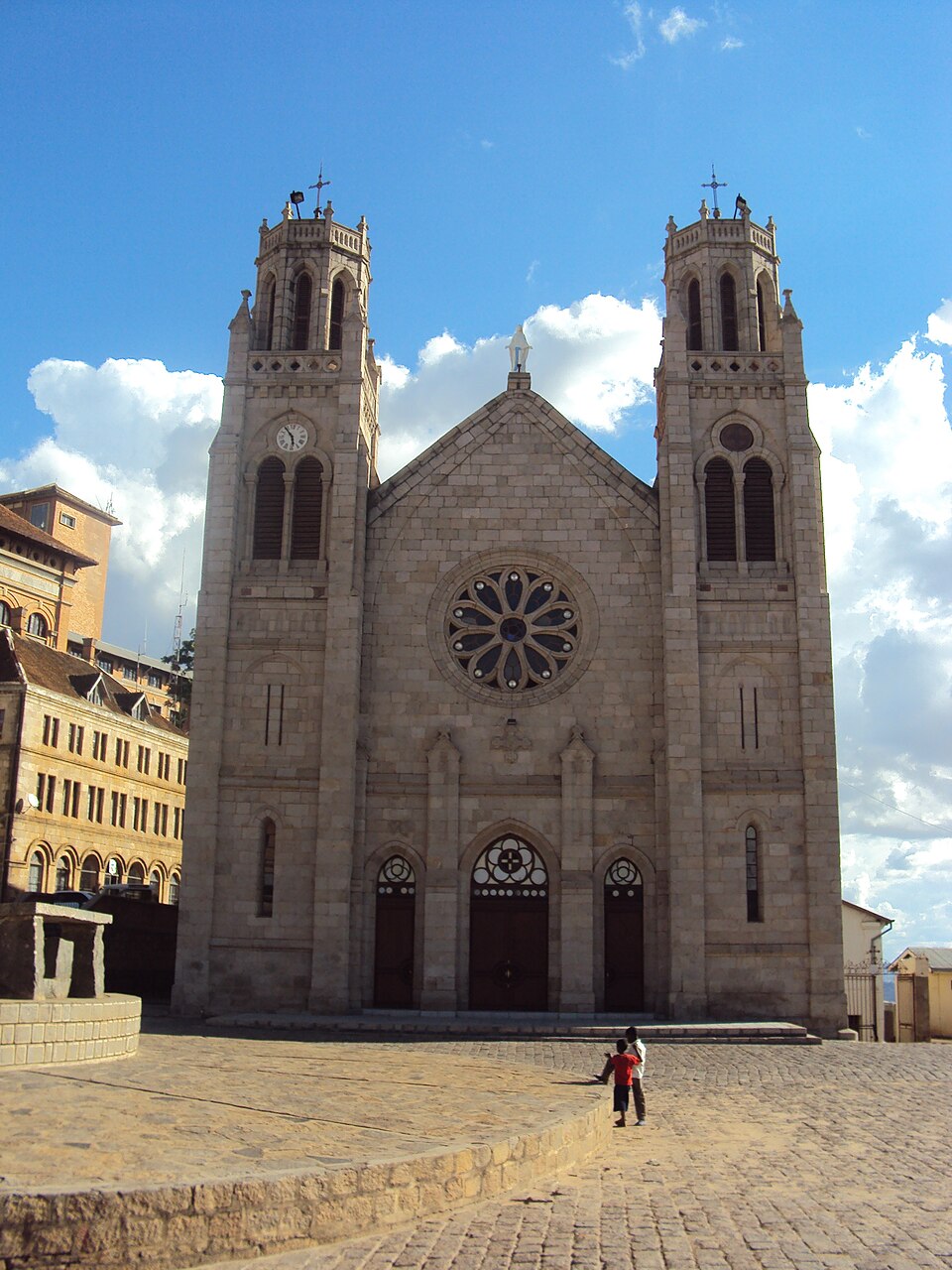
Photo: HoneyGaLe · CC BY-SA 3.0 · Wikimedia Commons In the Andohalo area of the upper town stands the Immaculate Conception Cathedral, seat of the Catholic Archdiocese of Antananarivo. Its facade faces west towards the city centre. Construction began in 1873 and was completed in 1890, and the church was built in the Gothic Revival style, giving the hilltop skyline its pointed silhouette.
Botanical and Zoological Garden of Tsimbazaza
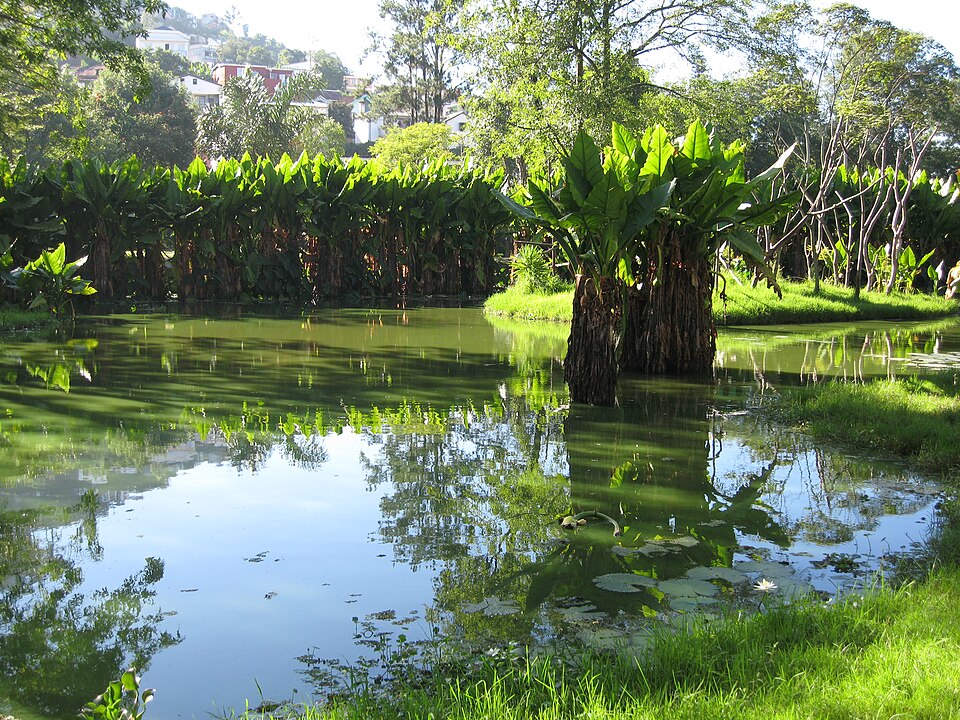
Photo: Woodlouse from Brighton, UK · CC BY-SA 2.0 · Wikimedia Commons Let us end in the Botanical and Zoological Garden of Tsimbazaza, just north of the National Assembly building. It is said to house the finest collection of Malagasy wildlife, with several unique species on display. Its museum holds tribal carvings and the skeletons of extinct giants, including an elephant bird, pygmy hippos and giant lemurs. Behind the scenes, the garden keeps Madagascar's largest herbarium, with roughly 80,000 plant specimens. In 1989 the WWF opened an environmental teaching centre here to mark its tenth year in Madagascar.