 Sofa VoyageSuomeksi
Bangkok
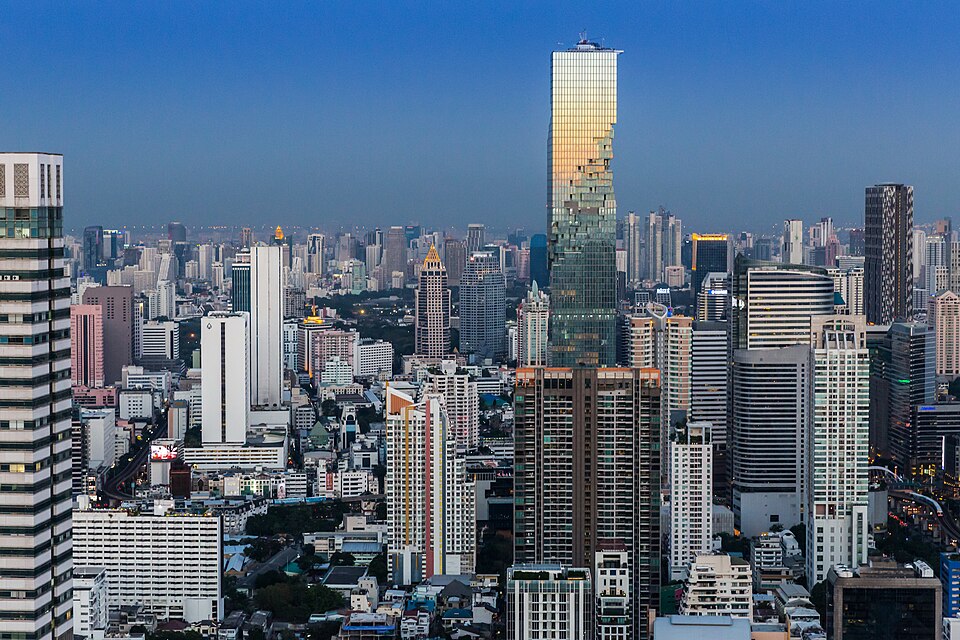
Welcome to Bangkok, known in Thai as Krung Thep Maha Nakhon, the capital and by far the largest city of Thailand. It spreads across the delta of the Chao Phraya River in central Thailand. Bangkok began as a small trading post in the Ayutthaya era of the 15th century and became the site of two capitals, Thonburi in 1767 and Rattanakosin in 1782. It was at the heart of the modernisation of Siam in the late 19th century. Today the city is famous for its street life, golden temples and royal palace, and it has been named the world's most visited city in several international rankings. Let us begin our tour.
Sights
Grand Palace

Photo: Preecha.MJ · CC BY-SA 4.0 · Wikimedia Commons Before you spreads the Grand Palace, a walled complex at the heart of Bangkok and the official residence of the Kings of Siam, and later Thailand, since 1782. Construction began on 6 May 1782 by order of King Rama the First, founder of the Chakri dynasty, when he moved the capital here from Thonburi. The king, his court and the royal government lived and worked within these walls until 1925. Successive kings kept adding buildings, especially King Chulalongkorn. Although the kings now live elsewhere, the palace is still used for royal ceremonies and state functions, and it covers more than 218,000 square metres.
Wat Phra Kaew
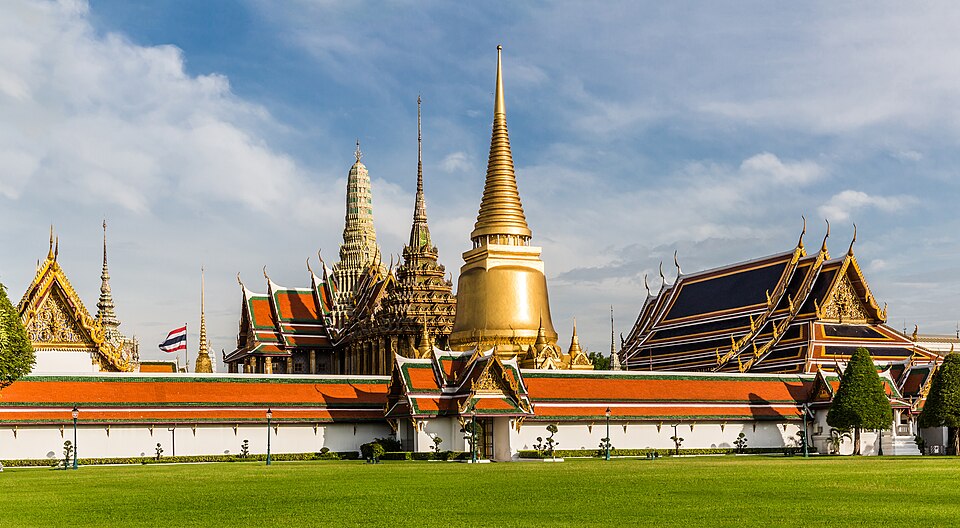
Photo: Original image: Ninara from Helsinki, Finland. Edit: TSP · CC BY 4.0 · Wikimedia Commons Within the grounds of the Grand Palace stands Wat Phra Kaew, the Temple of the Emerald Buddha, regarded as the most sacred Buddhist temple in Thailand. It houses the Emerald Buddha, venerated as the protector of the nation. Construction began in 1783 under Rama the First, and since then every king has personally added to, restored or embellished the temple as a way of making religious merit. Over the years, kings have also donated sacred and precious objects, so the temple is a treasury as well. Please dress and behave respectfully, as important royal ceremonies are held here every year.
Wat Arun
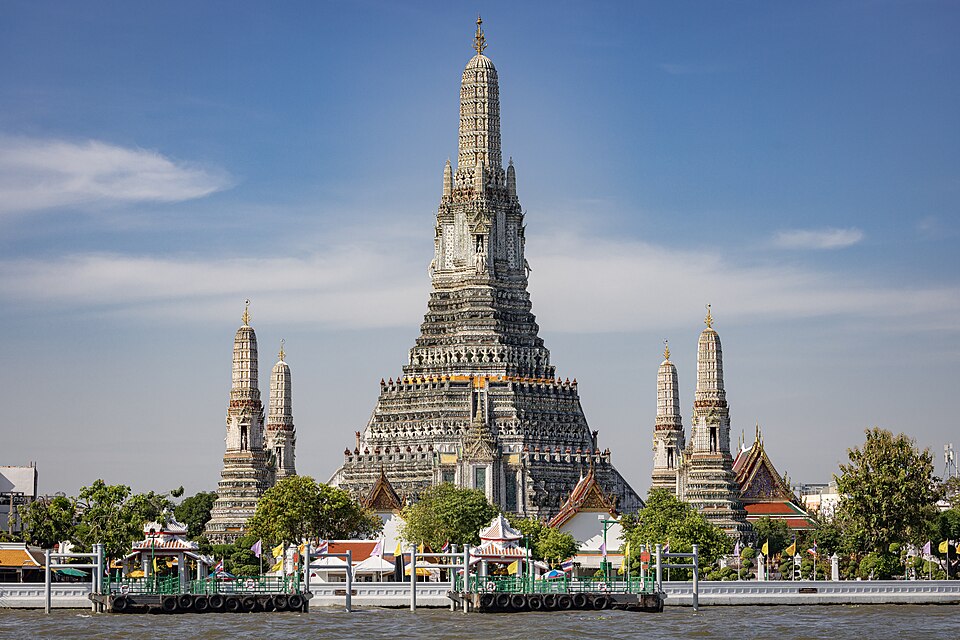
Photo: Mastertongapollo · CC BY-SA 4.0 · Wikimedia Commons Across the river, on the west bank of the Chao Phraya in Thonburi, rises Wat Arun, the Temple of Dawn. It takes its name from the Hindu god Aruṇa, often pictured as the rays of the rising sun. The temple blends Indian influences, with both Hindu and Buddhist symbolism, and Siamese tradition. It has existed since at least the 17th century, but its famous towering prang, the spire you see before you, was built in the early 19th century during the reigns of Rama the Second and Rama the Third. It is among the best-known landmarks in Thailand.
Wat Pho
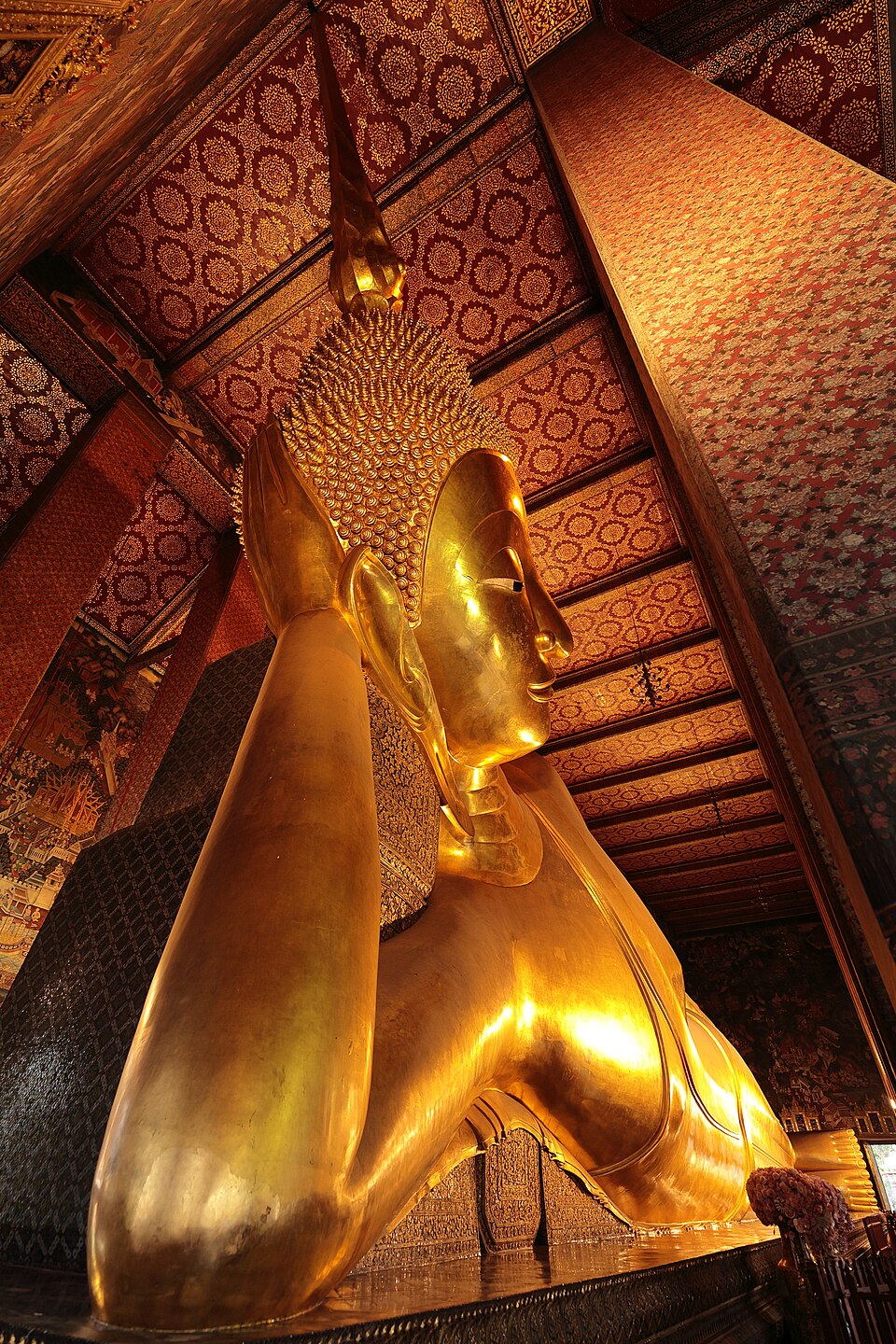
Photo: Mastertongapollo · CC BY-SA 4.0 · Wikimedia Commons Just south of the Grand Palace lies Wat Pho, the Temple of the Reclining Buddha. Its great statue is 46 metres long, part of the largest collection of Buddha images in Thailand. King Rama the First rebuilt the temple on an earlier site and made it his main temple, and some of his ashes are enshrined here. Wat Pho is also considered the earliest centre of public education in Thailand, and its instructive inscriptions are recognised in UNESCO's Memory of the World programme. Best of all, it is known as the birthplace of traditional Thai massage, which is still taught and practised here.
Chatuchak Weekend Market
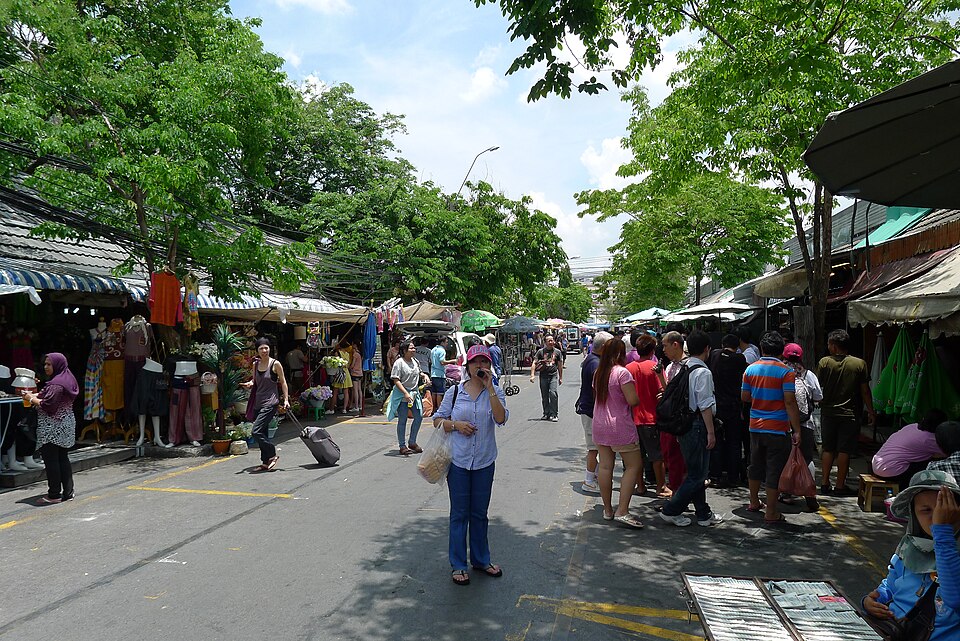
Photo: Azreey · CC BY-SA 3.0 · Wikimedia Commons Welcome to the Chatuchak Weekend Market, affectionately known as JJ Market, the largest market in Thailand and the world's largest and most diverse weekend market. More than 15,000 stalls are divided into 27 sections, and over 200,000 visitors arrive every weekend. You can find almost anything here: plants, antiques, electronics, pets, ceramics, furniture, clothing, books and plenty of food and drinks. The market has been open since 1942, and it moved several times between Sanam Luang and Sanam Chai before settling in Chatuchak.
Khaosan Road

Photo: Marcin Konsek · CC BY-SA 4.0 · Wikimedia Commons Here is Khaosan Road, a 410 metre long street in central Bangkok, built in 1892 during the reign of Rama the Fifth, about a kilometre north of the Grand Palace. Its name literally means milled rice, which suggests it was once a major rice market. Long-time residents recall that the first guesthouse here opened around 1982, in a narrow alley. Back then the street was very quiet, lined with small shophouses selling beef noodles, groceries and Thai fabrics, a far cry from the lively nightlife the road is known for today.
Jim Thompson House

Photo: Don Ramey Logan · CC BY-SA 3.0 · Wikimedia Commons On the banks of the Saen Saep canal stands the Jim Thompson House, the home and art collection of the American businessman Jim Thompson. After founding the Thai Silk Company in 1948, he became a major collector of Southeast Asian art, gathering Buddhist statues, traditional paintings and Chinese blue and white porcelain. In 1958 he began building his new home, a complex of six traditional wooden Thai houses. Most of these 19th century houses were dismantled and brought from Ayutthaya, while the largest, a weaver's house, came from Bangkrua just across the canal, where his company's weavers were based. Thompson mysteriously disappeared in Malaysia in 1967.