 Sofa VoyageSuomeksi
Beijing

Welcome to Beijing, previously romanised as Peking, the capital of China. With more than 21.8 million residents, it is the world's most populous national capital. Beijing is one of the oldest cities in the world, with recorded history spanning over three millennia, and it has been the political centre of China for most of the past eight centuries. Mountains surround the city on three sides. It is home to eight UNESCO World Heritage Sites, and in 2022 it became the first city to host both the Summer and Winter Olympics. Let's explore its palaces, temples and walls.
Sights
Forbidden City
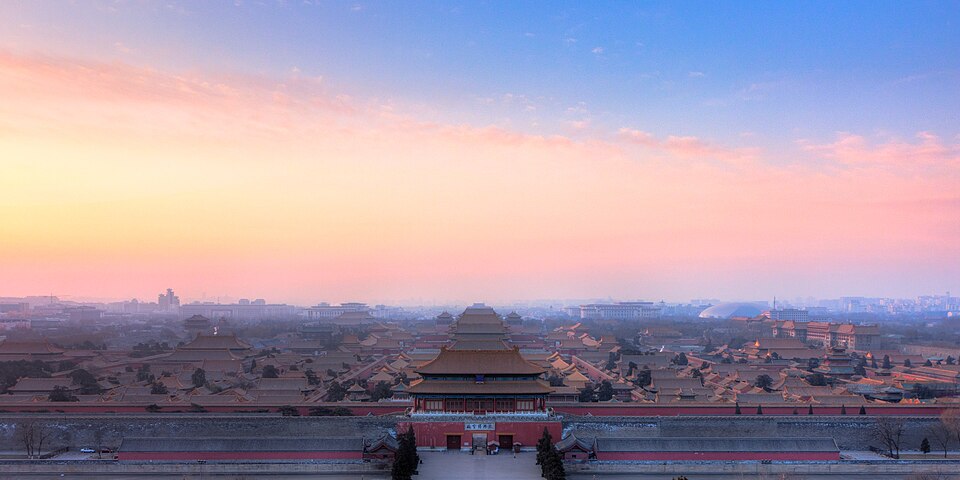
Photo: Pixelflake · CC BY-SA 3.0 · Wikimedia Commons Step through the gates into the Forbidden City, the imperial palace at the heart of Beijing. Built from 1406 to 1420, it was home to twenty-four emperors of the Ming and Qing dynasties and the centre of political power in China until 1924. Legend says the palace has 9,999 rooms, but experts counted 8,886, spread across 72 hectares. It is the largest preserved royal palace complex in the world, and UNESCO recognises it as the largest collection of preserved ancient wooden structures anywhere. In 1987, The Last Emperor became the first Western film shot inside.
Great Wall of China

Photo: Severin.stalder · CC BY-SA 3.0 · Wikimedia Commons Here is the Great Wall of China, a series of fortifications built across the historic northern borders as protection against nomadic groups from the Eurasian Steppe. The first walls date back to the 7th century BC, and they were joined together in the Qin dynasty. The best-known sections were built by the Ming dynasty. Along the wall, watchtowers and barracks housed troops, and signals were sent with smoke or fire. Altogether the fortifications stretch for more than 21,000 kilometres, roughly tracing the edge of the Mongolian steppe.
Temple of Heaven

Photo: Shujianyang · CC BY-SA 4.0 · Wikimedia Commons In the south-east of central Beijing lies the Temple of Heaven, a complex of imperial Confucian buildings. Here the emperors of the Ming and later the Qing dynasties came for annual ceremonies, praying to Heaven for a good harvest and performing other seasonal rites. UNESCO listed it as a World Heritage Site in 1998, calling it a masterpiece of architecture and landscape design, whose symbolic layout influenced architecture and planning in the Far East for many centuries.
Tiananmen Square
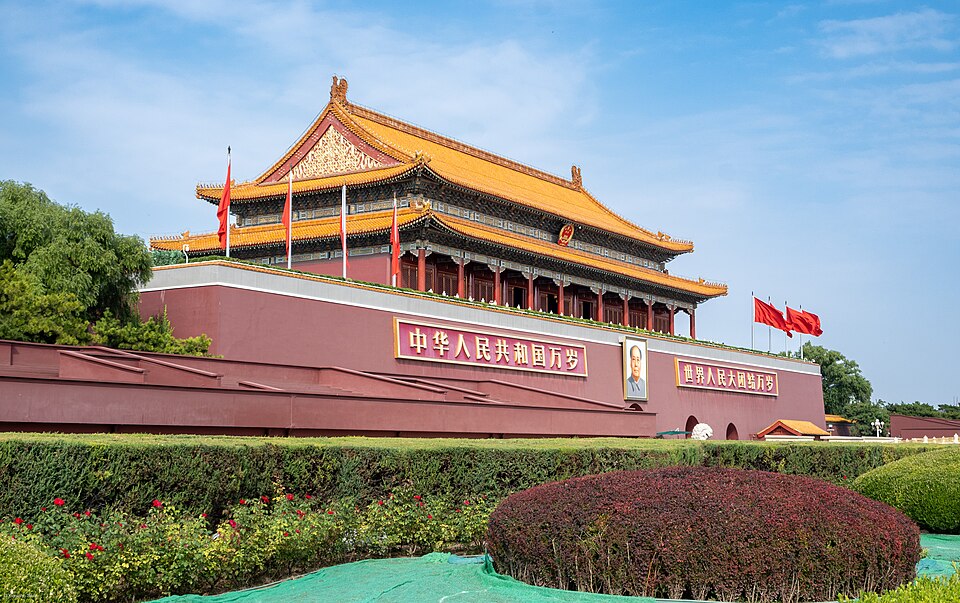
Photo: xiquinhosilva · CC BY 2.0 · Wikimedia Commons You are standing in Tiananmen Square, named after the Gate of Heavenly Peace to its north, which separates it from the Forbidden City. The square was built in 1651 and enlarged fourfold in the 1950s. It is vast, 765 metres long and 282 metres wide. Here, on 1 October 1949, Mao Zedong proclaimed the founding of the People's Republic of China, and each day a flag is raised at sunrise and lowered at sunset. The square has seen many events in Chinese history, and outside China it is best known for the 1989 protests and massacre.
Summer Palace

Photo: xiquinhosilva · CC BY 2.0 · Wikimedia Commons Welcome to the Summer Palace, a vast imperial garden of lakes, gardens and palaces from the Qing dynasty. It covers 2.9 square kilometres, and three-quarters of that is water. Here is the surprise: Kunming Lake is entirely man-made, and the soil taken out was used to build Longevity Hill, about 60 metres high, which rises beside it. Over 3,000 ancient buildings stand here, inspired by the gardens of southern China. UNESCO called it a masterpiece of Chinese landscape garden design.
Mutianyu

Photo: Velatrix · CC0 · Wikimedia Commons Some 70 kilometres north-east of the centre, you climb onto the Mutianyu section of the Great Wall, one of its best-preserved stretches. It once served as the northern barrier defending the capital and the imperial tombs. Mutianyu is older than the better-known Badaling section: it was first built in the mid-6th century, and during the Ming dynasty general Xu Da began building the present wall over the earlier one. It was rebuilt in 1569, and most of it is still well preserved.
Beijing National Stadium
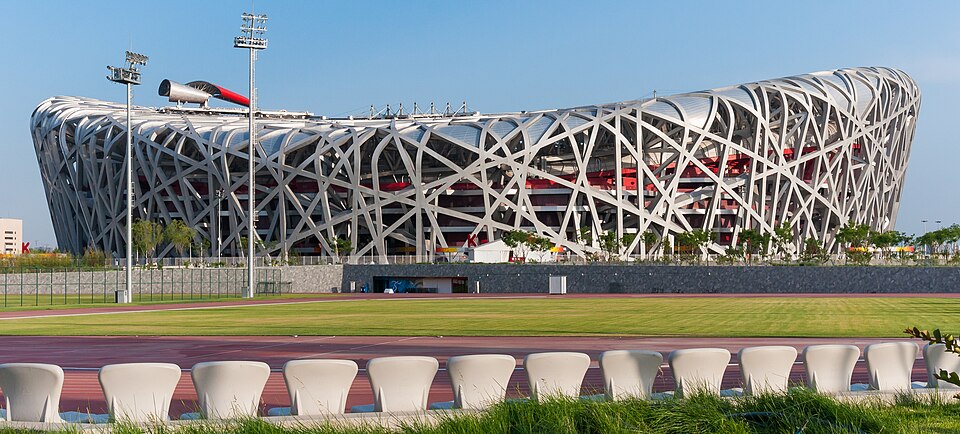
Photo: CEphoto, Uwe Aranas · CC BY-SA 3.0 · Wikimedia Commons Before you stands the National Stadium, better known as the Bird's Nest. It was designed by the Swiss firm Herzog and de Meuron for the 2008 Summer Olympics and Paralympics, with the Chinese artist Ai Weiwei as artistic consultant. The design grew out of a study of Chinese ceramics, and its tangle of steel beams hides the supports, which gives the stadium its famous nest-like look. It seats 80,000 people, and it was used again for the 2022 Winter Olympics.
Lama Temple
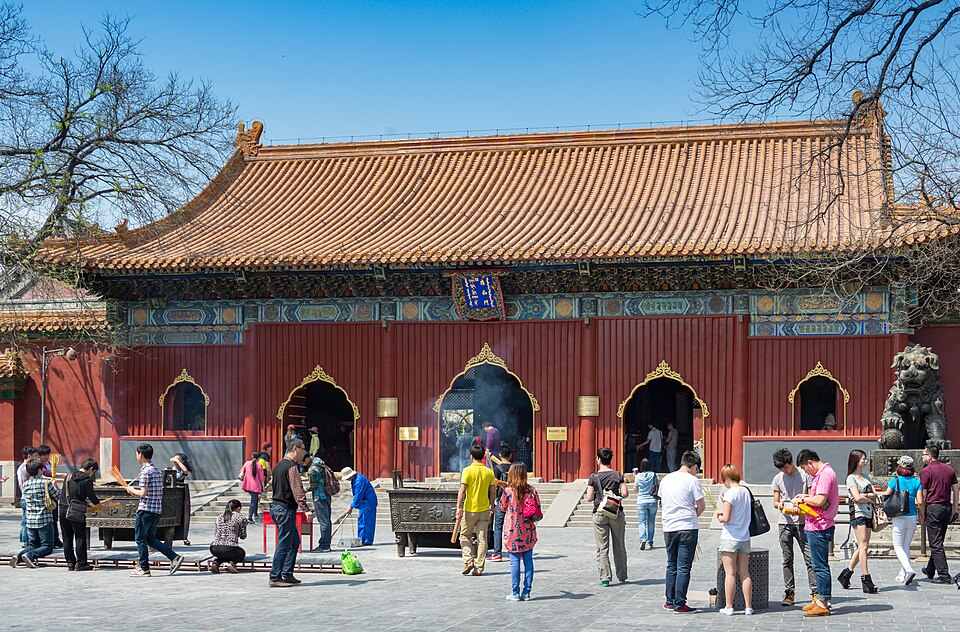
Photo: xiquinhosilva · CC BY 2.0 · Wikimedia Commons Step into the Yonghe Temple, also called the Lama Temple, a monastery of the Gelug school of Tibetan Buddhism. Its buildings and artwork blend Han Chinese and Tibetan styles, and it is one of the largest Tibetan Buddhist monasteries in China proper. Building began in 1694 on a site that once held a residence for court eunuchs of the Ming dynasty. It was then turned into the home of Prince Yong, fourth son of the Kangxi Emperor. During the middle and late Qing dynasty, it was the highest Buddhist temple in the country.