 Sofa VoyageSuomeksi
Berlin

Welcome to Berlin, the capital and largest city of Germany. With 3.7 million inhabitants, it has the largest population within city limits of any city in the European Union. Berlin grew up along the banks of the river Spree and was first documented in the 13th century, at the crossing of two important trade routes. In the 1920s it was the third-largest city in the world. After the Second World War, a wall split it into East and West, until reunification in 1990 made Berlin the capital of all Germany again. Surprisingly, about a third of the city is forest. Let's begin our walk.
Sights
Brandenburg Gate
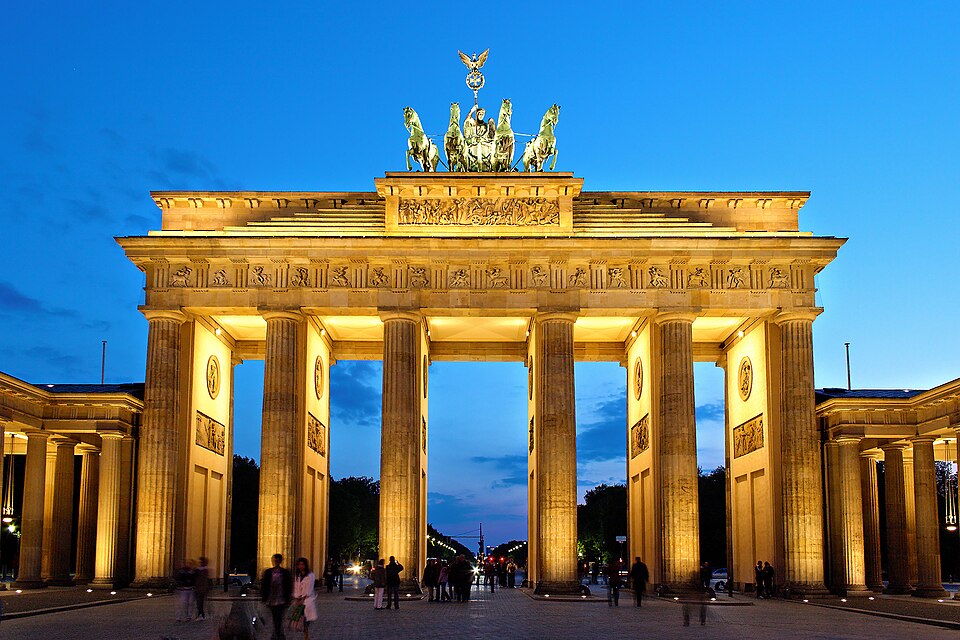
Photo: Thomas Wolf , www.foto-tw.de · CC BY-SA 3.0 · Wikimedia Commons In front of you stands the Brandenburg Gate, one of the best-known landmarks in Germany. King Frederick William the Second of Prussia had it built from 1788 to 1791, to designs by the royal architect Carl Gotthard Langhans, on the site of an old city gate on the road to Brandenburg an der Havel. Look up at the bronze quadriga crowning it, the work of the sculptor Johann Gottfried Schadow. For almost three decades the Berlin Wall blocked this gateway and marked the divided city. Since reunification, it has become a symbol of European unity and peace.
Reichstag building

Photo: Mfield , Matthew Field, http://www.photography.mattfield.com ; edit by Waugsberg · GFDL 1.2 · Wikimedia Commons Just north of the Brandenburg Gate rises the Reichstag, home of the German parliament, the Bundestag. Paul Wallot's Neo-Renaissance building was finished in 1894. A fire in 1933 badly damaged it and became a pivotal event in the entrenchment of the Nazi regime, and in the Battle of Berlin it was an important target for the Red Army. After the war it stood in West Berlin and could not serve either German parliament. Then, from 1995 to 1999, Norman Foster redesigned it for reunified Germany. Look up at the glass dome above the chamber. You can walk inside it.
Berlin Wall
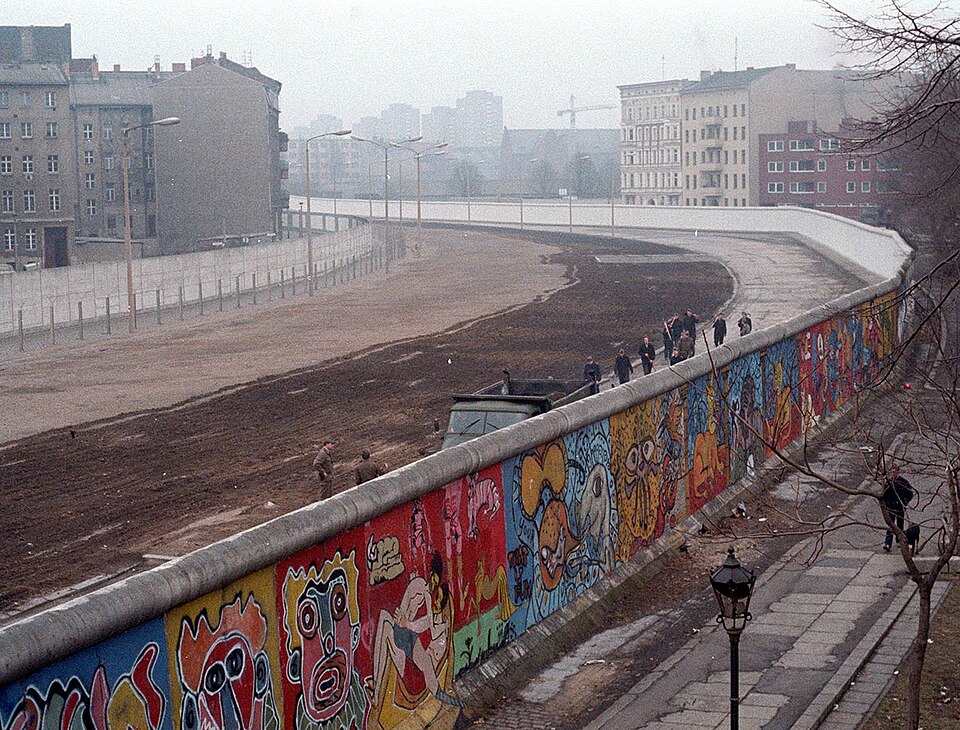
Photo: Noir · CC BY-SA 3.0 · Wikimedia Commons Here you are tracing the line of the Berlin Wall, the guarded concrete barrier that encircled West Berlin from 1961 to 1989. Work began on 13 August 1961, and the barrier came with watchtowers and a wide death strip. Its main purpose was to stop East Germans fleeing to the West. Over 100,000 people tried to escape, and more than 5,000 succeeded. On 9 November 1989, after weeks of unrest, the East German government announced that its citizens could visit the West. Crowds climbed onto the Wall, and souvenir hunters chipped away pieces. Less than a year later, Germany was reunified.
Museum Island
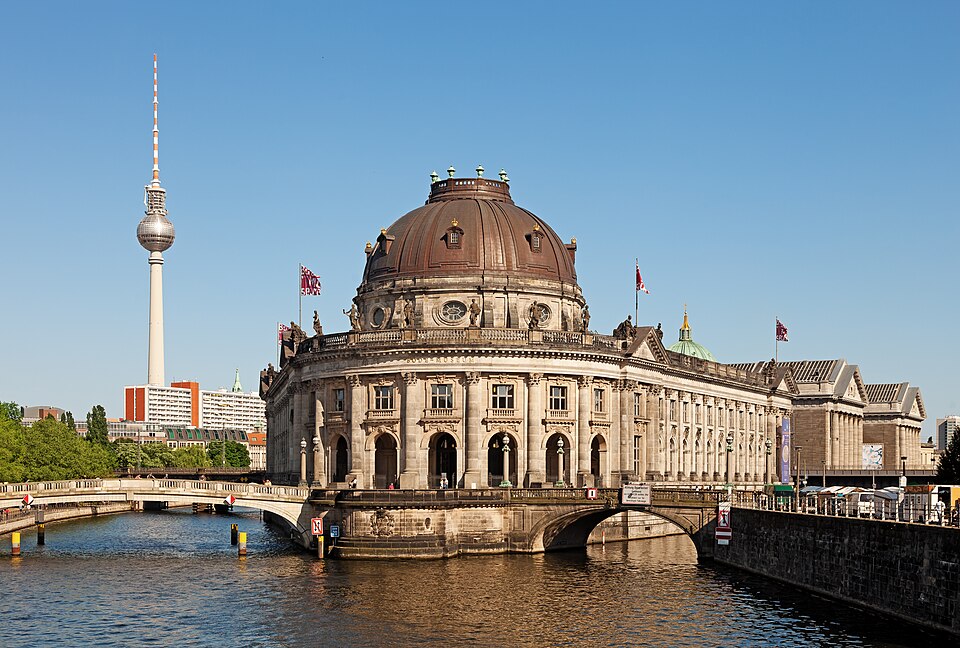
Photo: Thomas Wolf , www.foto-tw.de · CC BY-SA 3.0 · Wikimedia Commons Cross onto Museum Island, on the northern part of an island in the Spree, in the historic heart of Berlin. Five great museums stand here: the Altes Museum, the Neues Museum, the Alte Nationalgalerie, the Bode-Museum and the Pergamon Museum. They were built over a full century, from 1830 to 1930, at first on the orders of the Prussian kings and to plans by five different architects. UNESCO made the island a World Heritage Site in 1999, as a testimony to how museums developed in the 19th and 20th centuries.
Berlin Cathedral
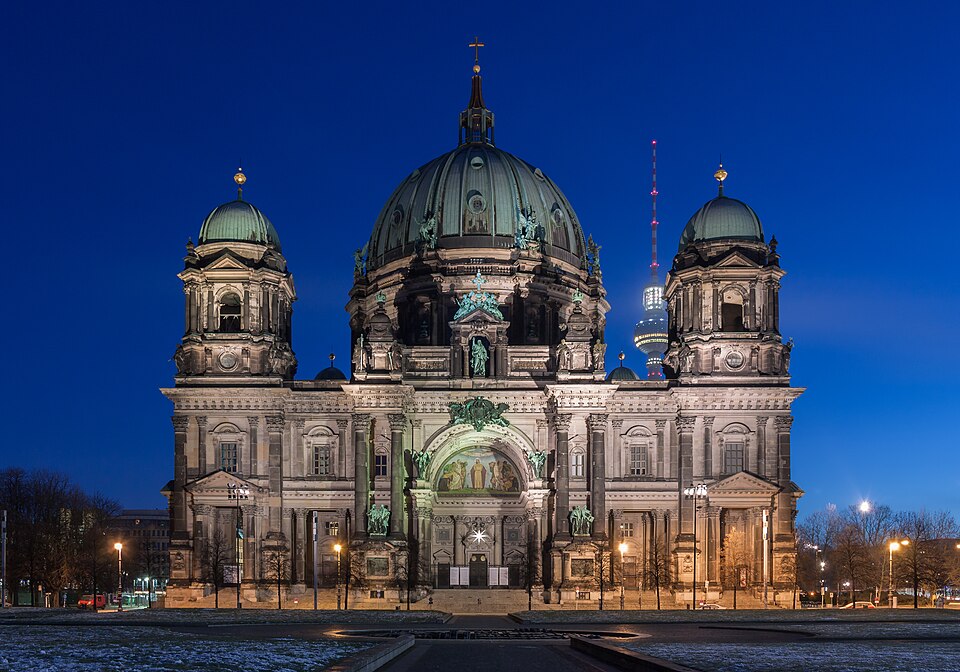
Photo: Ansgar Koreng · CC BY 3.0 de · Wikimedia Commons Beside the Lustgarten park rises Berlin Cathedral, with its great dome. It began as a chapel for the Berlin Palace, and the present church was built from 1894 to 1905, on the orders of Emperor William the Second, in Renaissance and Baroque Revival styles. It is the largest Protestant church in Germany. Beneath your feet lies a surprise: the Hohenzollern crypt covers almost the entire basement, making this one of the most important dynastic tombs in Europe. Damaged by bombing in the Second World War, its original interior was restored by 2002.
Checkpoint Charlie
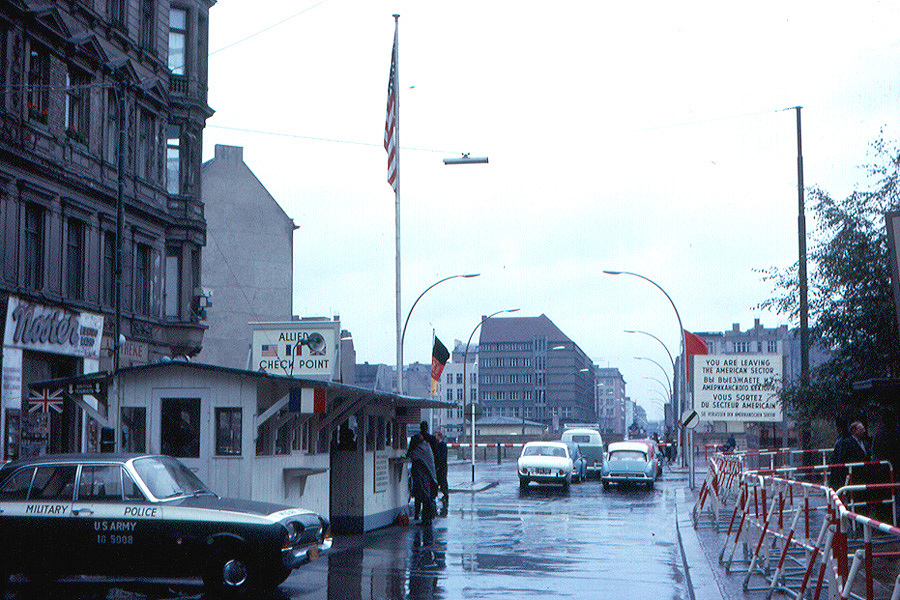
Photo: Roger Wollstadt · CC BY-SA 2.0 · Wikimedia Commons This is Checkpoint Charlie, the best-known crossing point in the Berlin Wall between East and West Berlin, and a symbol of the Cold War. During the Berlin Crisis of 1961, Soviet and American tanks briefly stood face to face right here. On 26 June 1963, President John F. Kennedy climbed a platform at this spot and looked over the Wall into East Berlin, on the same day he gave his famous Ich bin ein Berliner speech. And the original American guard house? It now stands in the Allied Museum in the Dahlem neighbourhood.
East Side Gallery

Photo: Lklundin · CC BY-SA 3.0 · Wikimedia Commons Walk along the East Side Gallery, an open-air gallery on the longest surviving section of the Berlin Wall, stretching 1,316 metres beside the Spree. In the spring of 1990, just after the Wall opened, 118 artists from 21 countries covered it with around a hundred paintings commenting on the changes of 1989 and 1990. Here is a twist: they painted the side that once faced East Berlin, rather than the West. The paintings you see are replicas made in 2009. More than three million people come here each year.
Berlin TV Tower
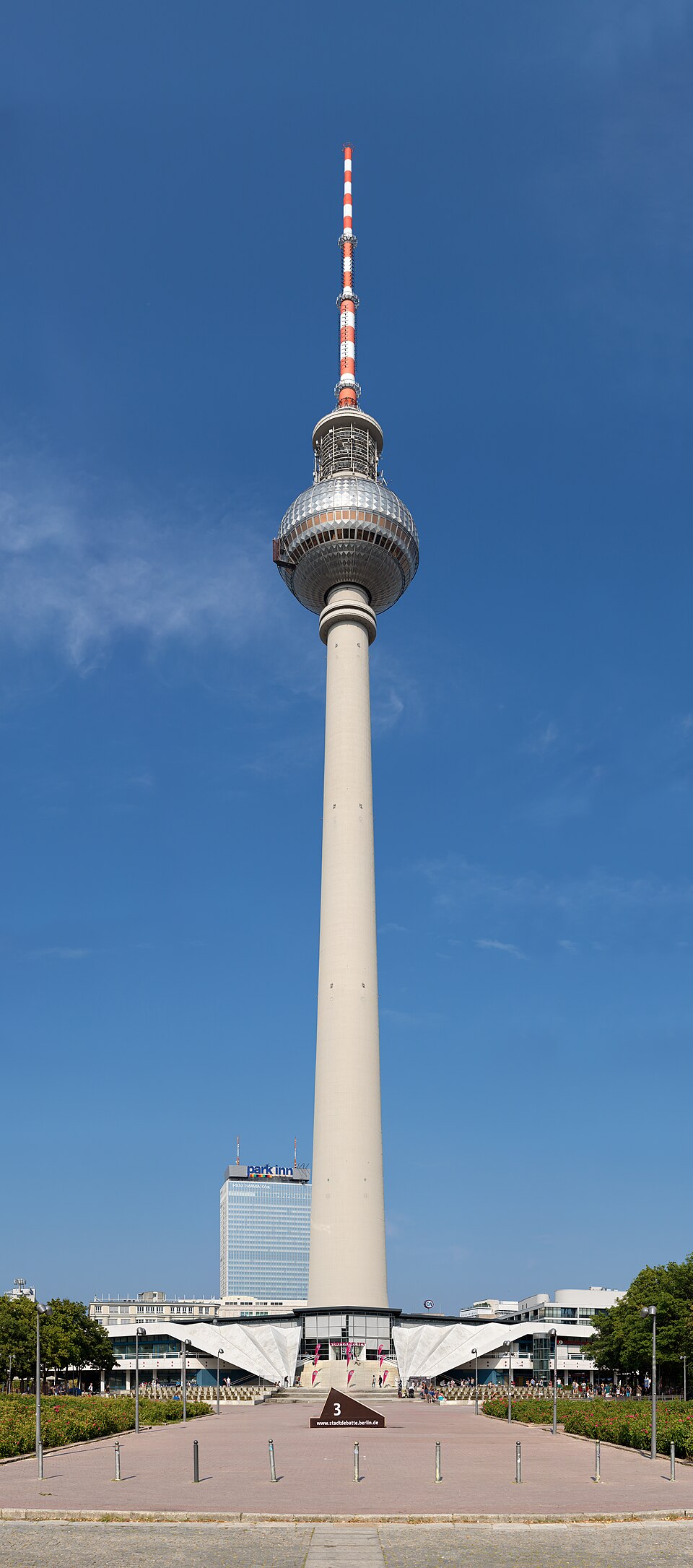
Photo: Christian Wolf ( www.c-w-design.de ) · CC BY-SA 3.0 de · Wikimedia Commons Look up at the Fernsehturm, the television tower beside Alexanderplatz. At 368 metres including its antenna, it is the tallest structure in Germany. The government of East Germany built it between 1965 and 1969, both as a broadcasting tower and as a symbol of communist power. After reunification, its meaning changed completely, and it became a symbol of a reunited Berlin. Ride up to the observation deck, 203 metres high, where there is a bar, and above it a rotating restaurant. More than one million people visit every year.