 Sofa VoyageSuomeksi
Bern
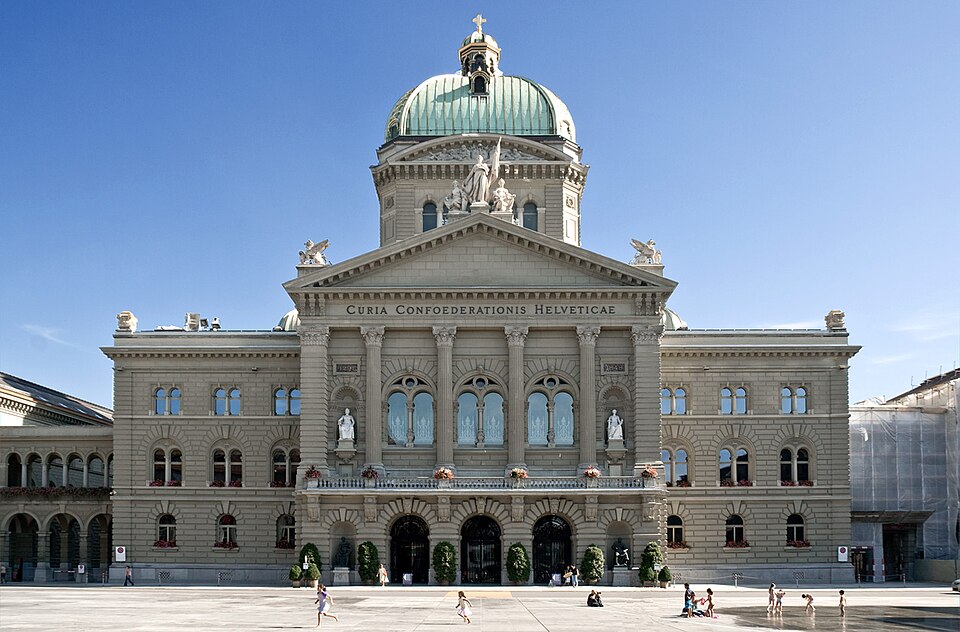
Welcome to Bern, the federal city and de facto capital of Switzerland. Its old town sits on a hill almost encircled by the Aare, a major river of the Swiss Plateau, and in 1983 it became a UNESCO World Heritage Site. The medieval city was founded by the Zähringer family, probably in 1191, and in 1353 Bern joined the Swiss Confederacy as one of its eight early cantons. Over the centuries it grew into a powerful city-state, and in 1848 it was made the federal city. Bern is also the capital of the canton of Bern. Let us start our walk at its oldest monument.
Sights
Zytglogge
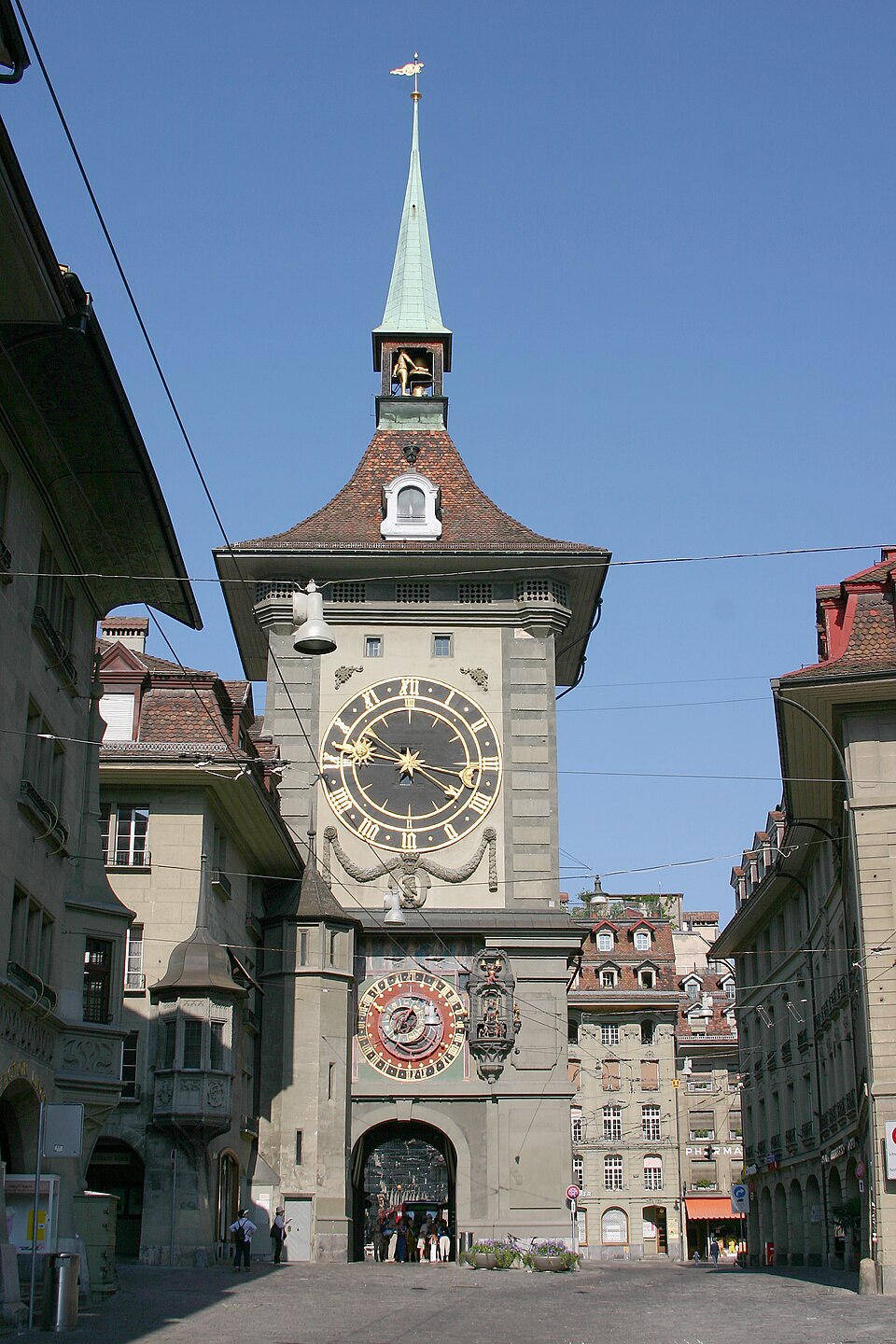
Photo: Mike Lehmann, Mike Switzerland 13:37, 2 July 2006 (UTC) · CC BY-SA 3.0 · Wikimedia Commons Pause beneath the Zytglogge, whose name means time bell. This medieval tower was built around 1218 to 1220 as the western gate of the city, and was then only 16 metres tall. As Bern grew, the walls moved outwards, and the tower was raised by 7 metres to look over the surrounding houses. Over some 800 years it has served as a guard tower, a prison and a clock tower. Stay a moment and watch its 15th-century astronomical clock, which makes the Zytglogge one of the city's great attractions.
Bern Minster
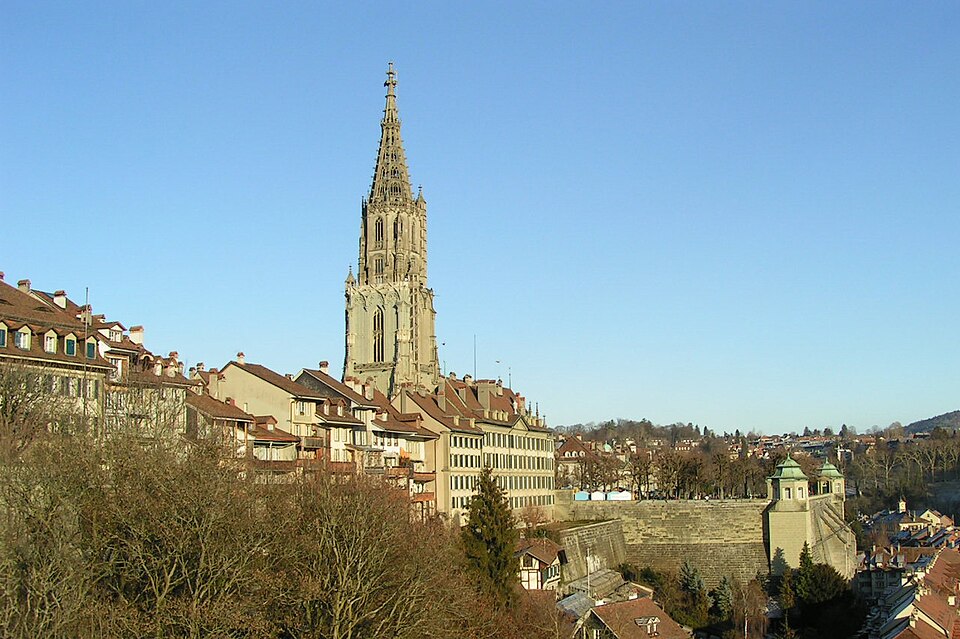
Photo: André P. Holzer, Bern · CC BY-SA 3.0 · Wikimedia Commons Above the old town soars the tower of Bern Minster, a Reformed cathedral built in the Gothic style. Work began in 1421, yet the tower was only completed in 1893, more than four centuries later. At 100.6 metres, it makes this the tallest cathedral in Switzerland. The west façade dominates Münsterplatz, while on the south side the Münsterplattform terrace opens out above the river. Inside, three naves stretch over 84 metres from end to end.
Federal Palace of Switzerland
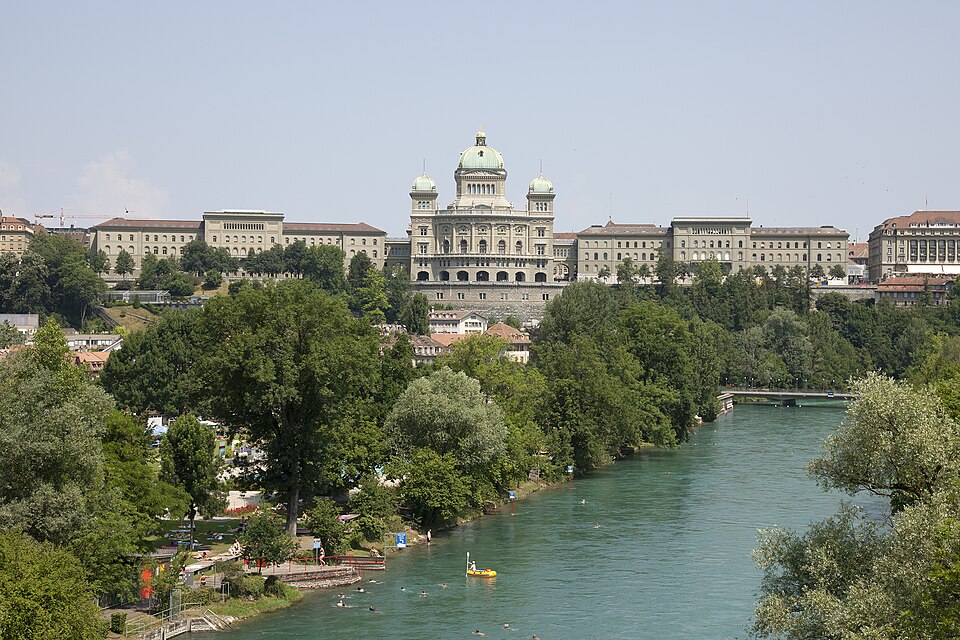
Photo: Mike Lehmann, Mike Switzerland ( talk ) 05:54, 14 July 2010 (UTC) · CC BY-SA 3.0 · Wikimedia Commons In front of you stands the Federal Palace, seat of the Swiss parliament and government, a symmetrical complex just over 300 metres long. It consists of three linked buildings. The west wing was built first, from 1852 to 1857, and the parliament building in the centre followed between 1894 and 1902, crowned by a striking dome. Look closely at its decoration: its symbolism draws on Switzerland's history and cultural diversity, and stone from all parts of the country was used to build it, making it a true national monument.
Bärengraben

Photo: Unknown artist Unknown artist · Public domain · Wikimedia Commons At the eastern edge of the old town, next to the Nydeggbrücke and the River Aare, lies the Bärengraben, the famous Bear Pit. The bear is the symbol of both the city and the canton of Bern and appears on their coats of arms, so bears here are more than a curiosity. Since 2009 the old pit has been joined by the BärenPark, a larger and more natural enclosure along the riverbank. The Bear Pit itself is a Swiss heritage site of national significance.
Old City of Bern
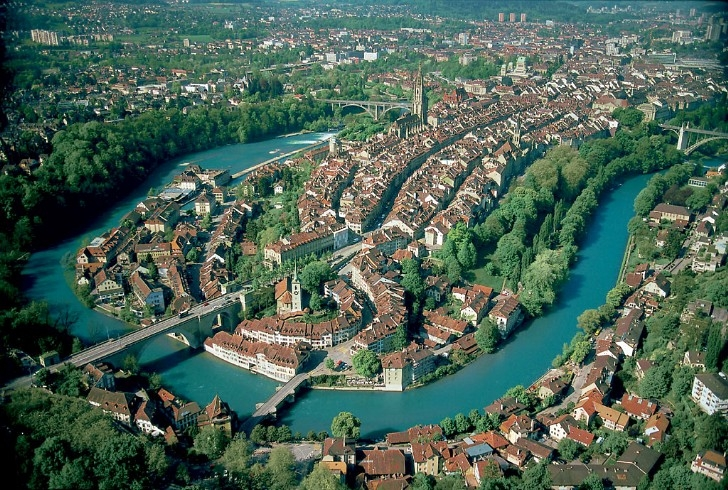
Photo: de:Benutzer:Reaast · Public domain · Wikimedia Commons Wander now through the Old City, built on a narrow hill bordered on three sides by the Aare. Its compact layout has stayed essentially unchanged since it was built between the 12th and 15th centuries. After a great fire in 1405, much of the city was rebuilt in sandstone. Among its streets you will find churches, bridges and a large collection of Renaissance fountains, and the seats of the federal, cantonal and city governments too. It is a fine example of a medieval city that has made room for the modern world.
Zentrum Paul Klee
Photo: Unknown author Unknown author · Public domain · Wikimedia Commons On the eastern outskirts of Bern, three gentle waves of steel and glass rise out of the landscape. This is the Zentrum Paul Klee, designed by the Italian architect Renzo Piano and completed in 2005. It holds about 40 percent of Paul Klee's entire pictorial work. The museum began with a gift: in 1997, Klee's daughter-in-law, Livia Klee-Meyer, donated almost 690 works to the city and canton. Each of the three hills has its role, from a creative studio for all ages to the exhibition halls and the archives.