 Sofa VoyageSuomeksi
Brazzaville

Welcome to Brazzaville, the capital and largest city of the Republic of the Congo. It sits on the north bank of the Congo River, looking straight across the water at Kinshasa, capital of the neighbouring Democratic Republic of the Congo. More than a third of the country's people live here. During the Second World War, between 1940 and 1942, Brazzaville served as the de facto capital of Free France, and in 2013 UNESCO named it a City of Music. Let's set off along the river and explore.
Sights
Basilica of Sainte-Anne-du-Congo in Brazzaville
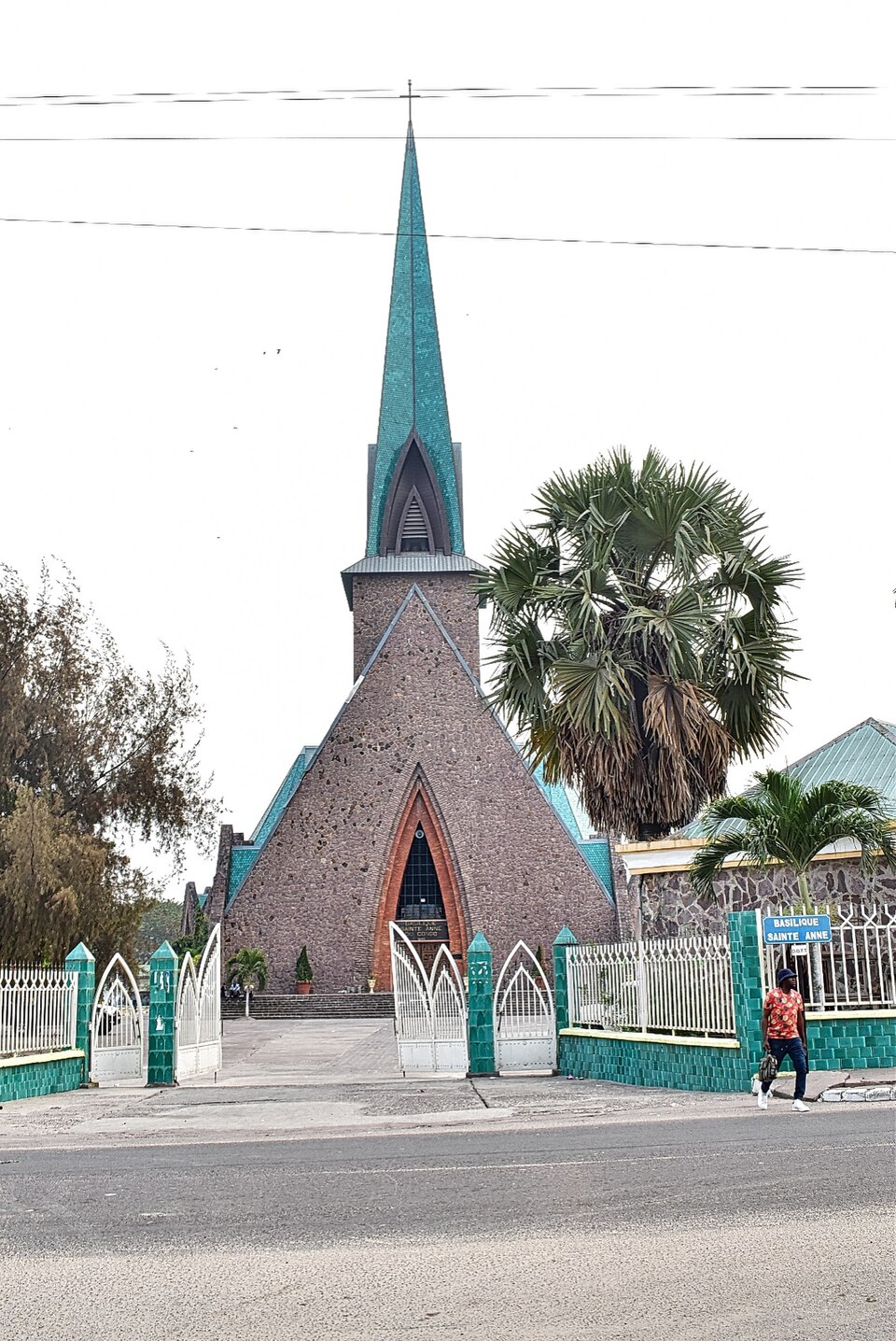
Photo: Kani Beat · CC BY-SA 4.0 · Wikimedia Commons Before you stands the Basilica of Sainte-Anne-du-Congo, a monumental Catholic church and one of Brazzaville's most striking buildings. It was completed in 1943, in the middle of the Second World War, to a design by the architect Roger Erell. Take a moment to look up at its sheer scale, which has made it a landmark of the city for generations.
Nabemba Tower
Look up at the Nabemba Tower, rising right beside the Congo River in the south of the city. At 106 metres and 30 floors, it is the tallest building in the whole Republic of the Congo. It takes its name from Mont Nabemba, the country's highest mountain, and locals also know it as the Elf Tower, because it was built with money borrowed from the French oil company Elf Aquitaine. Designed by Jean Marie Legrand, it went up between 1983 and 1986, yet it was only inaugurated in 1990.
Sacred Heart Cathedral
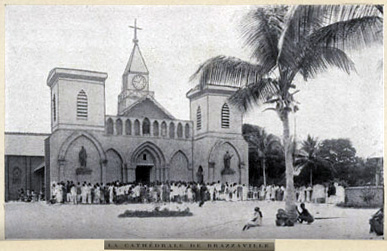
Photo: Garitan · Public domain · Wikimedia Commons Here is the Sacred Heart Cathedral, seat of the Archbishop of Brazzaville and the oldest existing cathedral in central Africa. It was built in 1892 and consecrated two years later. Walk round to the main entrance, which faces east: two large painted statues of Saint Paul and Saint Peter greet you there, and they date from before 1914. This church has welcomed famous visitors too, among them Charles de Gaulle in 1944 and Pope John Paul the Second in 1980.
Livingstone Falls
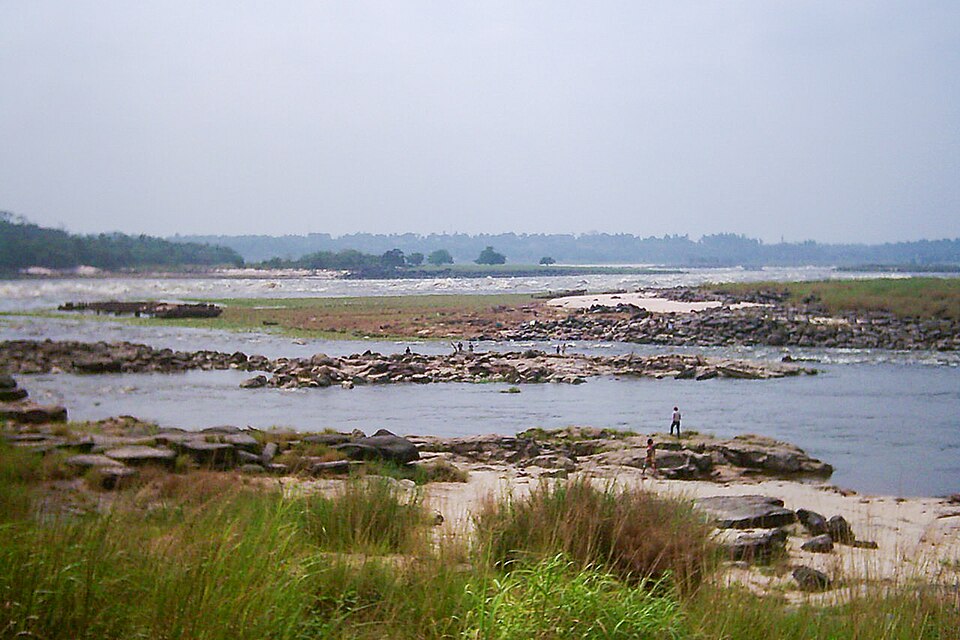
Photo: User:Vberger · Public domain · Wikimedia Commons Downstream from the city, the Congo River tumbles through Livingstone Falls, named after the British explorer David Livingstone. This is not a single waterfall but a chain of enormous rapids, dropping 270 metres over 350 kilometres before ending at Matadi. Because the Congo carries the second largest flow of any river on Earth, its lowest rapids can be counted as the world's largest waterfall by flow rate. Most surprising of all is how narrow the channel is, in places less than 300 metres wide, for such a colossal volume of water.