 Sofa VoyageSuomeksi
Colombo

Welcome to Colombo, Sri Lanka's executive and judicial capital and its most populous city, on the west coast of the island. Colombo is also the financial centre of the country. It became the capital when Sri Lanka was ceded to the British Empire in 1815, and it kept that status after independence in 1948. In 1978, when administrative functions moved to Sri Jayawardenepura Kotte, Colombo was named the commercial capital. Our tour starts in the city and then ventures further across the island, to an ancient rock fortress, a sacred temple and a coastal fort.
Sights
Gangaramaya Temple
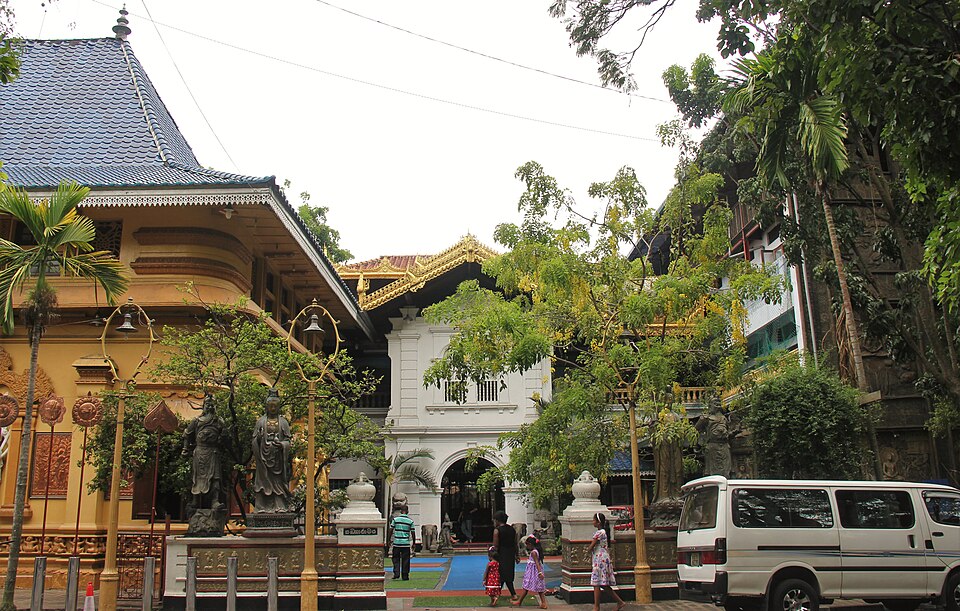
Photo: AKS.9955 · CC BY-SA 4.0 · Wikimedia Commons Welcome to Gangaramaya Temple, one of the most important temples in Colombo, near the calm waters of Beira Lake. Completed in the late 19th century on what was once a small hermitage on marshy land, it blends Sri Lankan, Thai, Indian and Chinese architecture. Alongside the shrine, the stupa and the Bodhi tree, you will find a museum and a library. The most striking building for visitors is the Seema Malaka, an assembly hall for monks designed by Geoffrey Bawa and built with donations from a Muslim sponsor.
Galle Face Green
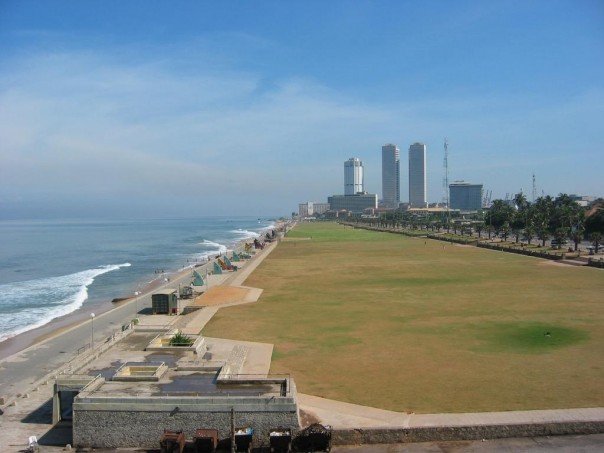
Photo: Mayakaru at English Wikipedia · CC BY 3.0 · Wikimedia Commons Breathe in the sea air at Galle Face Green, an ocean-side park stretching 500 metres along the coast in the heart of Colombo. The promenade was first laid out in 1859 by Governor Sir Henry George Ward, and the green was once far larger than today. Over the years it served for horse racing, golf, cricket, polo, football and rugby. Its origins are more martial: the Dutch first laid it out so their cannons had a clear line of fire against the Portuguese.
Sigiriya
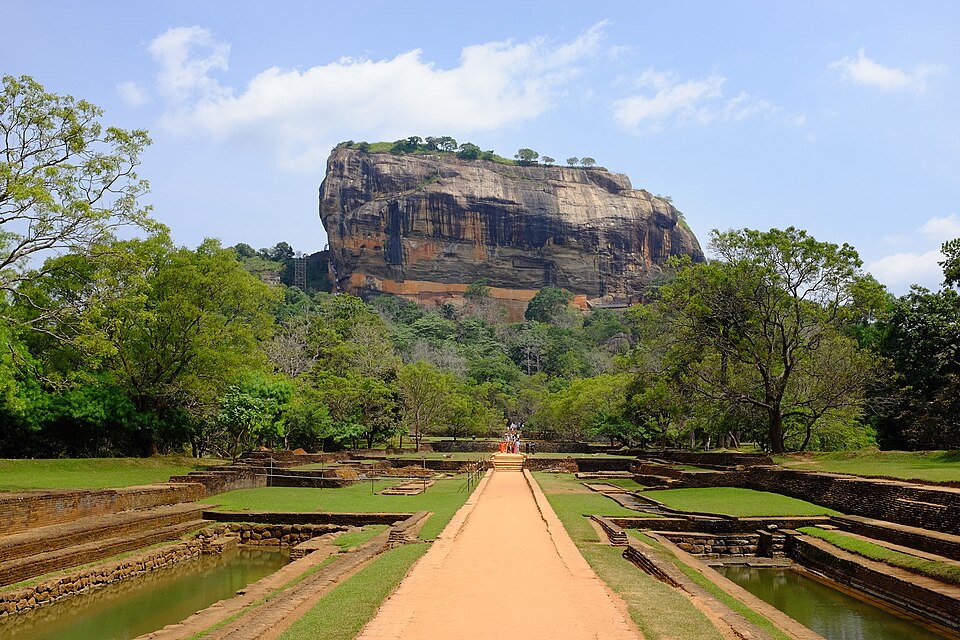
Photo: Wrobell · CC BY-SA 3.0 · Wikimedia Commons Now we travel inland to Sigiriya, the Lion Rock, an ancient rock fortress near the town of Dambulla. A massive column of granite about 180 metres high towers before you. According to an ancient chronicle, King Kashyapa chose this rock for his new capital, built his palace on its summit and decorated its sides with colourful frescoes. Halfway up, he built a gateway in the form of an enormous lion, which gave the place its name. Today it is a UNESCO World Heritage Site and one of the best preserved examples of ancient urban planning.
Temple of the Tooth
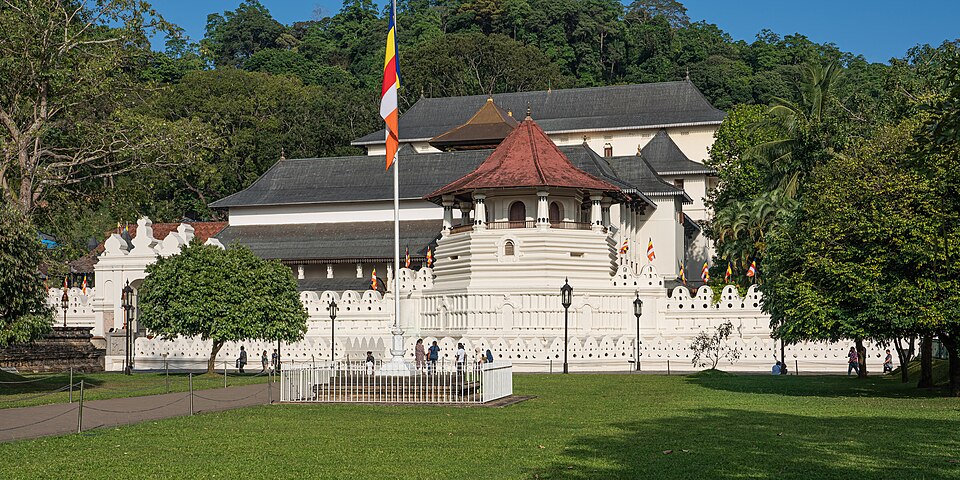
Photo: A.Savin · FAL · Wikimedia Commons Our journey continues to Kandy and the Temple of the Sacred Tooth Relic, inside the royal palace complex of the former Kingdom of Kandy. It houses the relic of the tooth of the Buddha. For centuries it was believed that whoever held the relic held the governance of the country, so it was kept by Sinhalese kings. Monks perform rituals here three times a day, at dawn, at noon and in the evening. Every Wednesday the relic receives a symbolic bathing with scented water and fragrant flowers.
Lotus Tower
Back in Colombo, look up at the Lotus Tower, rising 351.5 metres into the sky. Shaped like a lotus, it has become a symbolic landmark for the whole country. The tower is used for communication and observation, and it also offers leisure facilities. Interestingly, it was first planned for Peliyagoda before the government decided to build it at a different location.
Galle Fort
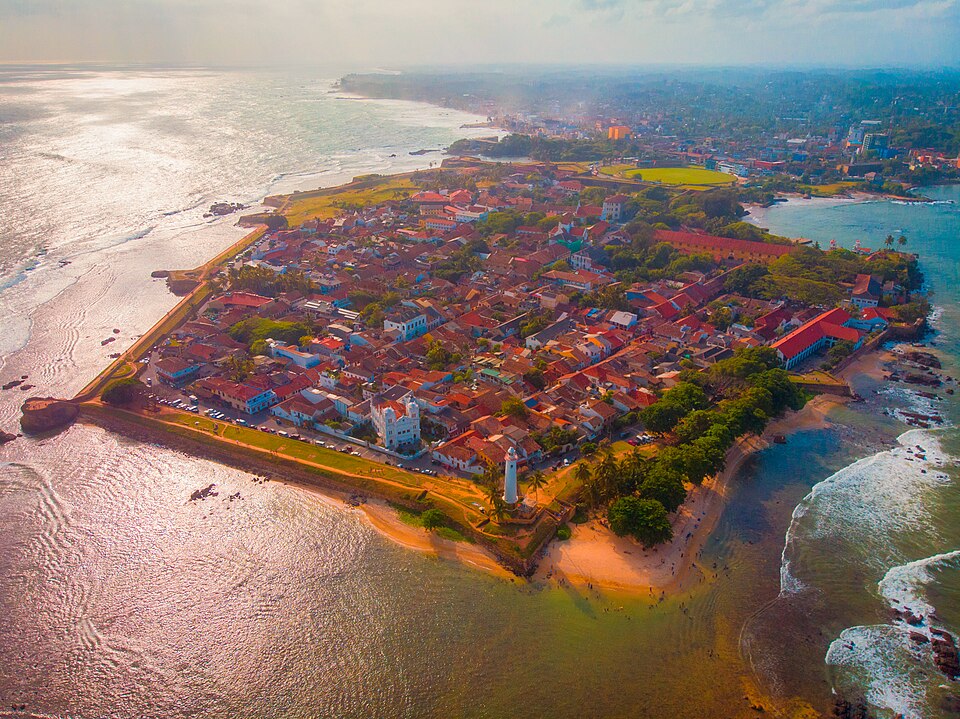
Photo: Rovin Shanila · CC BY-SA 4.0 · Wikimedia Commons Our final stop is Galle Fort, on the Bay of Galle on the southwest coast. The Portuguese first built it in 1588, and the Dutch fortified it extensively from 1649 onwards, which is why it is also called the Dutch Fort. UNESCO lists it as a World Heritage Site, an urban ensemble showing how European architecture met South Asian traditions. Inside the ramparts lives a multi-ethnic and multi-religious community. Remarkably, the fort withstood the Boxing Day tsunami of 2004, which damaged parts of the town of Galle.