 Sofa VoyageSuomeksi
Conakry
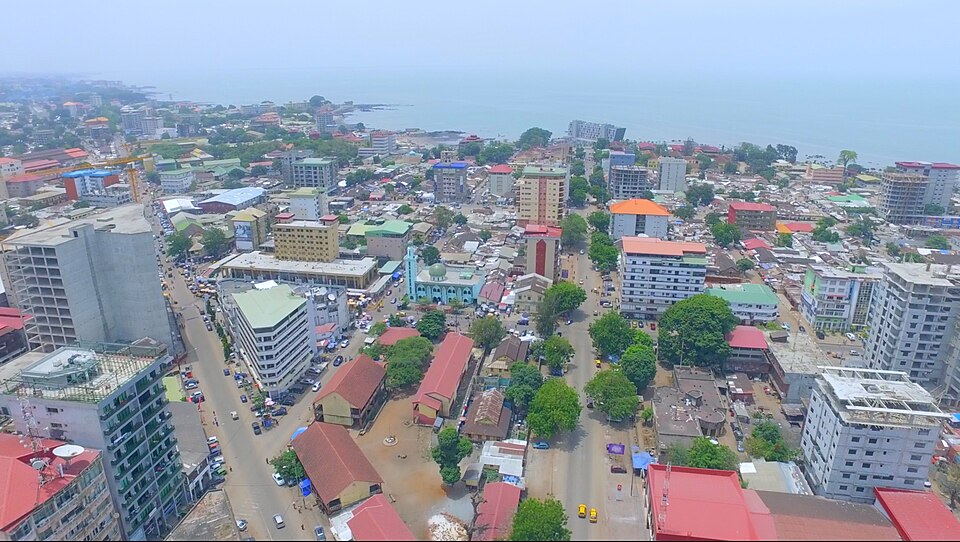
Welcome to Conakry, the capital and largest city of Guinea, on the west coast of Africa. It is a port city and the country's economic and cultural centre, home to around one fifth of all Guineans. Conakry began on the small Tombo Island and later spread onto the long, narrow Kaloum Peninsula. In 1885, its two island villages had fewer than 500 inhabitants. It became the capital of French Guinea in 1904, and after independence in 1958 the city grew enormously, from 50,000 people to more than 3 million. Let us explore it.
Sights
Grand Mosque of Conakry
Before you stands the Grand Mosque of Conakry, opened in 1982 and built under President Ahmed Sékou Touré with funding from King Fahd of Saudi Arabia. It is the fourth largest mosque in Africa and the largest in Sub-Saharan Africa. Inside there is room for 10,000 men on the ground floor and 2,500 women on the upper level, and another 12,500 worshippers can gather on the large esplanade outside. In its gardens lies the Camayenne Mausoleum, with the tombs of the national hero Samori Ture, Sékou Touré and Alfa Yaya.
Îles de Los
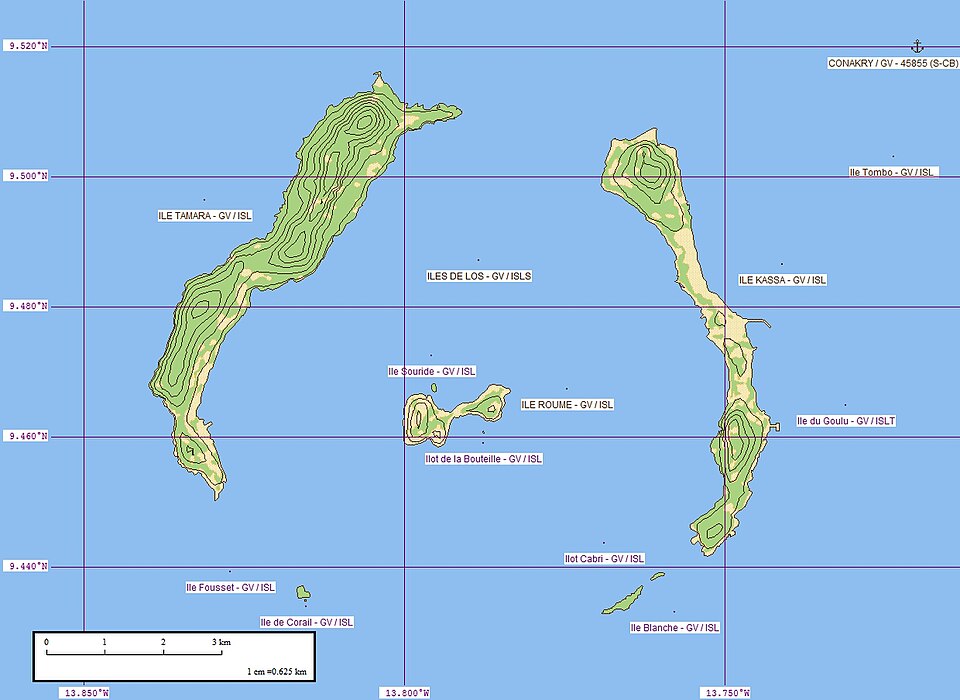
Photo: EVS-Islands · CC BY 2.0 · Wikimedia Commons Just off the coast of Conakry lie the Îles de Los, a group of islands about two kilometres offshore. Their name comes from the Portuguese Ilhas dos Ídolos, meaning islands of the idols. The islands are best known for their beaches and forested interiors, and they are popular with visitors looking for a break from the city. To get there, you take a ferry from Kaloum on the mainland.
Sandervalia National Museum

Photo: Yamen · CC BY 4.0 · Wikimedia Commons In the Sandervalia quarter of Kaloum is the Sandervalia National Museum, the national museum of Guinea. Its displays are modest, with traditional objects from different regions of Guinea and statues from the colonial era. The museum was founded as part of a policy to encourage traditional folklore, the same policy that created Les Ballets Africains. Look to the right of the entrance for a curiosity: a masonry structure built in 1896 by Aimé Olivier de Sanderval, a concrete arch that artists sometimes use to display their paintings.
St. Mary's Cathedral
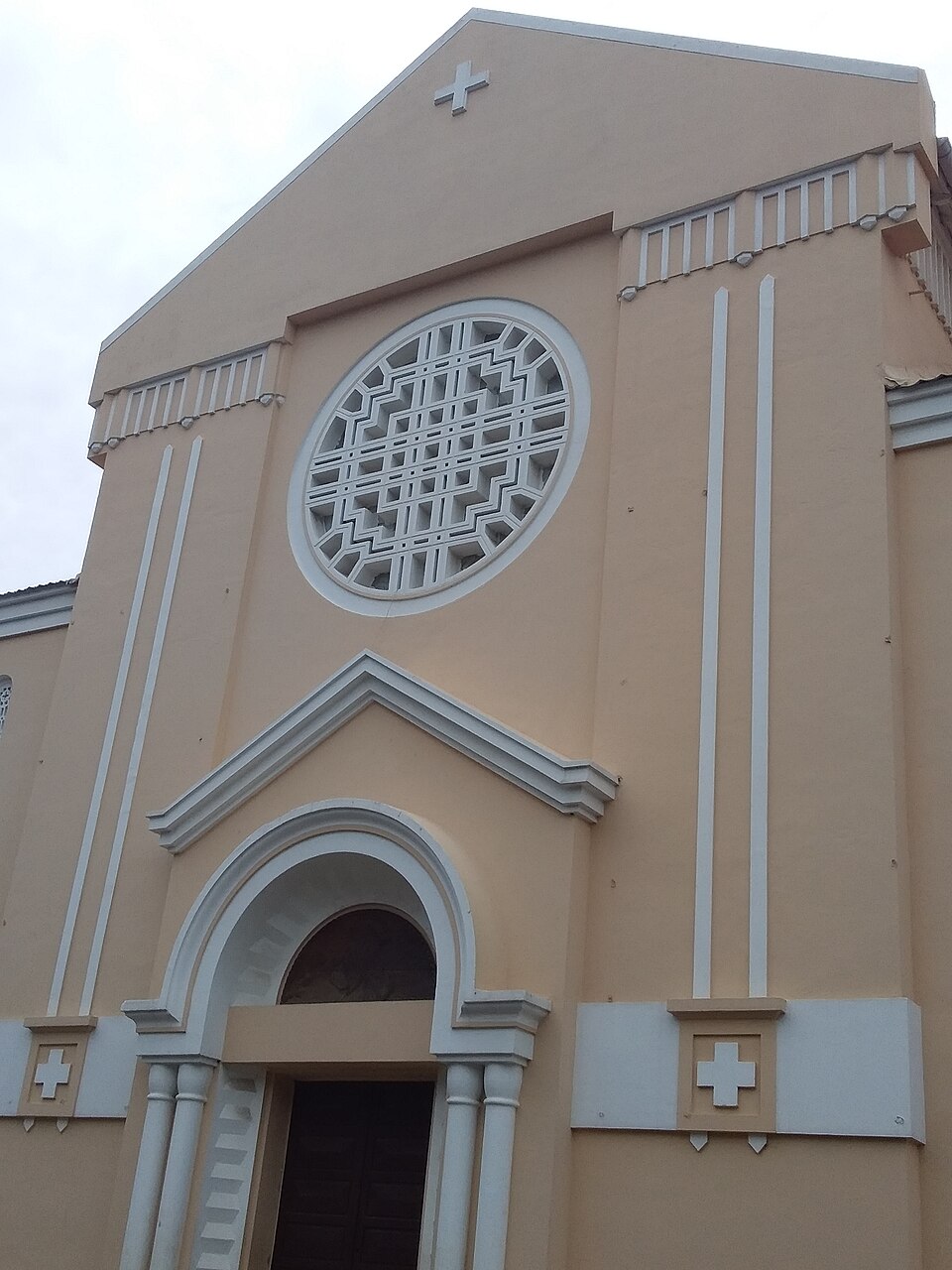
Photo: Ourysow92 · CC BY-SA 4.0 · Wikimedia Commons This yellow and red building is the Cathedral of Saint Mary, the principal church of the Roman Catholic Archdiocese of Conakry. Its foundation stone was laid in 1928 by Monseigneur Raymond René Lérouge, and it was built in the 1930s. Look closely at its architecture and you will notice something unusual for a Catholic church: elements of Orthodox design. Because most people in Guinea are Muslim, its congregation is not large. The Presidential Palace stands just behind it.
Conakry Botanical Garden
Take a green break in the Conakry Botanical Garden, in the Camayenne part of the city, with the Grand Mosque just to the north. The Ambroise Paré Hospital lies to the south. The garden is known above all for its kapok trees, so as you stroll along its paths, look up and let these great trees set the pace of your visit.
Camp Boiro
This is a place of painful memory. Camp Boiro was a concentration camp in the centre of Conakry, in use from 1960 to 1984. During the regime of President Ahmed Sékou Touré, who led Guinea after independence, thousands of political opponents were imprisoned here, and a great many were executed or died from torture or starvation. The camp had once housed the Republican Guard under French rule. It was renamed in 1969 after a police commissioner, Mamadou Boiro. Let us remember the victims in silence.