 Sofa VoyageSuomeksi
Copenhagen

Welcome to Copenhagen, the capital and most populous city of Denmark. It lies mainly on the island of Zealand, with a smaller part on Amager, and across the Øresund strait lies Malmö in Sweden, linked by the Øresund Bridge. Copenhagen began as a Viking fishing village in the 10th century and became the capital in the early 15th century. During the Renaissance it flourished as the cultural and economic centre of Scandinavia. Today it is known as one of the most bicycle-friendly cities in the world. Let us explore its gardens, canals and castles.
Sights
Tivoli Gardens
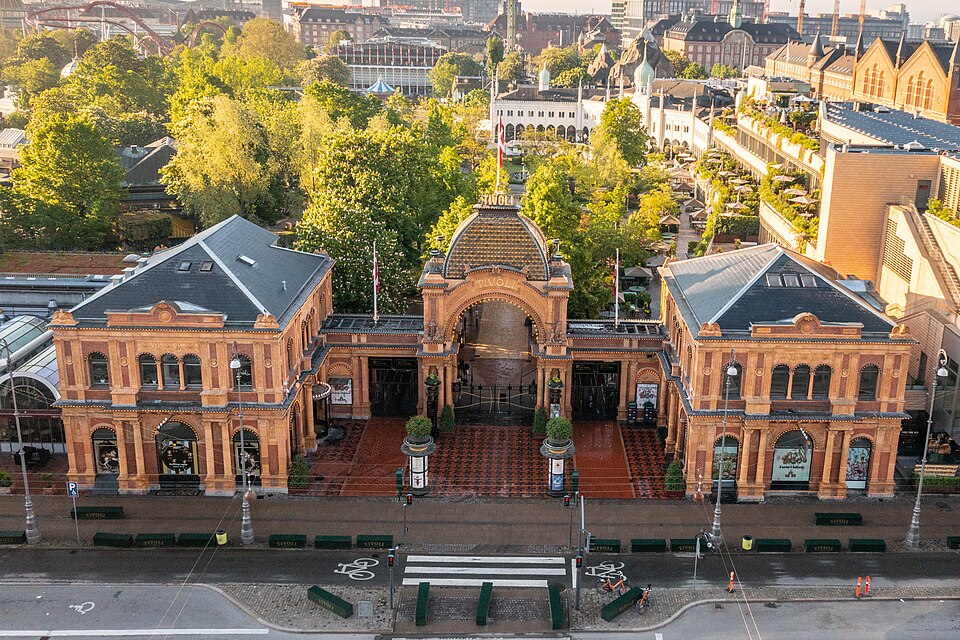
Photo: European Commission · CC BY 4.0 · Wikimedia Commons Our first stop is Tivoli Gardens, an amusement park and pleasure garden right next to Copenhagen's Central Station. It opened on 15 August 1843, making it the second-oldest operating amusement park in the world, after Dyrehavsbakken, also in Denmark. Its original name was Tivoli and Vauxhall, borrowing from the Jardin de Tivoli in Paris and Vauxhall Gardens in London. Tivoli is the most visited amusement park in Scandinavia, and it has even appeared on screen, in the 1961 monster film Reptilicus.
Nyhavn
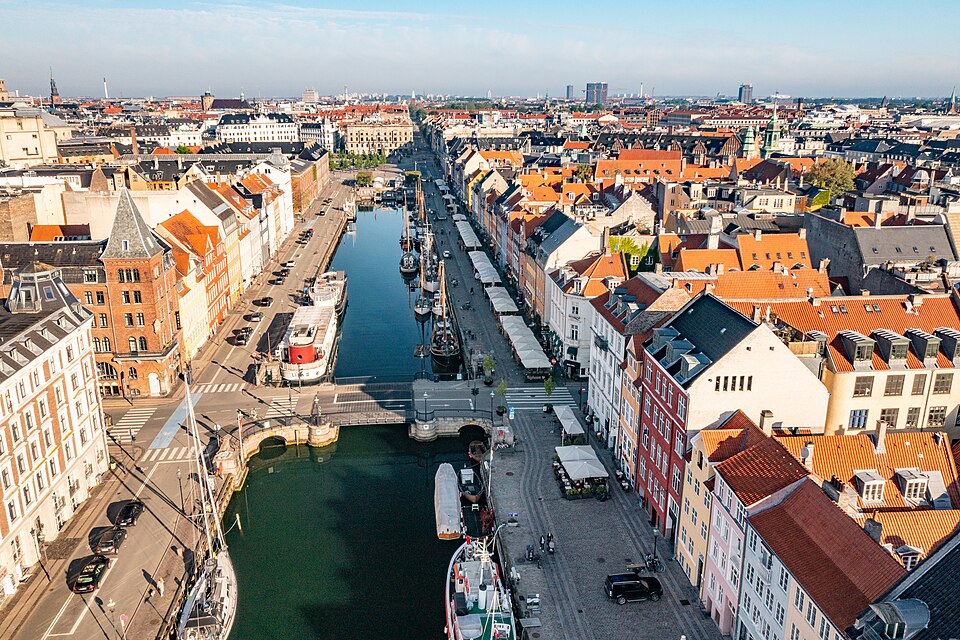
Photo: European Commission · CC BY 4.0 · Wikimedia Commons Stroll along Nyhavn, the New Harbour, a 17th-century canal lined with brightly coloured townhouses, cafés and restaurants, and full of historic wooden ships. It was dug between 1670 and 1675 on the orders of King Christian the Fifth, by Danish soldiers and Swedish prisoners of war. Ships once unloaded cargo and fishermen's catch here, and the harbour was notorious for beer, sailors and prostitution. The fairy-tale writer Hans Christian Andersen lived at Nyhavn for 18 years.
The Little Mermaid
Out on the Langelinie promenade, perched on a rock by the water, sits the Little Mermaid. This bronze statue by Edvard Eriksen shows a mermaid becoming human, inspired by Hans Christian Andersen's fairy tale of 1837. Many visitors are surprised by how small she is: just 1.25 metres tall and weighing 175 kilograms. Yet since her unveiling in 1913, she has been one of the great icons of Copenhagen, among the statues that symbolise their cities, alongside Manneken Pis in Brussels and the Statue of Liberty in New York.
Rosenborg Castle

Photo: Falk2 · CC BY-SA 4.0 · Wikimedia Commons Here is Rosenborg Castle, built in 1606 as a country summer house and one of King Christian the Fourth's many building projects. It is in the Dutch Renaissance style typical of Danish buildings of the time, and it was expanded several times until it reached its present form by 1624. Danish kings lived here until around 1710. After that it served as a royal residence only twice, both in emergencies: once after Christiansborg Palace burned down in 1794, and again during the British attack on Copenhagen in 1801. Upstairs, the Long Hall was originally intended as a ballroom.
Amalienborg
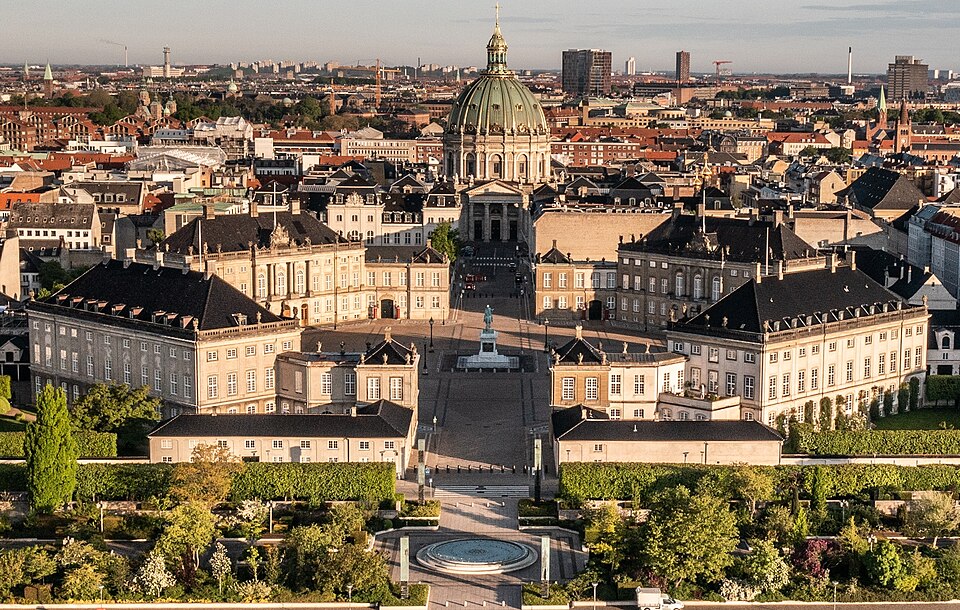
Photo: European Commission / Joshua Andrew Gross · CC BY 4.0 · Wikimedia Commons Step into the octagonal courtyard of Amalienborg, the official residence of the Danish royal family. Around you stand four identical Classical palaces with Rococo interiors, and in the centre rises a large equestrian statue of King Frederick the Fifth. Surprisingly, the palaces were not built for royalty at all, but for four noble families. Only after Christiansborg Palace burned in 1794 did the royal family buy them and move in.
Christiansborg Palace

Photo: Julian Herzog ( Website ) · CC BY 4.0 · Wikimedia Commons On the islet of Slotsholmen stands Christiansborg Palace, home to the Danish Parliament, the Prime Minister's Office and the Supreme Court. It is the only building in the world that houses all three branches of a country's government, and Danes often simply call it Borgen, the castle. Castles and palaces have stood on this site since the first castle was built in 1167. The present palace is the third to bear the name, and after two great fires, in 1794 and 1884, it reflects three eras of architecture, from baroque riding grounds to a neo-baroque main building finished in 1928.
Rundetaarn

Photo: Avda · CC BY-SA 3.0 · Wikimedia Commons Now climb the Round Tower, built by Christian the Fourth as an astronomical observatory in the 17th century. Instead of stairs, it has an equestrian staircase: a spiral ramp winding 7.5 turns up to a platform 34.8 metres above the ground, with wide views over Copenhagen. The tower is part of the Trinitatis complex, which also includes the Trinitatis Church and a library hall that housed the first University Library. It followed the first national observatory in Leiden by only five years, at a time when accurate navigation across the oceans depended on astronomy.
Freetown Christiania
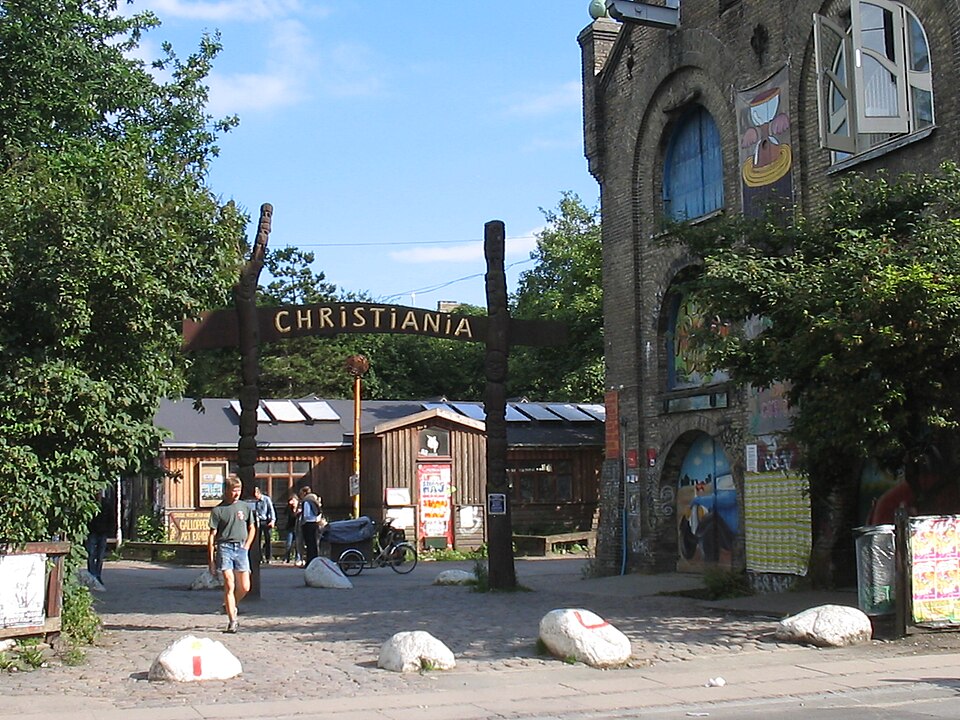
Photo: Franklin Heijnen · CC BY-SA 2.0 · Wikimedia Commons Finish your tour in Freetown Christiania, in the Christianshavn neighbourhood. It began in 1971 when squatters moved into a former military base, and it grew into an intentional community, anarchist commune and micronation of about 850 to 1,000 residents, covering 7.7 hectares. Christiania is considered the fourth largest tourist attraction in Copenhagen, with half a million visitors a year. Its unofficial anthem is a protest song from 1976 whose title means You cannot kill us.