 Sofa VoyageSuomeksi
Dhaka
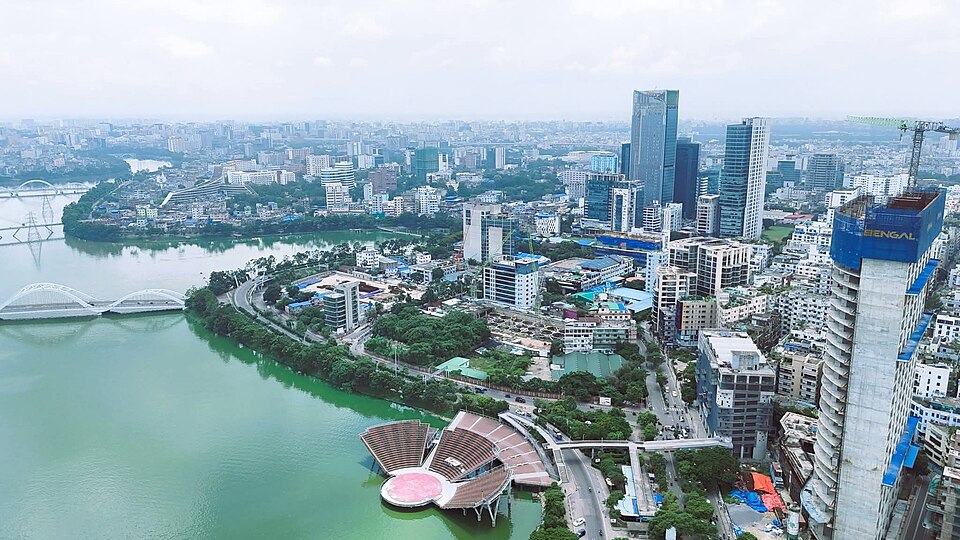
Welcome to Dhaka, the capital and largest city of Bangladesh, and the largest Bengali-speaking city in the world. It lies on the Ganges Delta, bounded by four rivers, and is widely considered the most densely populated built-up urban area on Earth. In the 17th century, Dhaka grew into a provincial capital of the Mughal Empire, named Jahangirnagar after the emperor Jahangir. As the hub of Bengal's muslin trade, it became one of the most prosperous cities in the world, and it was once called the Venice of the East. In 1971 it became the capital of independent Bangladesh. Let us begin in the old city, with the Mughals.
Sights
Lalbagh Fort
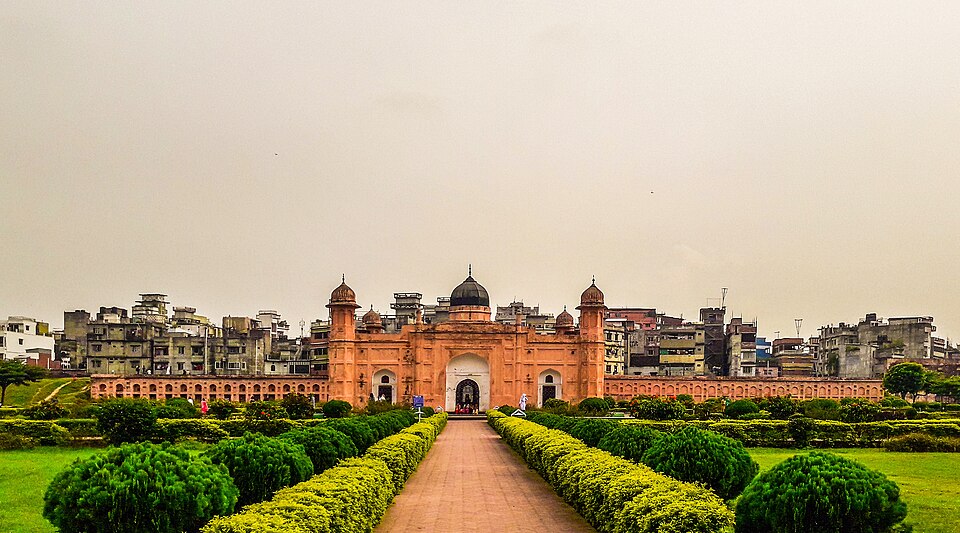
Photo: Farha Fawzia Atashi · CC BY-SA 4.0 · Wikimedia Commons In the old city stands Lalbagh Fort, whose name means Red Garden, after the reddish and pinkish hues of its Mughal architecture. Its construction was begun by Prince Muhammad Azam Shah, a son of Emperor Aurangzeb, and continued by Shaista Khan, the governor of Bengal. Then tragedy struck: Shaista Khan's daughter, Pari Bibi, the Fairy Lady, died, and he halted the work, apparently believing the fort brought bad luck. She was buried inside, and her tomb still stands among the lawns, fountains and water channels. The fort once stood beside the Buriganga River, but the river has since retreated.
Ahsan Manzil
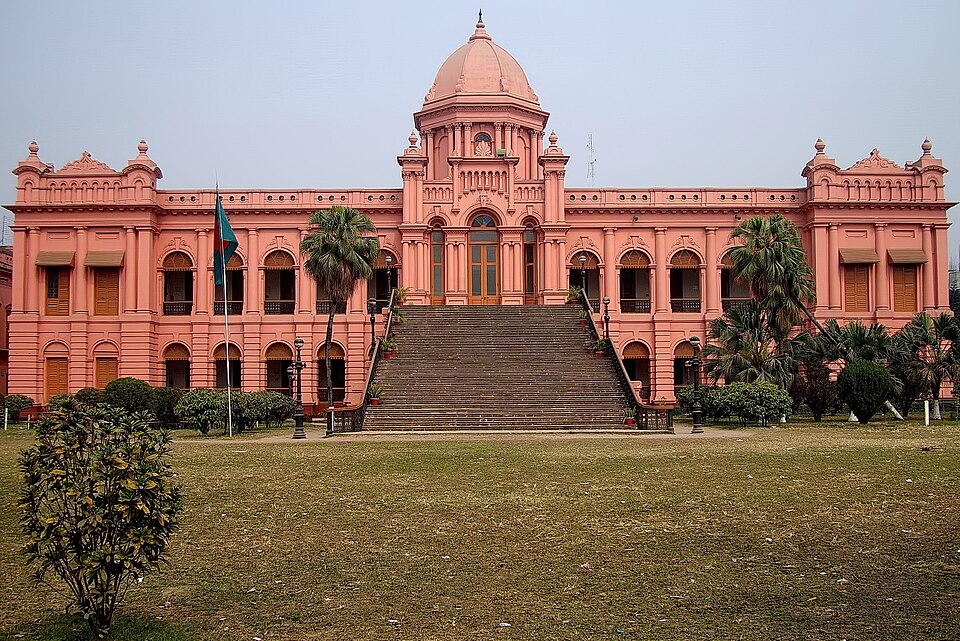
Photo: Mahbub Hossain Shaheed (mahosha) · CC BY-SA 4.0 · Wikimedia Commons On the banks of the Buriganga River rises Ahsan Manzil, a grand palace in the Indo-Saracenic style. In the late 19th and early 20th centuries, it was the official residence and seat of the Nawab of Dhaka. The site has a long and surprising history: in Mughal times a local landowner had a garden house and a palace here, and around 1740 his son sold the property to French traders, who built a trading house beside it. Today the palace is a museum, telling the story of the Nawab family and of Dhaka itself.
Jatiya Sangsad Bhaban

Photo: Saiful Aopu & Nahid Sultan · CC BY-SA 3.0 · Wikimedia Commons Before you stands the Jatiya Sangsad Bhaban, the Parliament House of Bangladesh, one of the largest legislative complexes in the world, covering 840,000 square metres. Its story began when Dhaka was the capital of East Pakistan, and the building was first designed for the Parliament of Pakistan. The architect Muzharul Islam recommended bringing in the world's top architects. He first tried to recruit Alvar Aalto and Le Corbusier, but both were unavailable. So he turned to his former teacher at Yale, Louis Kahn, who created the monumental design you see today.
Star Mosque
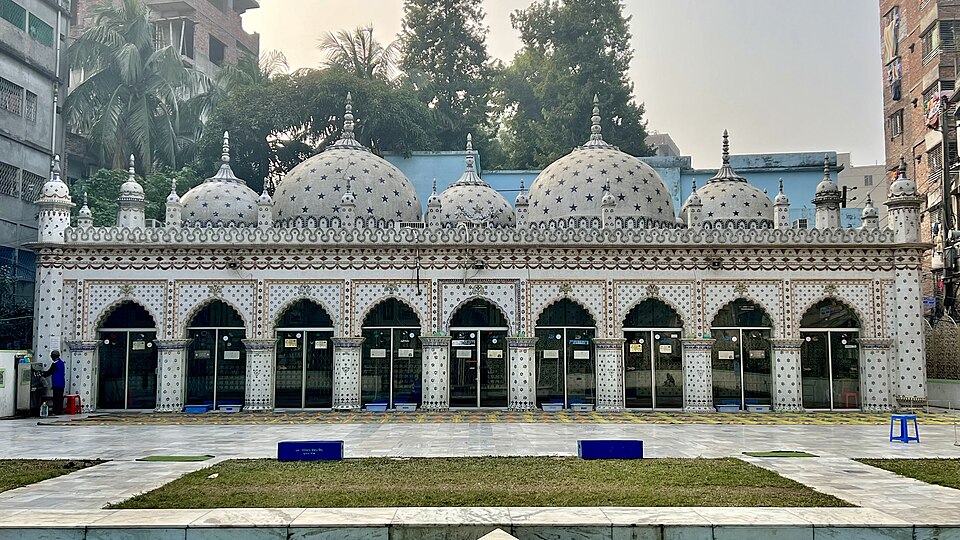
Photo: Dead.rabbit · CC BY-SA 4.0 · Wikimedia Commons In the Armanitola area, look for the Star Mosque, or Tara Masjid, covered in motifs of blue stars. It was originally a simple rectangular mosque in the Mughal style, built by a local nobleman, Mirza Ghulam Pir, and crowned with three domes. Its famous stars came much later, in 1926, when a businessman named Ali Jan Bepari renovated the mosque and added the decoration that gave it its present name. You may already have seen it without visiting: the Star Mosque appears on the Bangladeshi 100 taka note.
Dhakeshwari Temple
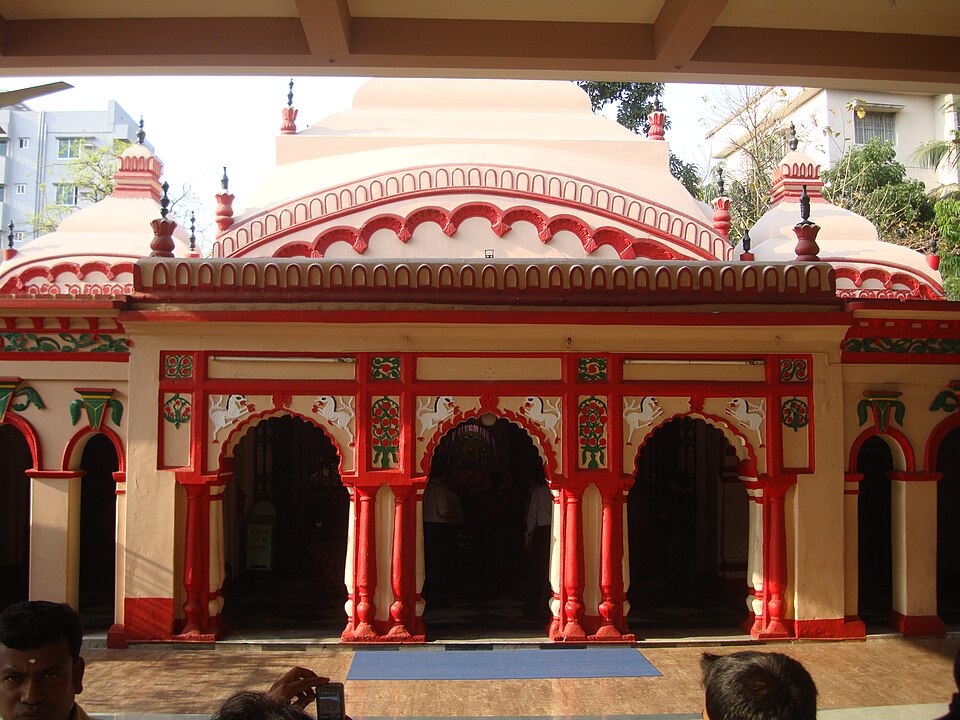
Photo: Ishrat jahan · CC BY-SA 3.0 · Wikimedia Commons This is the Dhakeshwari National Temple, a Hindu temple in Old Dhaka. Its name means Goddess of Dhaka, and the city itself is named after the goddess. The temple is state-owned, which makes it Bangladesh's National Temple, and Bangladesh is the only Muslim-majority country in the world with a national Hindu temple. Here is a surprising detail: the ancient metal image of the goddess was taken to Kolkata during partition, where it is still worshipped, while a replica is worshipped here. It is the largest Hindu temple in Bangladesh.
Curzon Hall
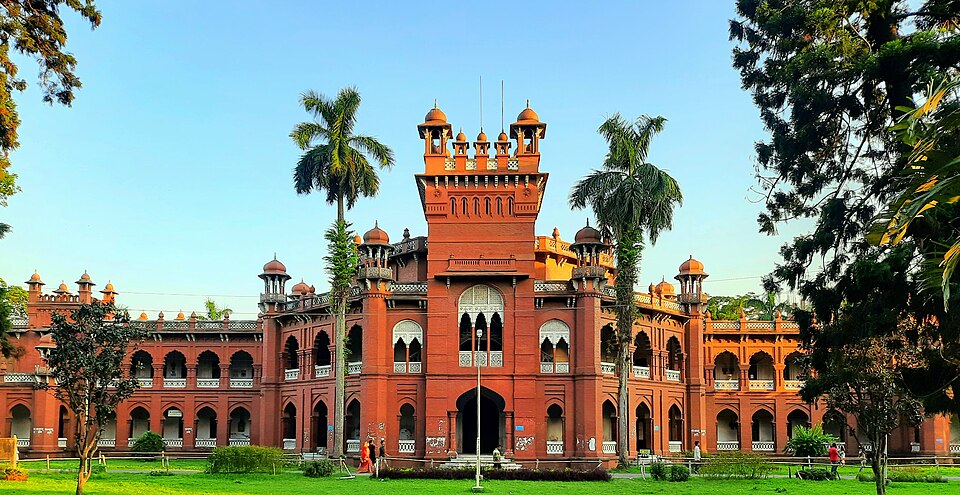
Photo: S.M.M.Musabbir Uddin · CC BY-SA 4.0 · Wikimedia Commons In front of you is Curzon Hall, a building from the British Raj era and home of the Faculty of Sciences at the University of Dhaka. It is named after Lord Curzon, the Viceroy of India, who came to Dhaka and laid its foundation stone in 1904. It was first planned as a town hall, or as a college library, and was completed in 1908. When Dacca University was established in 1921, the hall became the base of its science faculty. Its importance grew in 1905, when Dhaka became the capital of the new province of Eastern Bengal and Assam.