 Sofa VoyageSuomeksi
Hanoi
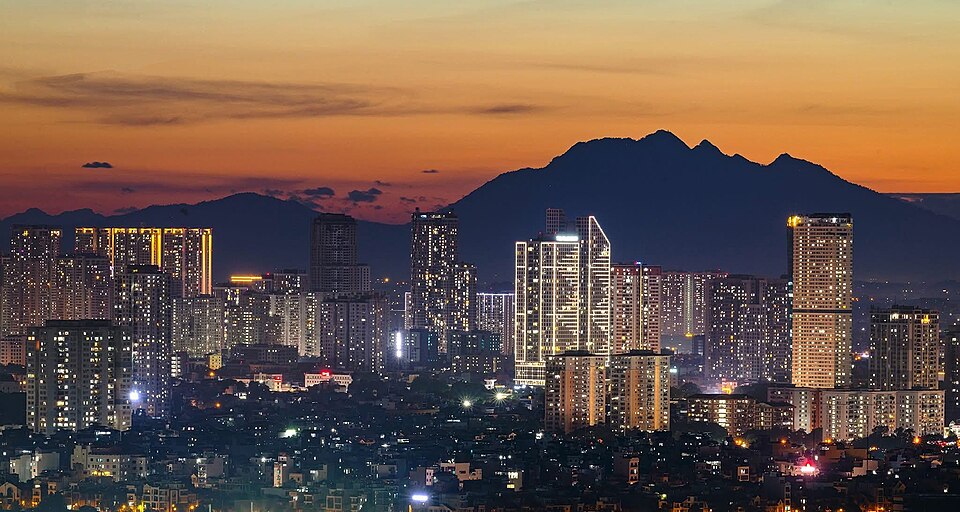
Welcome to Hanoi, the capital of Vietnam. In 1010 the emperor Lý Thái Tổ founded the capital of Đại Việt here and named it Thăng Long, the ascending dragon. Over the centuries the city has carried other names too, and it received the name Hanoi in 1831. It served as the capital of French Indochina, and in 1976 it became the capital of the unified Socialist Republic of Vietnam. Today you will see a striking mix of architecture, from pre-colonial Vietnamese buildings and French colonial facades to narrow tube houses along winding alleys. Let us begin by the water.
Sights
Hoàn Kiếm Lake
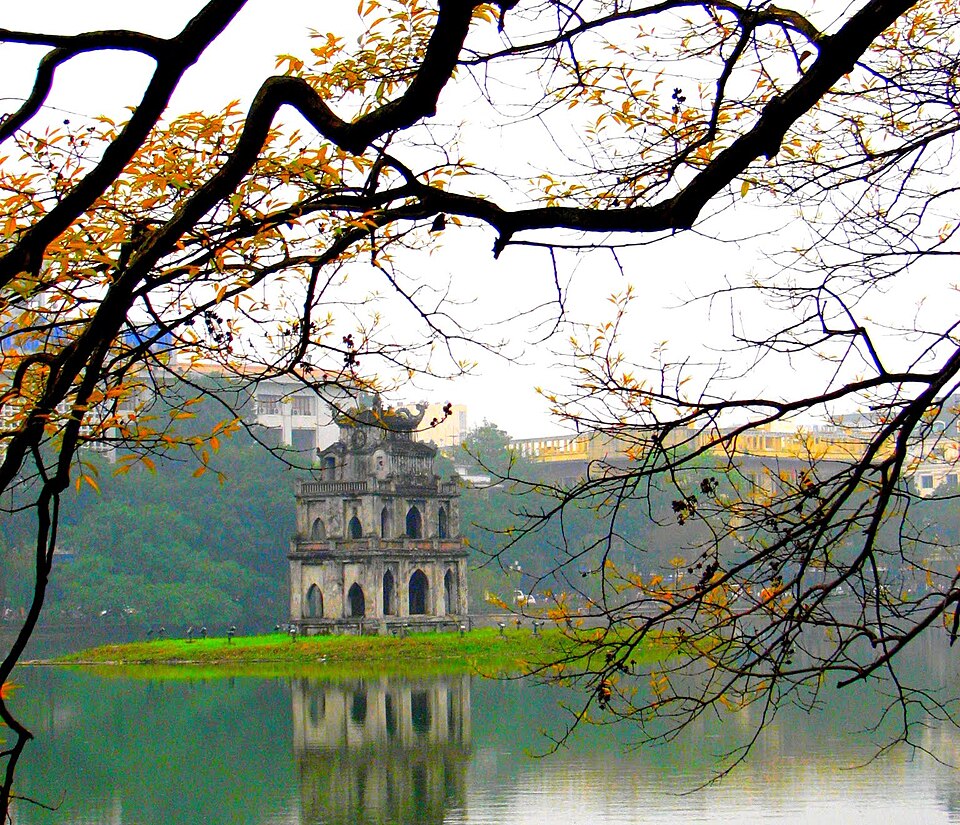
Photo: Cyril Doussin from London, United Kingdom · CC BY-SA 2.0 · Wikimedia Commons In the historical centre of Hanoi lies Hoàn Kiếm Lake, the Lake of the Returned Sword. It is one of the city's major scenic spots and the focal point of its public life. Legend tells that after defeating Ming China, Emperor Lê Lợi was boating here when a Golden Turtle God rose from the water and asked for his magic sword, Heaven's Will. The sword had been given to him by the Dragon King to win the war, and the emperor gave it back to the turtle. He then renamed the lake, once called Green Water Lake, to remember the moment.
Temple of Literature
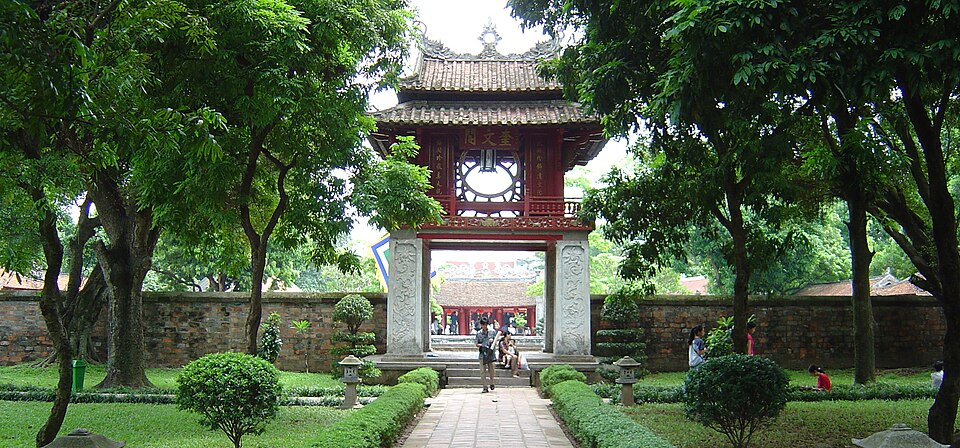
Photo: The original uploader was Chuoibk at English Wikipedia . · CC BY-SA 3.0 · Wikimedia Commons Step through the gates of the Temple of Literature, a temple dedicated to Confucius, founded in 1070 under Emperor Lý Thánh Tông. From 1076 to 1779 it housed the Imperial Academy, Vietnam's first national university. Among its pavilions, halls and stelae of doctors, offering ceremonies, study sessions and the strict exams of the Đại Việt took place. The temple even appears on the back of the 100,000 đồng banknote. Just before the Tết New Year celebration, calligraphers gather outside to write wishes in classical characters, which people give as gifts or hang at home.
Ho Chi Minh Mausoleum
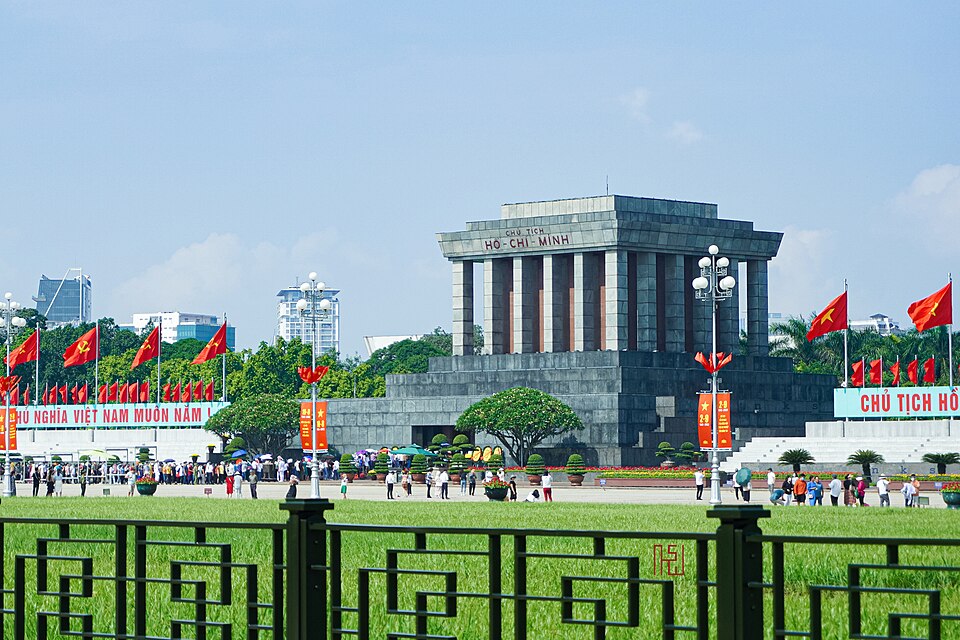
Photo: NKSTTSSHNVN · CC BY-SA 4.0 · Wikimedia Commons At the centre of Ba Đình Square stands the Ho Chi Minh Mausoleum, the resting place of the revolutionary leader and president Ho Chi Minh. It was on this square, on 2 September 1945, that he read the Declaration of Independence that established the Democratic Republic of Vietnam. Construction of the mausoleum began on 2 September 1973, and it was inaugurated in 1975. It was inspired by Lenin's Mausoleum in Moscow, but notice the distinctly Vietnamese touches, such as the sloping roof. The outside is grey granite, while the interior is of polished grey, black and red stone.
One Pillar Pagoda
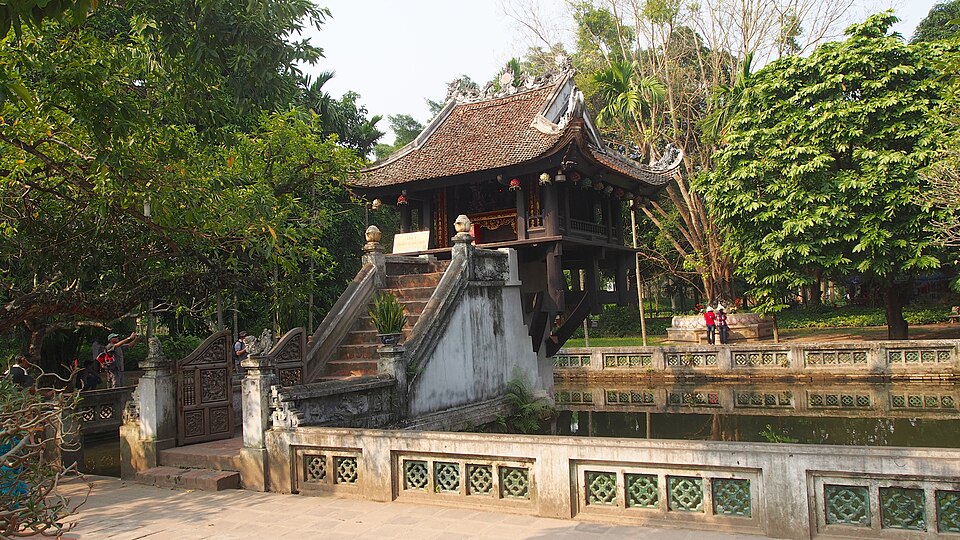
Photo: Clay Gilliland · CC BY-SA 2.0 · Wikimedia Commons Here is one of Vietnam's two most iconic temples, the One Pillar Pagoda, a Buddhist shrine built on a single pillar rising from a lotus pond. The original was built in 1049 by Emperor Lý Thái Tông. According to the court records, the childless emperor dreamt that the Bodhisattva Avalokiteśvara, seated on a lotus flower, handed him a baby son. Soon afterwards he married a peasant girl, and the couple had a son. In gratitude, and on the advice of a monk, he built this temple by raising a pillar in the middle of a lotus pond. Its shrine is called the lotus pedestal.
Old Quarter
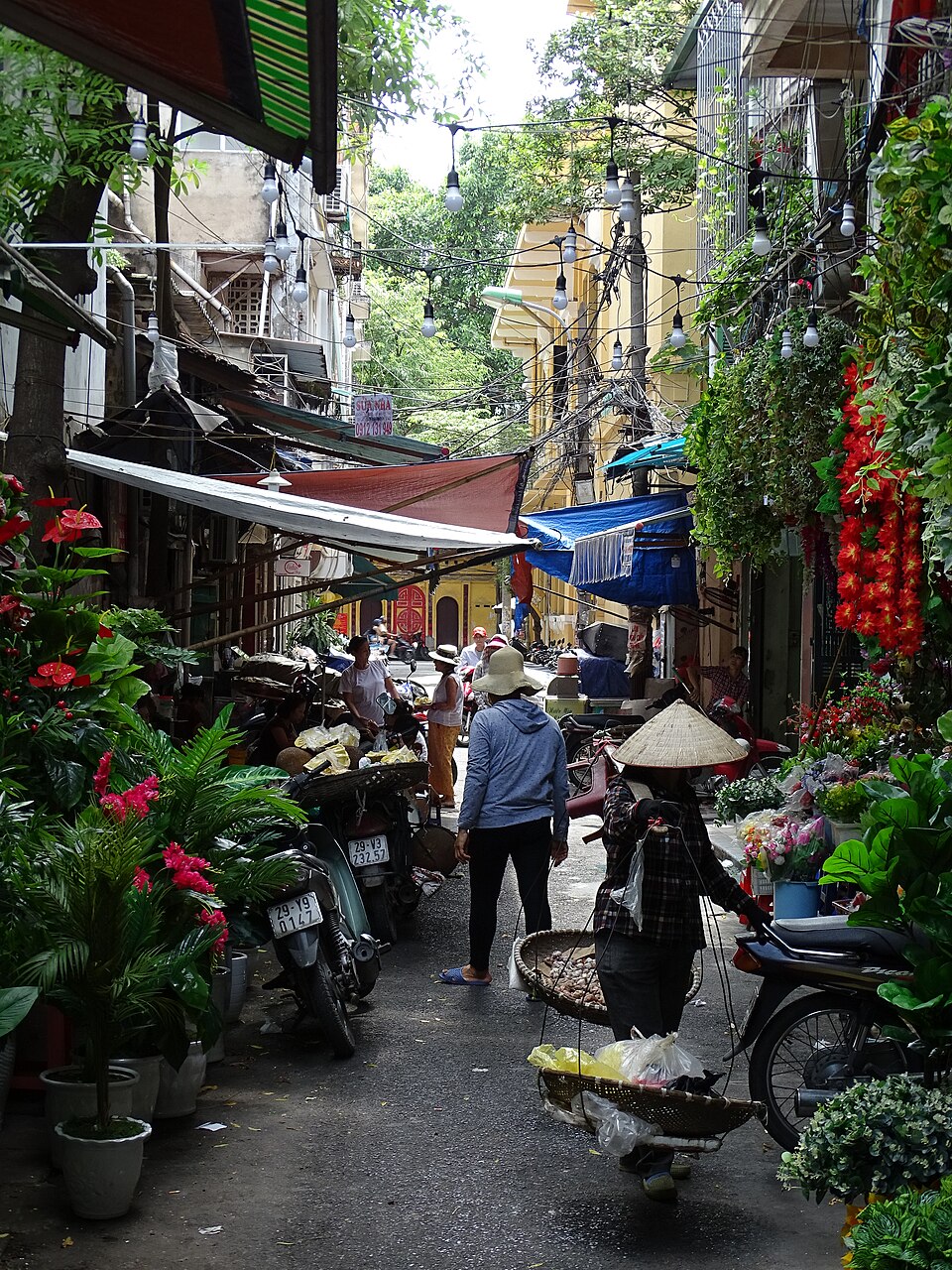
Photo: Adam Jones from Kelowna, BC, Canada · CC BY-SA 2.0 · Wikimedia Commons Wander into the Old Quarter, the historic urban core of Hanoi just outside the Imperial Citadel. This was once the city's residential, manufacturing and commercial centre, and each street specialised in one particular trade or craft. That is why the area is also known as the 36 streets, after the streets or guilds that used to make up the old town. Its official boundaries were fixed in 1995, drawn around the part of the city that is densest in historic streets and has best preserved its old character.
Hạ Long Bay
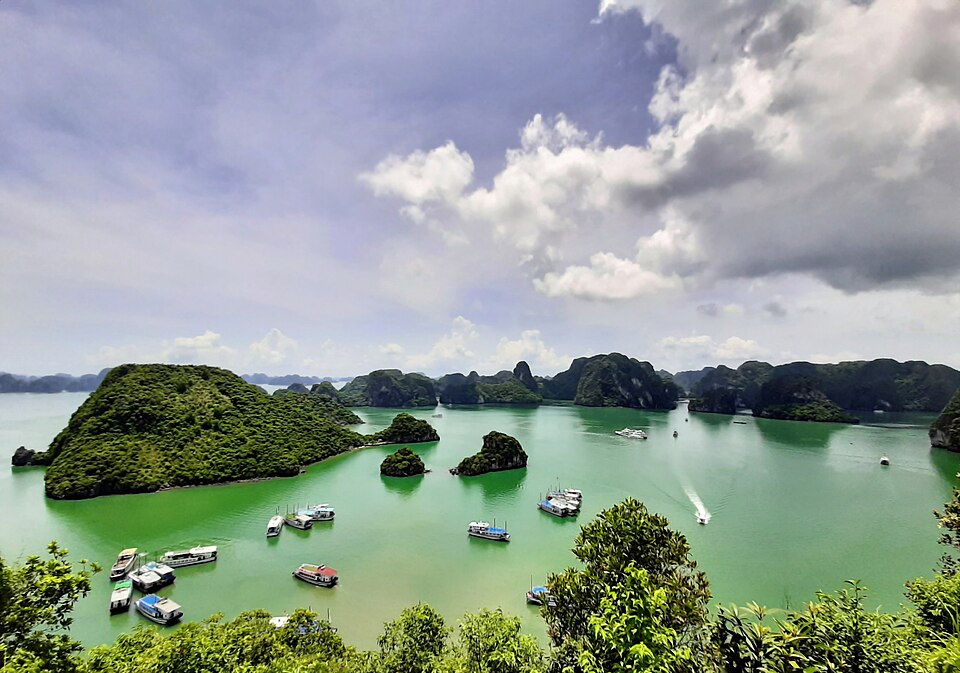
Photo: Taewangkorea · CC BY-SA 4.0 · Wikimedia Commons A journey to the north-east brings us to Hạ Long Bay, whose name means descending dragon. Thousands of limestone karsts and islets rise from its waters, which is why it is a UNESCO World Heritage Site. The bay covers around 1,553 square kilometres and holds 1,969 islets. Its limestone took 500 million years to form, and the karst landscape itself was shaped over 20 million years by the tropical wet climate. Five hundred years ago the poet Nguyễn Trãi already praised its beauty, calling it a rock wonder in the sky.
Imperial Citadel of Thăng Long
Photo: Lachy70 · Public domain · Wikimedia Commons We end at the Imperial Citadel of Thăng Long in the centre of Hanoi. Its construction began in 1010 and was completed in early 1011, under Emperor Lý Thái Tổ of the Lý dynasty, as the heart of the new capital. Much of what survived dates from a major reconstruction ordered by Gia Long in 1805. Later, the French demolished most of the citadel to make room for offices and barracks, sparing only the North Gate and the Flag Tower. Its roots go back even further, to the Đại La Citadel built under the Tang dynasty in the 9th century.