 Sofa VoyageSuomeksi
Havana
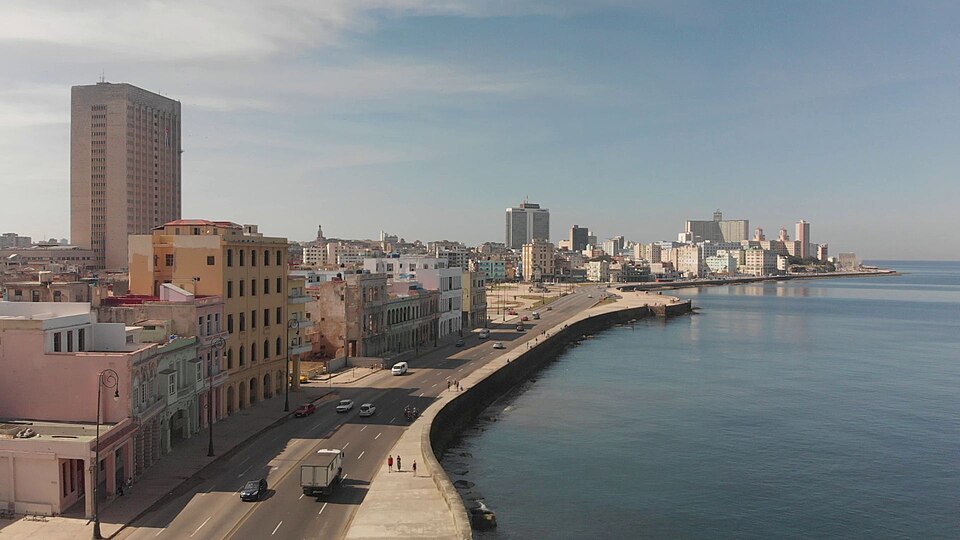
Welcome to Havana, the capital and largest city of Cuba and the country's main port. Founded by the Spanish in 1519, it soon overtook Santiago thanks to its excellent harbour and became the island's capital in 1552. Spanish galleons returning to Europe stopped here, so walls and forts were built to protect the city from naval attacks. Today Havana can be described as three cities in one: Old Havana, Vedado and the newer suburbs. Old Havana was declared a UNESCO World Heritage Site in 1982. Let us set off through its streets.
Sights
Old Havana

Photo: Dэя-Бøяg · CC BY-SA 3.0 · Wikimedia Commons Welcome to Old Havana, the downtown heart of the city and the core of the original settlement. Its modern boundaries follow the line of the old city walls. Founded on 16 November 1519 by the natural harbour of the Bay of Havana, the city became a stopping point for treasure-laden Spanish galleons crossing between the New World and the Old, and in the 17th century it was one of the main shipbuilding centres. Its baroque and neoclassical architecture and its fortifications earned it a place on the UNESCO World Heritage List in 1982.
Malecón
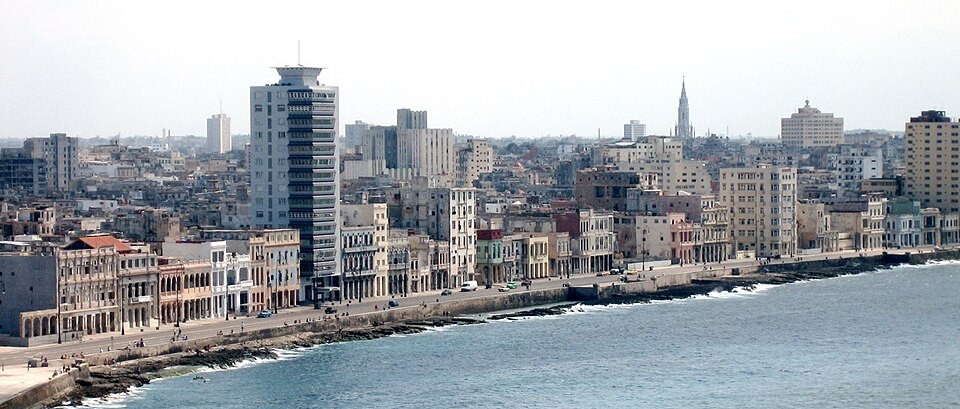
Photo: Lukas Mathis · CC BY-SA 2.0 · Wikimedia Commons Now walk out onto the Malecón, the broad esplanade, road and seawall that runs for 8 kilometres along Havana's coast, from the mouth of the harbour in Old Havana to the mouth of the Almendares River. It was built to protect the city from the sea, especially from cold fronts that drove waves against the house fronts. Construction began in 1901, during temporary US military rule. To celebrate the first 500 metres, a roundabout was built at Paseo del Prado, said to be the first in Cuba made of steel-reinforced concrete, and bands played Cuban melodies there every Sunday.
El Capitolio
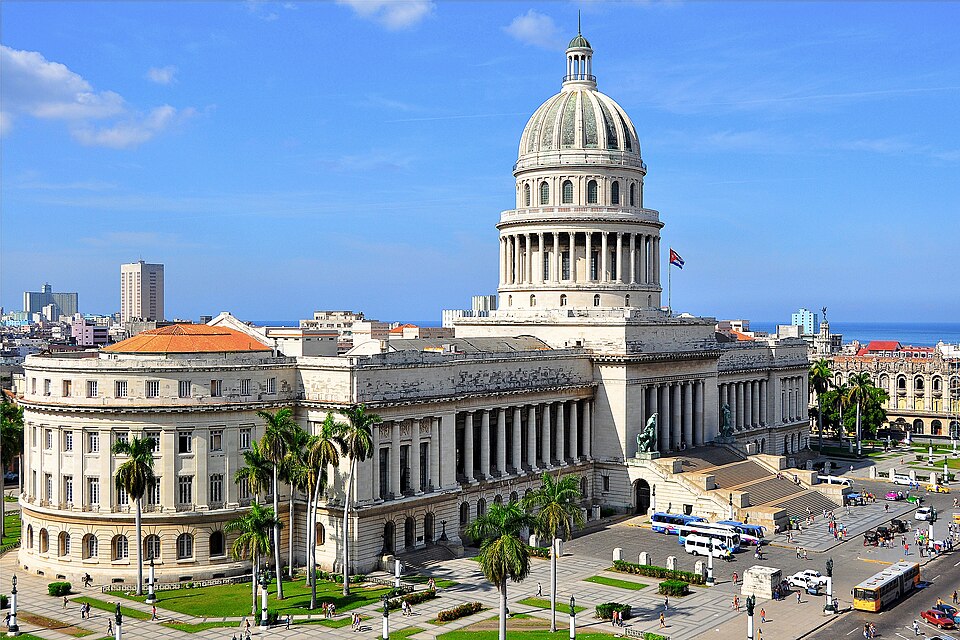
Photo: Nigel Pacquette · CC BY-SA 3.0 · Wikimedia Commons Before you stands El Capitolio, the National Capitol of Cuba, built between 1926 and 1929 on land that was once a railway terminal. It is 207 metres long and 91 metres wide. Its design is often compared to the United States Capitol, but it is not a replica. Completed in 1929, it remained the tallest building in Havana until the 1950s. Step inside and look up, because the building houses the third largest indoor statue in the world.
Morro Castle

Photo: National Photo Company Collection · Public domain · Wikimedia Commons Across the harbour from Old Havana, perched on its headland, rises the Castle of the Three Kings of Morro. Designed by the Italian engineer Battista Antonelli and built in 1589 in response to raids on the city, it guarded the harbour entrance with a chain stretched across the water to the fort at La Punta. The British captured it in 1762, but it was returned to Spain a year later under the Treaty of Paris. The word morro means a rock visible from the sea, and the fortress has long served as a landmark for sailors.
Havana Cathedral
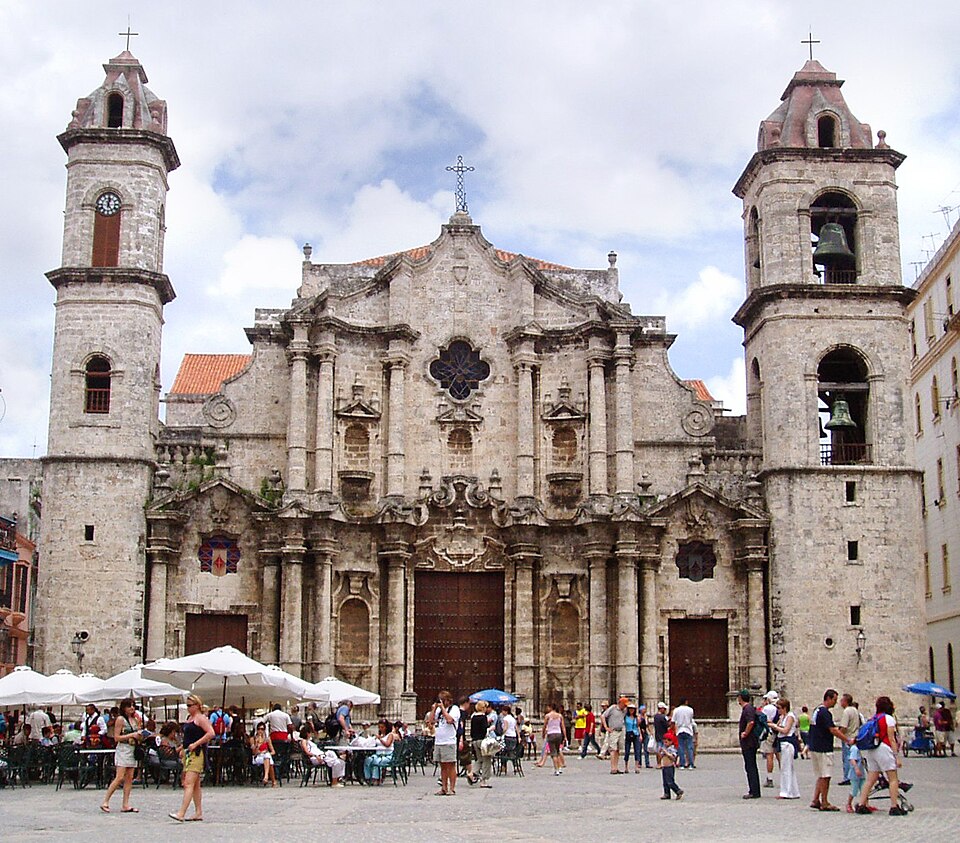
Photo: akasenn · CC BY-SA 3.0 · Wikimedia Commons On the Plaza de la Catedral in Old Havana stands Havana Cathedral, seat of the Archdiocese of San Cristóbal de la Habana. The Jesuits began building it in 1748, it was completed in 1777 and consecrated in 1782. The square in front was once a swamp, drained and used as a naval dockyard before the church was built. And here is a remarkable detail: the remains of Christopher Columbus were kept in this cathedral from 1796 to 1898, before they were taken to Seville Cathedral.
Plaza de la Revolución

Photo: Андрей Бобровский · CC BY 3.0 · Wikimedia Commons Here is Plaza de la Revolución, a vast square that also gives its name to one of the 15 boroughs of Havana, stretching down to the Malecón and including the Vedado district. The site, a hill called Loma de Los Catalanes, was chosen with the help of urban studies from 1926 that pointed to it as ideal for a larger city. It was planned as the centre of a system of avenues and squares, surrounded by great public buildings such as the National Library, ministries and a museum. Its original name was Plaza Cívica.
Gran Teatro de La Habana

Photo: Tacorontey · CC BY-SA 4.0 · Wikimedia Commons Finish your tour on the Paseo del Prado at the Gran Teatro de La Habana, home of the Cuban National Ballet. It was designed by the Belgian architect Paul Belau and built in 1914 on the site of the former Teatro Tacón, whose performance hall was incorporated into the new building. Its construction was paid for by Havana's Galician immigrants, as a social centre for their community. Beyond the theatres, it holds a concert hall, an art gallery and rehearsal halls, and since 1960 it has hosted the International Ballet Festival of Havana every two years.