 Sofa VoyageSuomeksi
Helsinki
Welcome to Helsinki, the capital of Finland, on the shore of the Gulf of Finland. Until about 1930 it was known in English by its Swedish name, Helsingfors, and the city still has two official languages, Finnish and Swedish. Helsinki lies 80 kilometres north of Tallinn, and its metropolitan area is the northernmost in the world with over a million inhabitants. It is also the northernmost capital of an EU member state. The city hosted the 1952 Summer Olympics and was the 2012 World Design Capital. Let us explore its cathedrals, sea fortress and modern design.
Sights
Helsinki Cathedral
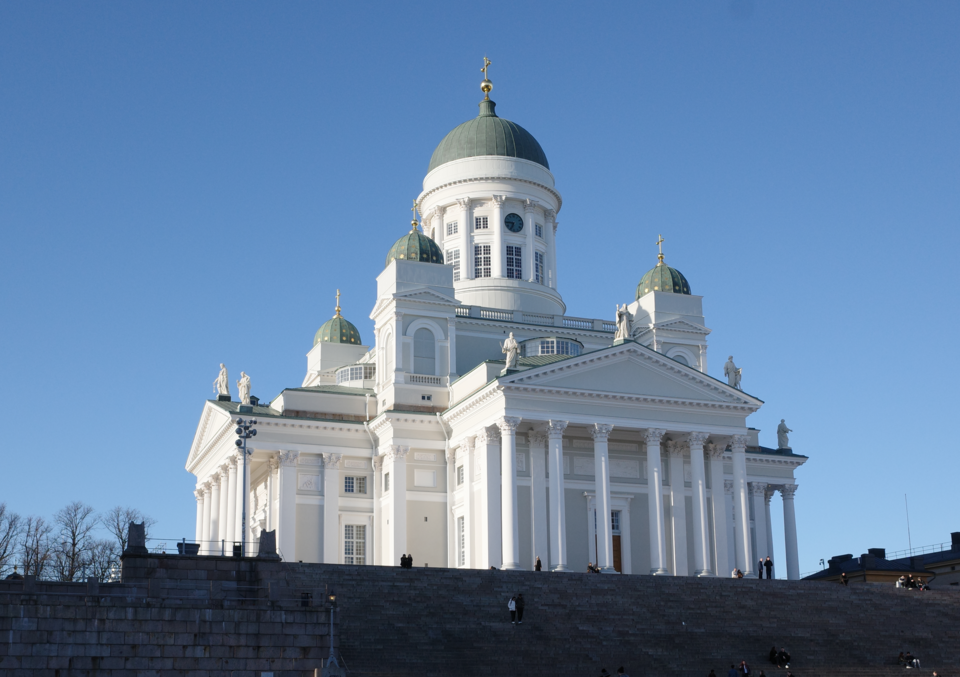
Photo: Manster323 · CC0 · Wikimedia Commons Above Senate Square rises Helsinki Cathedral, with its tall green dome surrounded by four smaller ones. This neoclassical church was designed by Carl Ludvig Engel as the climax of his Senate Square, ringed by other buildings of his design. It was built from 1830 to 1852 as a tribute to Emperor Nicholas the First of Russia, then Grand Duke of Finland, and it was known as St Nicholas's Church until Finland declared independence in 1917. Its plan is a Greek cross, perfectly symmetrical, with a colonnade and pediment on each of its four sides.
Suomenlinna
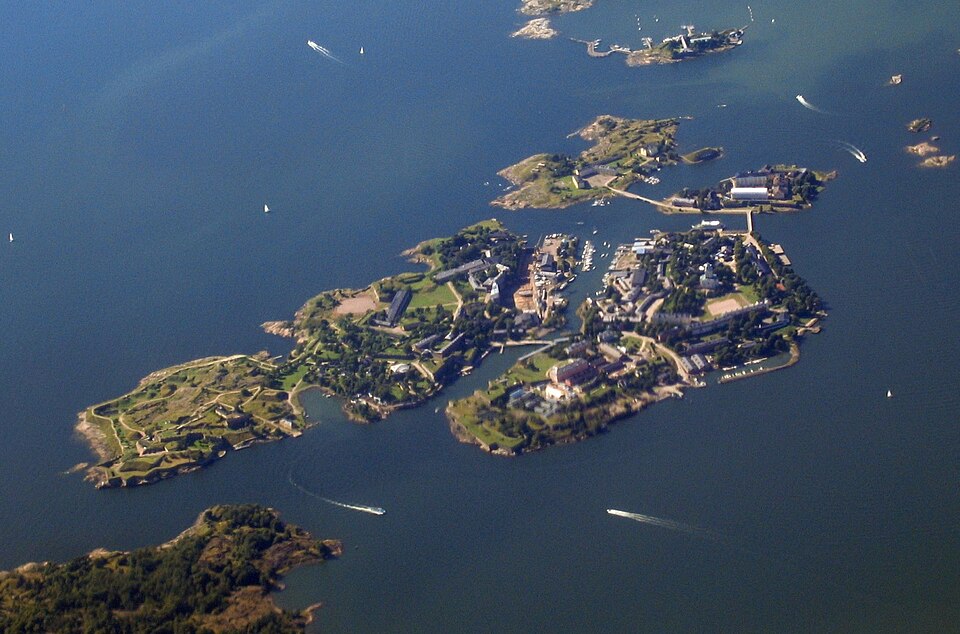
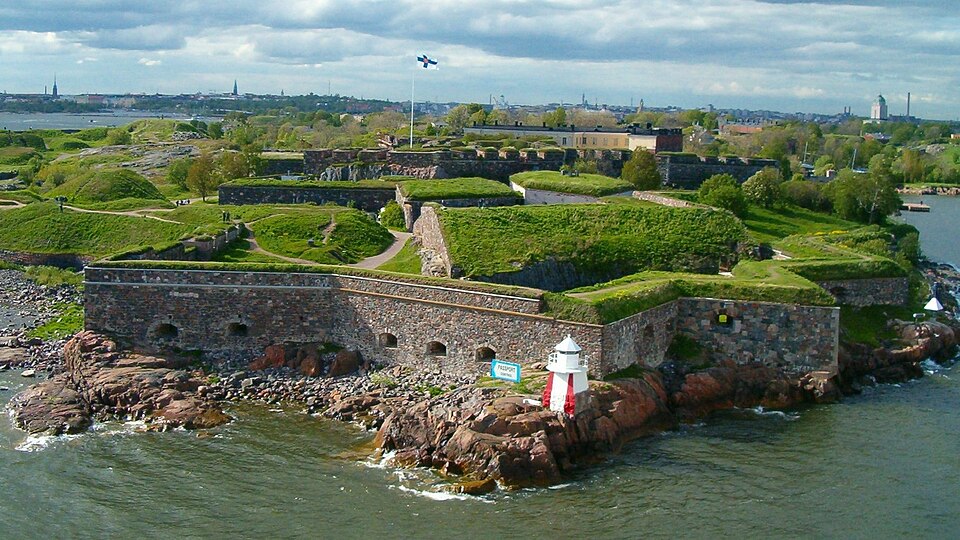
Photo: Migro · Public domain · Wikimedia Commons Take the short trip to Suomenlinna, a sea fortress spread over eight islands about four kilometres southeast of the city centre. Construction began in 1748 under the Swedish Crown as a defence against Russia, led by Admiral Augustin Ehrensvärd. It was called the Gibraltar of the North, yet when Russian forces besieged it in 1808, it surrendered after only two months, paving the way for Russia's seizure of Finland. Its original name Sveaborg means Fortress of Sweden; in 1918 it was renamed Suomenlinna, Fortress of Finland. Since 1991 it has been a UNESCO World Heritage Site, and a favourite picnic spot.
Uspenski Cathedral
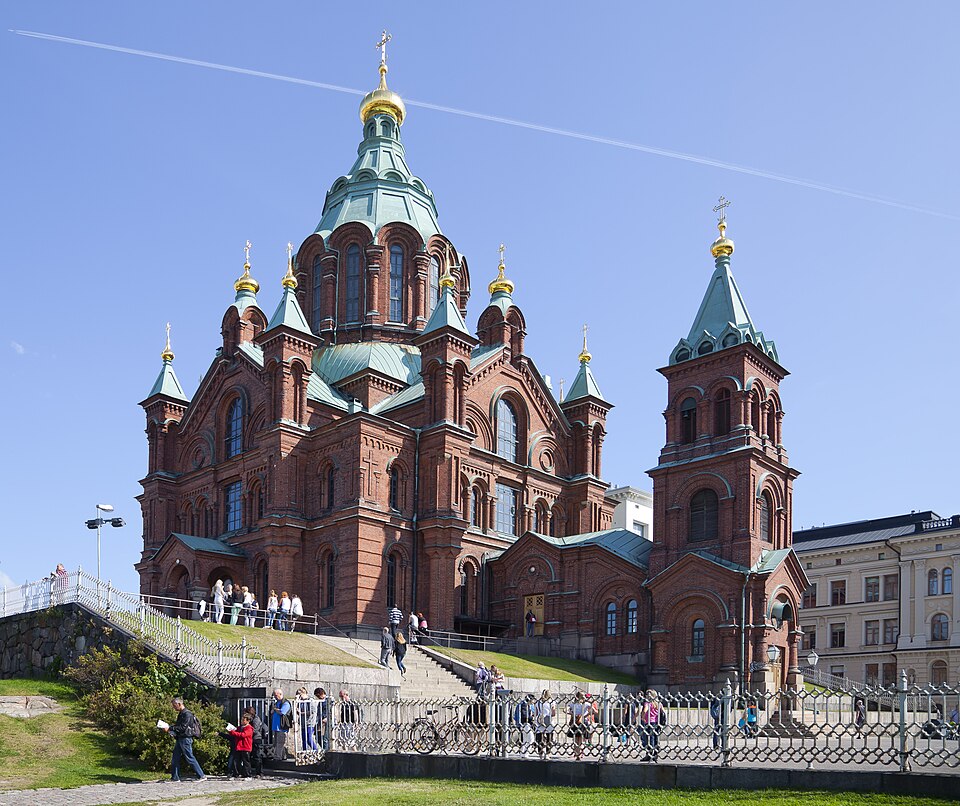
Photo: Diego Delso · CC BY-SA 3.0 · Wikimedia Commons Now admire Uspenski Cathedral, the main cathedral of the Orthodox Church of Finland and the largest Orthodox church in Northern Europe. Its name comes from an Old Church Slavonic word for the Dormition of the Virgin Mary, to whom it is dedicated. It was designed by the Russian architect Aleksey Gornostayev, but built only after his death, between 1862 and 1868, largely funded by parishioners and private donors. The cathedral was inaugurated on 25 October 1868, and around 700,000 bricks went into its construction.
Temppeliaukio Church
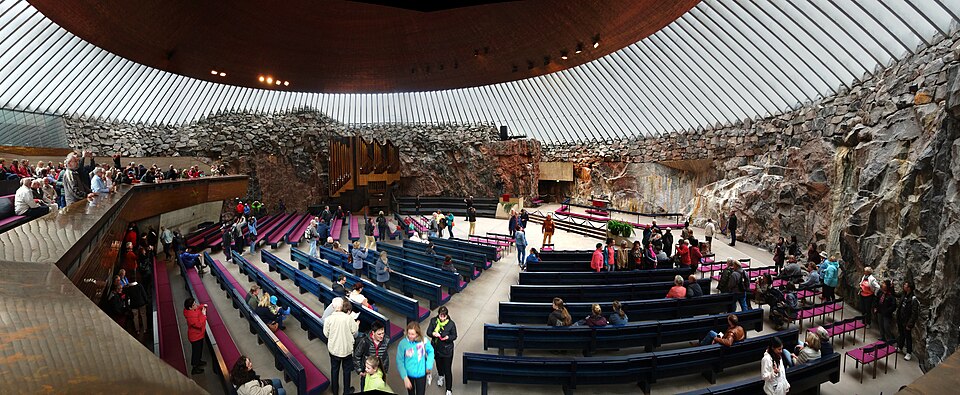
Photo: Jens Strauß · CC BY-SA 4.0 · Wikimedia Commons Step down into Temppeliaukio Church, known as the Church of the Rock, in the Töölö district. Designed by the architect brothers Timo and Tuomo Suomalainen and completed in 1969, it was not built on top of the rocky site but excavated right into the granite bedrock, with much of the natural rock left exposed. Look up at the copper-lined dome, ringed by a broad band of skylights that lets daylight pour in. It is an active Lutheran parish church, and its distinctive acoustics also make it a popular concert venue.
Ateneum
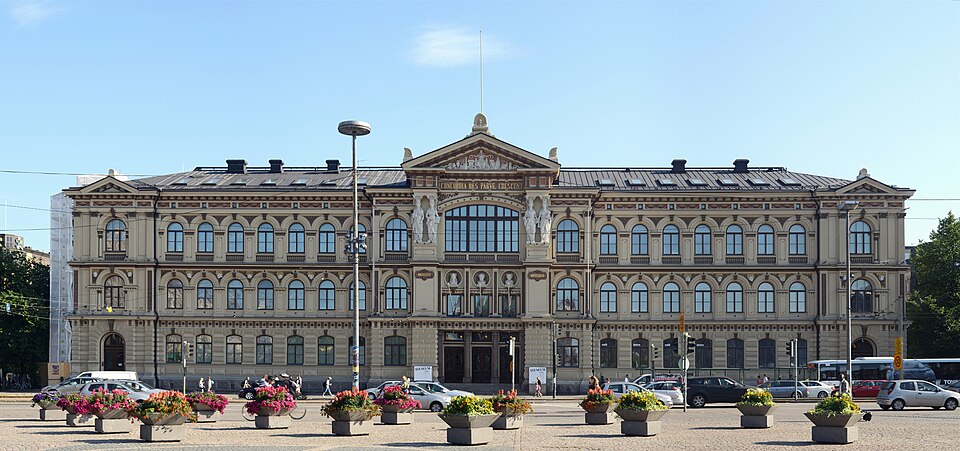
Photo: Alvesgaspar · CC BY-SA 3.0 · Wikimedia Commons On the south side of the Railway Square stands the Ateneum, part of the Finnish National Gallery and home to Finland's largest collections of classical art. The building was designed by Theodor Höijer and completed in 1887. Inside, Finnish art ranges from 18th-century rococo portraits to the experimental movements of the 20th century, including Hugo Simberg's The Wounded Angel. Here is a surprising fact: when Vincent van Gogh's Street in Auvers-sur-Oise arrived here in 1903, the Ateneum became the first museum collection in the world to include a painting by Van Gogh.
Helsinki Central Library Oodi
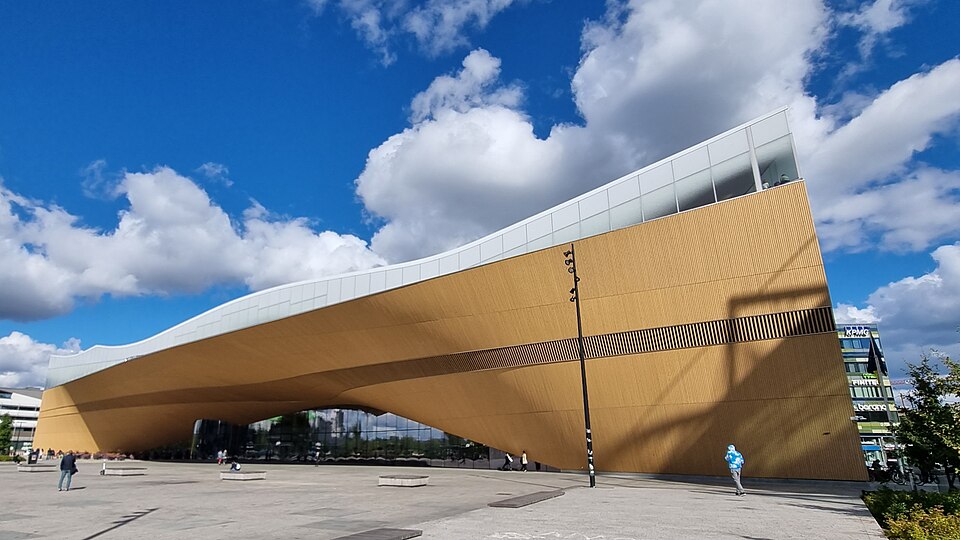
Photo: Cope Baronet · CC BY-SA 4.0 · Wikimedia Commons In the Kluuvi district, close to Central Station and next to the Music Centre and Kiasma, stands Oodi, the Helsinki Central Library, whose name means ode. Despite its name, it is not the main library of the city system; central simply refers to its location. Since opening in December 2018, it has become one of Helsinki's most visited public buildings, welcoming its ten-millionth visitor less than six years after opening. Alongside books, Oodi offers spaces for games, recording, film and concerts, which led TIME magazine to hail it as a library of the future.
Sibelius Monument
In Sibelius Park in Töölö stands the Sibelius Monument, a tribute to the composer Jean Sibelius by the sculptor Eila Hiltunen, unveiled on 7 September 1967. Its main element is an abstract cluster of 569 stainless steel pipes welded together in an undulating wave, weighing 24 tonnes. Hiltunen meant it to evoke Sibelius's music, though many see an organ, or Finnish birch woods and shore reeds. Critics of the abstract design demanded a figurative addition, so a portrait of Sibelius was added beside it. Listen closely: wind, rain and birdsong can make the pipes sound.
Seurasaari
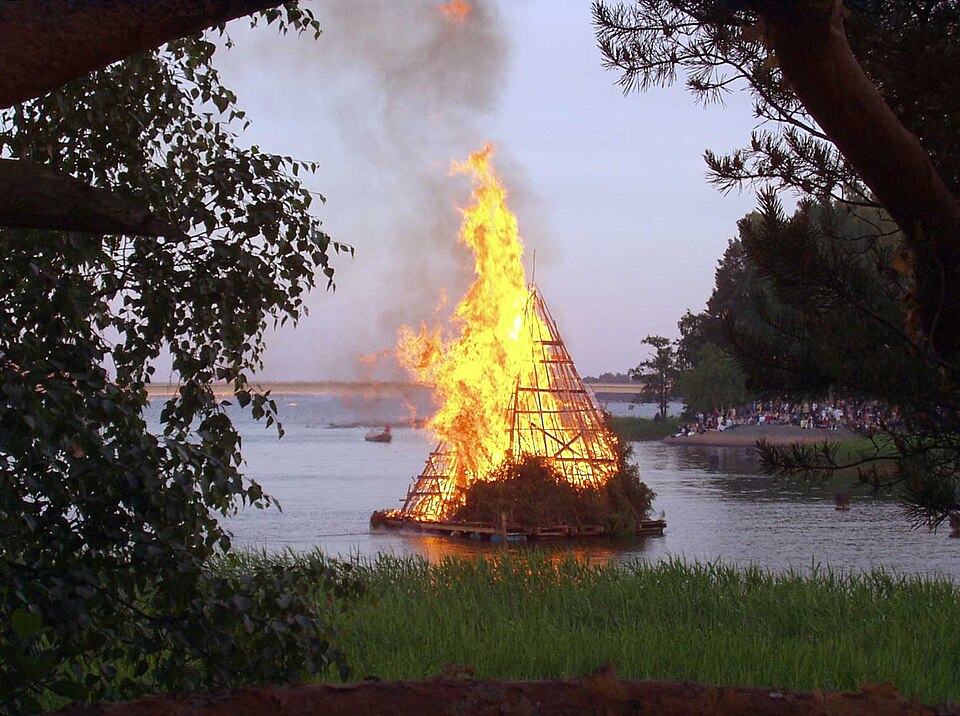
Photo: Ralf Roletschek · GFDL 1.2 · Wikimedia Commons Finish your tour on Seurasaari, an island best known for its open-air museum of old, mainly wooden buildings brought here from elsewhere in Finland and set among dense forest. In summer, many Helsinki residents come here to enjoy the peaceful rural atmosphere, and you may spot red squirrels, hares and many birds. The island is at its liveliest at Midsummer, when a huge bonfire is built on a small isle just offshore and lit by a newlywed couple, while thousands watch from the island and from boats nearby.