 Sofa VoyageSuomeksi
Islamabad
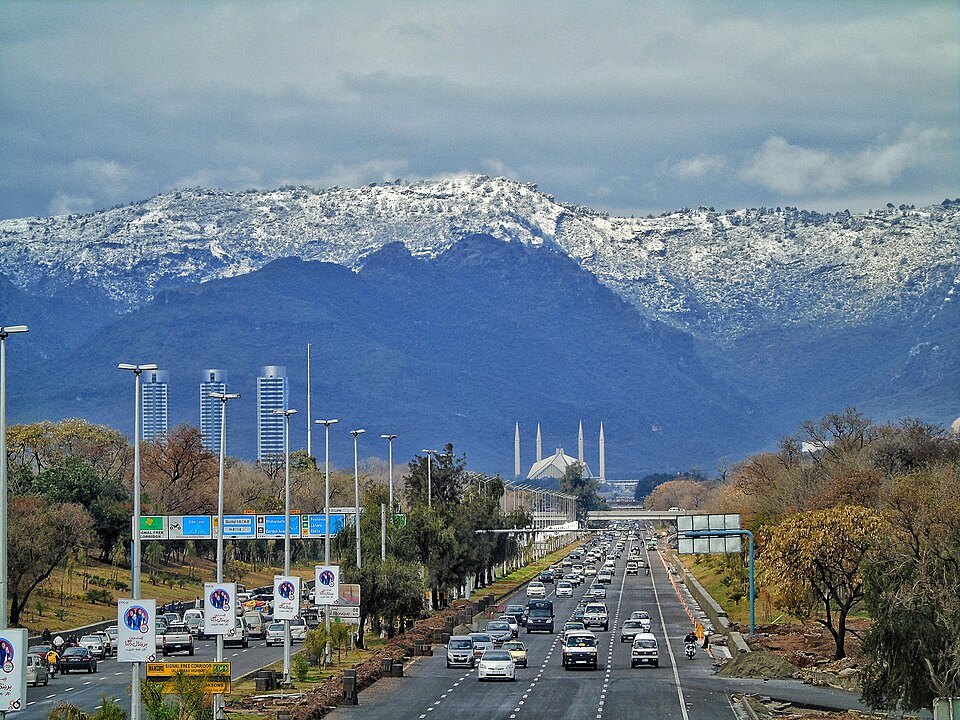
Welcome to Islamabad, the capital of Pakistan, set along the green Margalla Hills in the north of the Punjab region. Unlike most capitals, Islamabad was planned from scratch: built in the 1960s and established in 1967, it replaced Karachi as the national capital. Its master plan was drawn up by the Greek architect Constantinos Doxiadis, who divided the city into eight zones. Next door lies Rawalpindi, and together they form a metropolitan area of more than 5.7 million people. Islamabad is known for its parks and forests. Let us begin with its most famous landmark.
Sights
Faisal Mosque

Photo: Ali Mujtaba · CC BY-SA 4.0 · Wikimedia Commons At the foot of the Margalla Hills, the westernmost foothills of the Himalayas, stands the Faisal Mosque, the national mosque of Pakistan. It is named after King Faisal of Saudi Arabia, whose grant paid for its construction, which began in 1976. The Turkish architect Vedat Dalokay won an international competition with a daring idea: a mosque without a typical dome, shaped instead like a Bedouin tent, with eight-sided sloping concrete roofs. Four 90-metre minarets surround it. From 1986 until 1993, this was the largest mosque in the world.
Pakistan Monument
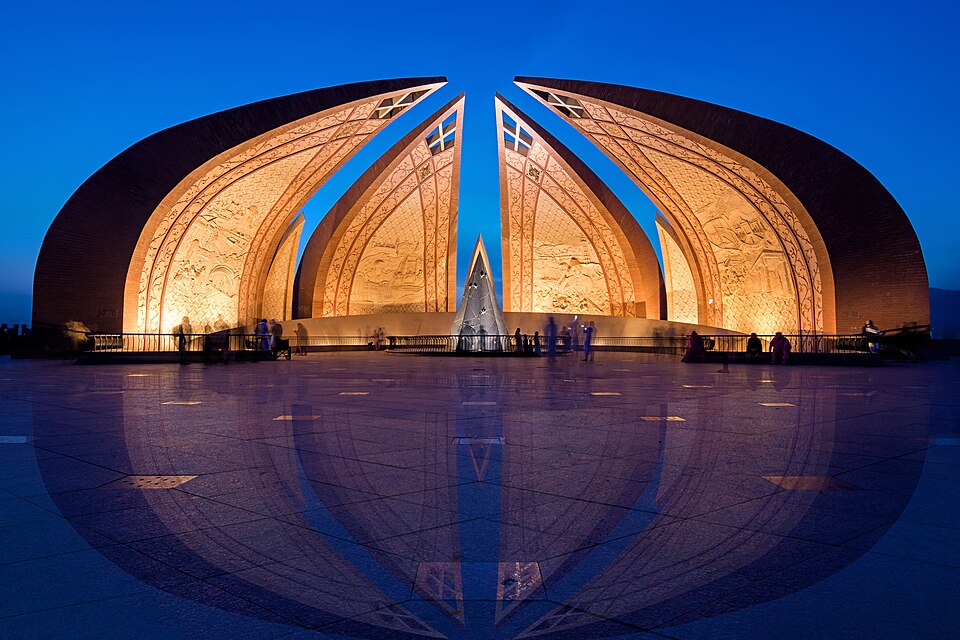
Photo: Muhammad Ashar · CC BY-SA 4.0 · Wikimedia Commons On the Shakarparian Hills rises the Pakistan Monument, built to symbolise the unity of the Pakistani people. It is shaped like a flower. The four large petals represent the four major cultures of Pakistan, Punjabi, Baloch, Sindhi and Pashtun, while the three smaller petals represent other cultures, including Azad Kashmir and Gilgit-Baltistan. All seven petals come together over the central platform. Thanks to its elevated position, the monument can be seen from across Islamabad and Rawalpindi. It is dedicated to those who sacrificed their today for a better tomorrow.
Daman-e-Koh

Photo: Fraz.khalid1 · CC0 · Wikimedia Commons Climb up to Daman-e-Koh, a hilltop garden in the middle of the Margalla Hills. Its name joins two Persian words meaning skirt and hill, together meaning foothills. It sits about 500 feet above the city. From its southern viewpoint, Islamabad spreads out below you, and you can pick out the Faisal Mosque, Seventh Avenue and Rawal Lake. Keep an eye on your snacks: the monkeys here are fond of visitors' treats. And in the winter months, leopards are reported to come down from the higher hills of Murree.
Lok Virsa Museum
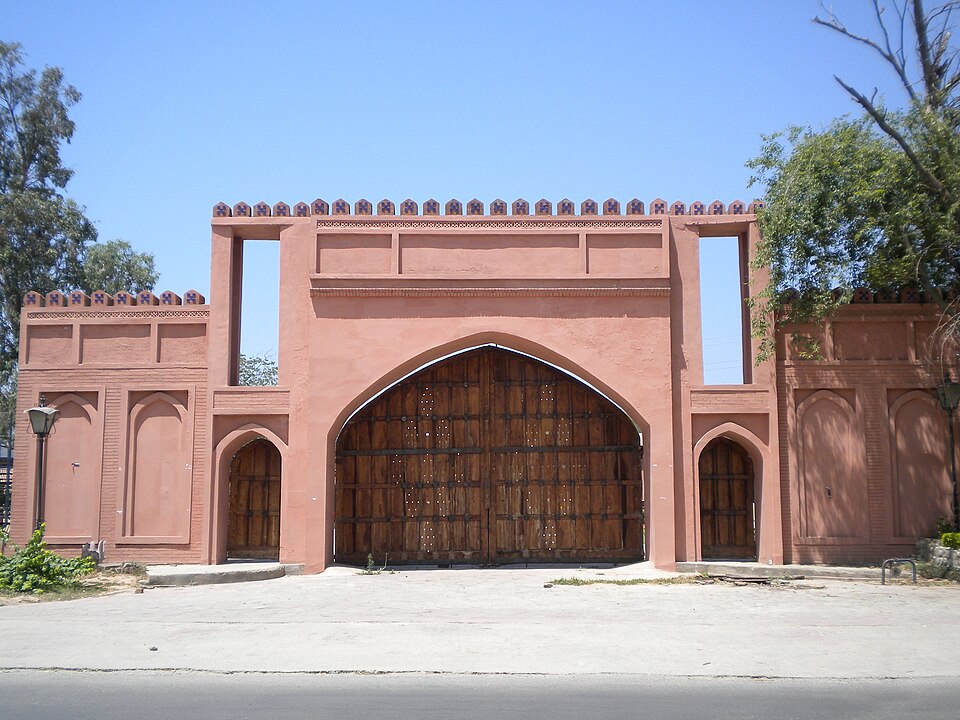
Photo: Khalid Mahmood · CC BY-SA 3.0 · Wikimedia Commons In the Shakarparian Hills lies the Lok Virsa Museum, the Heritage Museum, run by the National Institute of Folk and Traditional Heritage. It opened in 1974, and with several exhibition halls it is the largest museum in Pakistan. It is often called the Museum for the people of Pakistan, whom the museum describes as the real bearers of the country's cultural traditions. Inside, the history and living traditions of Pakistan's many ethnic groups are on display, from all corners of the country, and there is also an outdoor museum.
Margalla Hills National Park
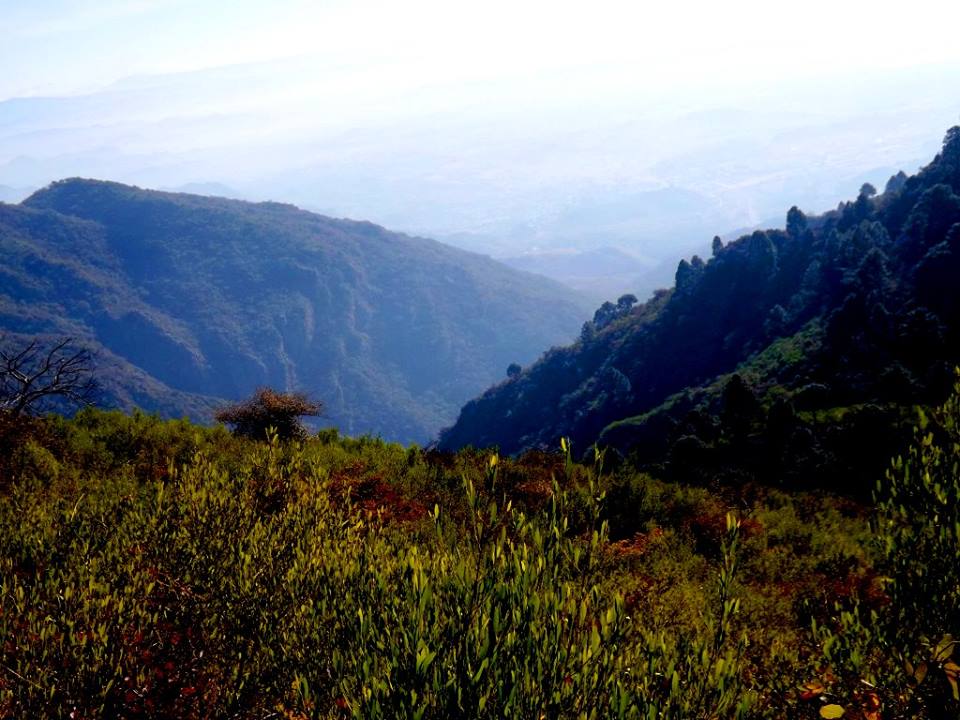
Photo: Basil777 · CC BY-SA 3.0 · Wikimedia Commons Right on the city's doorstep spreads Margalla Hills National Park, established in 1980 and one of the largest national parks in Pakistan. It takes in the Margalla Hills, the foothills of the Himalayas, along with Shakarparian Park and Rawal Lake. Its highest peak, Tilla Charouni, reaches 1,604 metres. The park is rich in wildlife: around 600 plant species, over 400 kinds of birds and 38 mammals, among them the gray goral, the barking deer and even the leopard. Imagine having all that so close to a capital city.
Taxila
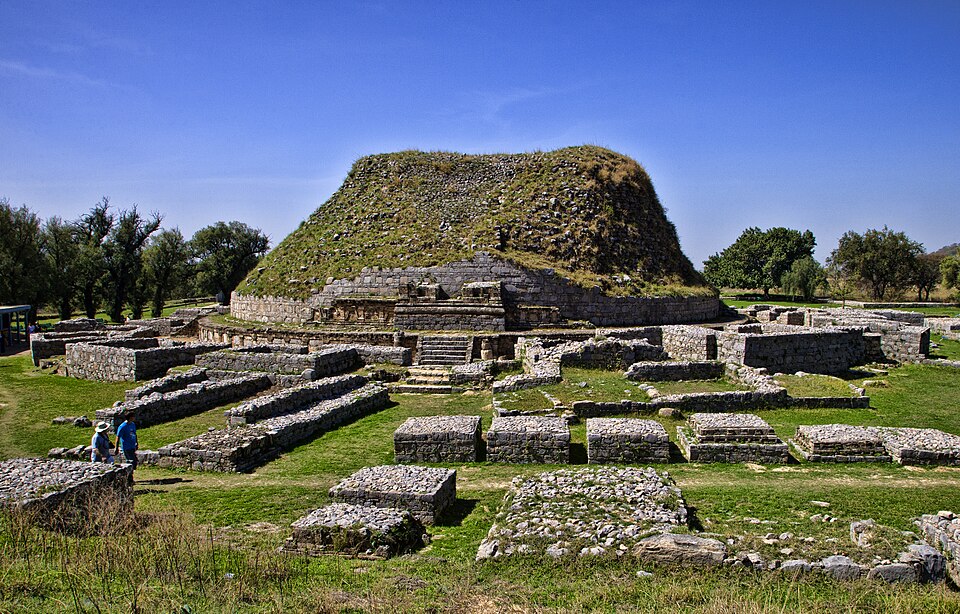
Photo: Sasha Isachenko · CC BY-SA 3.0 · Wikimedia Commons About 25 kilometres northwest of Islamabad lies Taxila, one of the oldest cities in South Asia and a UNESCO World Heritage Site since 1980. Ancient Taxila was one of the capitals of the Gandhara civilisation. Its king recognised the authority of Alexander the Great in 326 BCE, and according to Buddhist texts, Ashoka served as governor here before becoming king. Some scholars consider its ancient centre of learning one of the earliest universities in South Asia. After the Huns devastated it in the 5th century, it faded into obscurity, until British archaeologists rediscovered its ruins in the 19th century.