 Sofa VoyageSuomeksi
Kathmandu
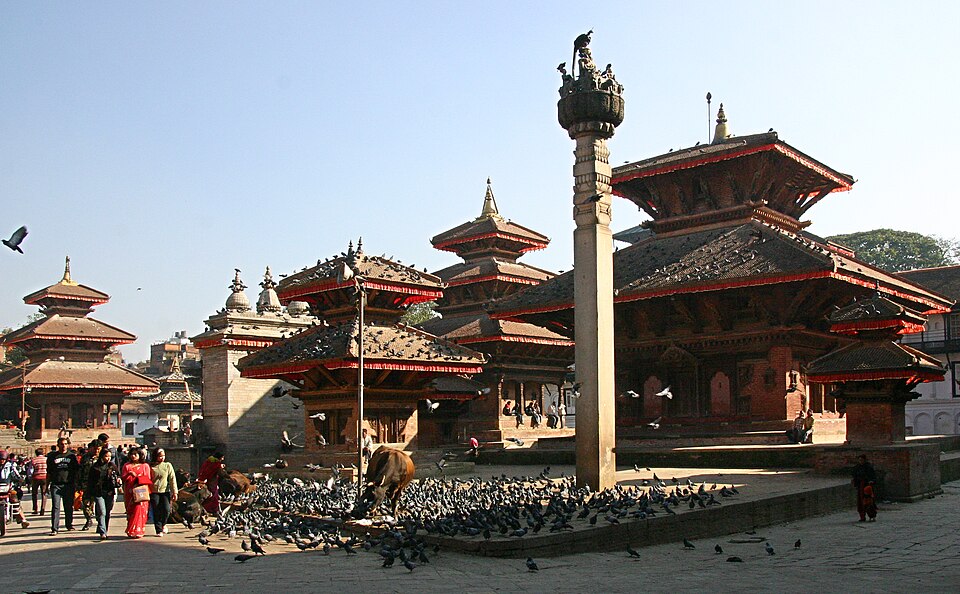
Welcome to Kathmandu, the capital and largest city of Nepal, lying in the Kathmandu Valley at an elevation of 1,324 metres. It is recognised as one of the oldest continuously inhabited places in the world, with a history reaching back to the 2nd century AD, and in earlier times it was known as Kantipur. The valley has long been the cultural and political heart of the Newar people, and Kathmandu served as the royal capital of the Kingdom of Nepal. Hindu and Buddhist traditions live side by side here, and the city is a gateway to the Himalayas. Let us visit its sacred stupas, temples and royal squares.
Sights
Swayambhunath
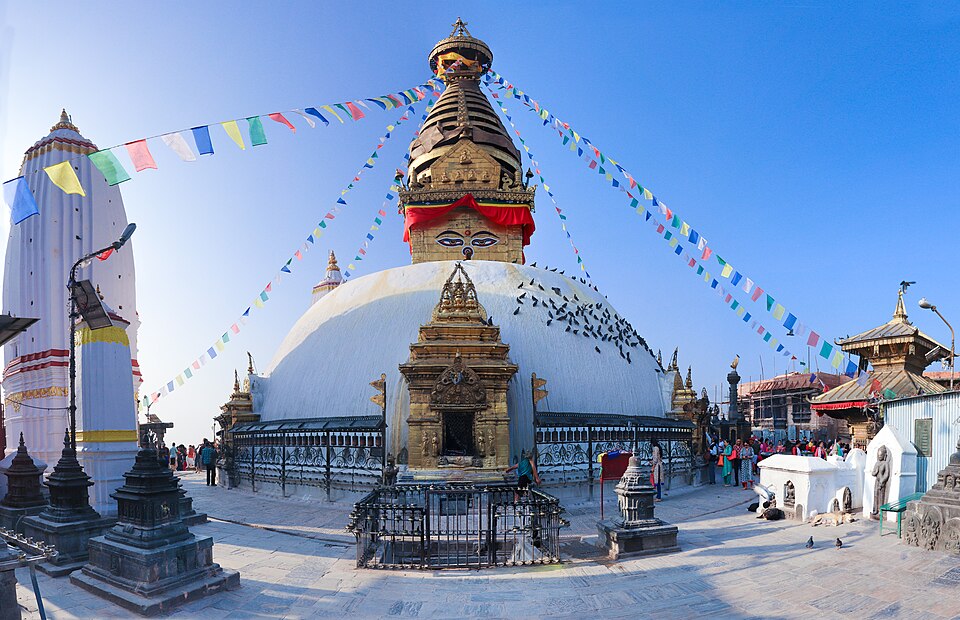
Photo: Nabin K. Sapkota · CC BY-SA 4.0 · Wikimedia Commons Climb the hill west of the city to Swayambhunath, an ancient religious complex whose name means self-arising. The hill has long been a pilgrimage site, considered the home of the primordial Buddha. Buddhists around the world venerate the stupa as one of the most ancient and important of all, and for the Newar people it is among the three most sacred Buddhist pilgrimage sites. Look around and you will see Hindu temples and deities within this Buddhist site, a symbol of religious harmony. It became a UNESCO World Heritage Site in 1979.
Boudhanath
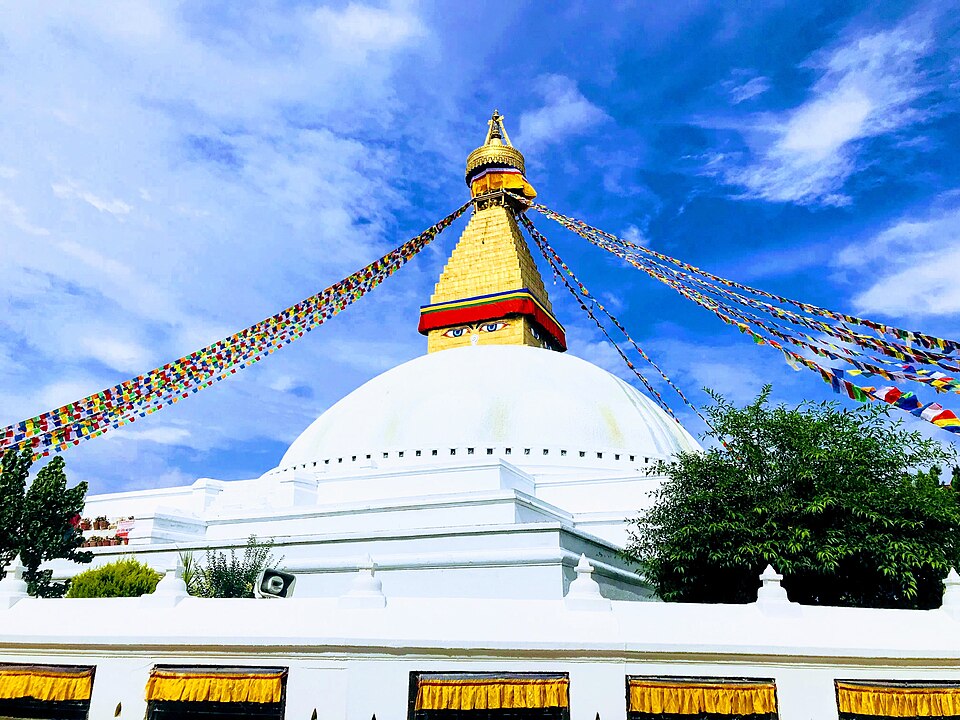
Photo: Sumitbhatt222 · CC BY-SA 4.0 · Wikimedia Commons Before you rises the great white dome of the Boudha Stupa, seen as the embodiment of the enlightened mind of all the Buddhas. Laid out as a massive mandala, it is the largest spherical stupa in Nepal and one of the largest in the world. The present structure was most likely built in the 14th century, though chronicles mention a stupa here as early as the 5th century. It stands on the ancient trade route from Tibet to India, and one text even says it gave birth to Tibetan Buddhism.
Pashupatinath Temple
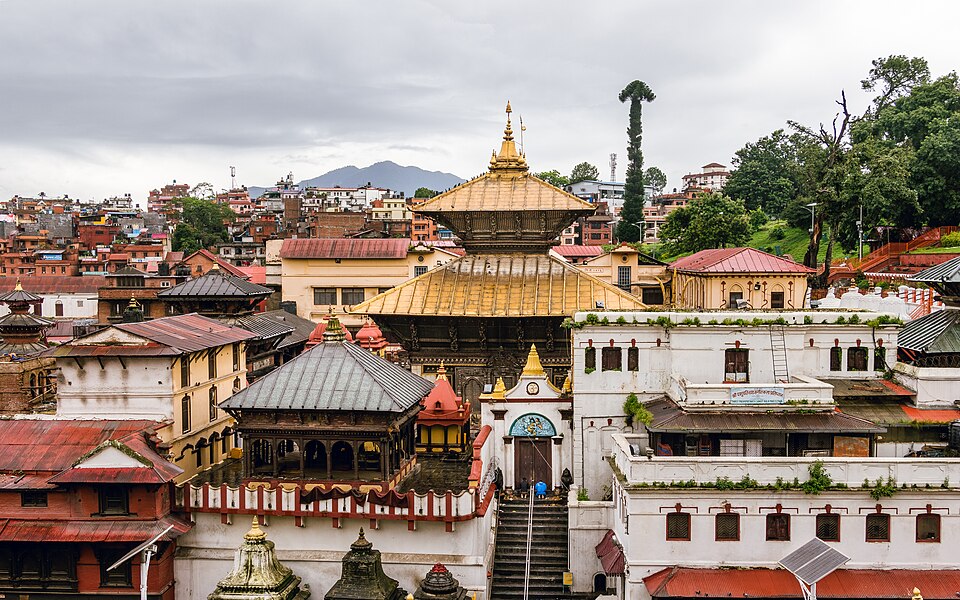
Photo: Bijay Chaurasia · CC BY-SA 4.0 · Wikimedia Commons On the banks of the sacred Bagmati River stands the Pashupatinath Temple, dedicated to Pashupati, a manifestation of Shiva. It is one of the oldest and most significant religious complexes in South Asia, and one of the holiest pilgrimage sites for Hindus. The precinct is vast: around the principal pagoda-style temple, it covers 246 hectares and includes 518 smaller temples, along with ashrams, inscriptions and images raised over the centuries. Please move quietly and respectfully here.
Kathmandu Durbar Square
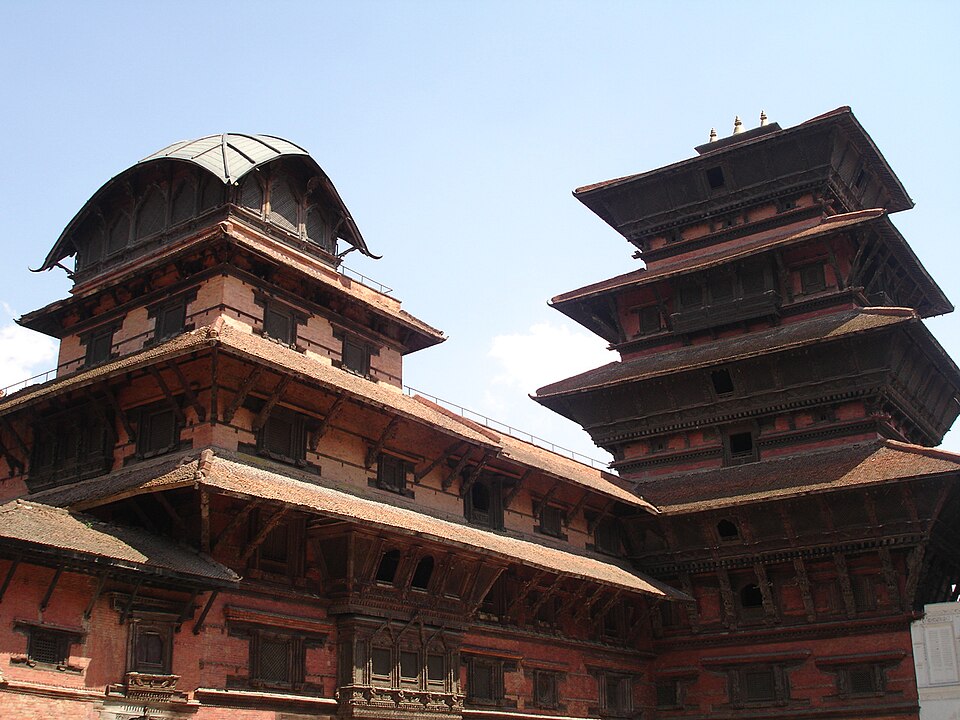
Photo: Artha at English Wikipedia · CC BY-SA 3.0 · Wikimedia Commons Welcome to Kathmandu Durbar Square, one of three royal palace squares in the valley listed by UNESCO. Construction of the square began in the 3rd century, but most of its major structures came later, including 16th-century temples from the reign of the Malla kings, with the finely carved façades typical of Newar architecture. The central square is ringed by palaces of the Malla and Shah periods. The best known is the Nautalle Durbar, a nine-storey palace built by Prithvi Narayan Shah to commemorate the unification of Nepal.
Bhaktapur Durbar Square
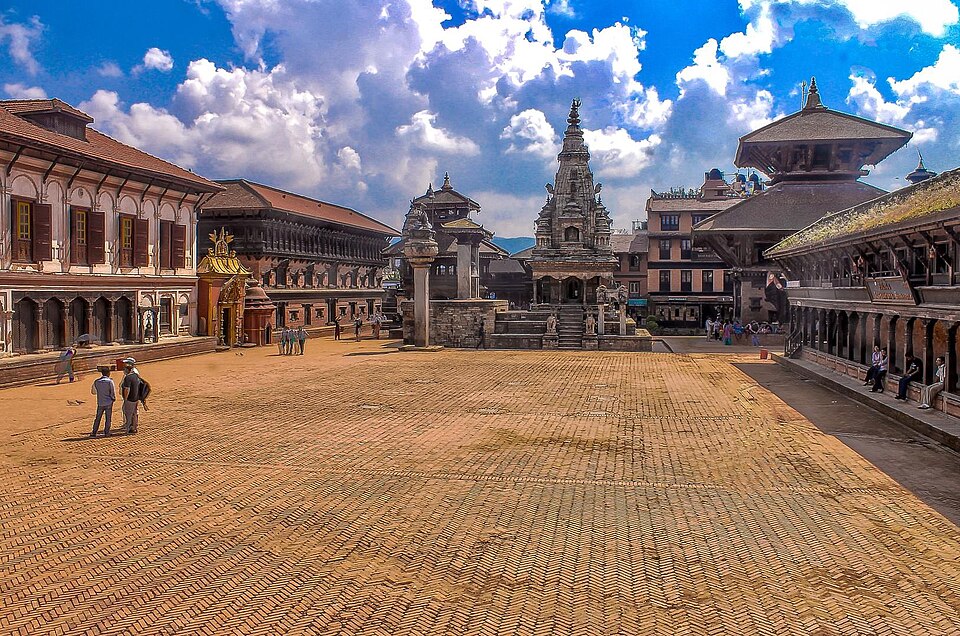
Photo: Bikram Pratap Singh · CC BY-SA 3.0 · Wikimedia Commons Let us travel to Bhaktapur Durbar Square, a former royal palace complex. It was home to the Malla kings and later to the kings of Bhaktapur, until the kingdom was conquered in 1769. In its days of independence it was considered the biggest and grandest of the valley's three Durbar Squares. Imagine it at its height, with 99 courtyards. Frequent earthquakes, especially those of 1833 and 1934, destroyed most of them, and today hardly 15 remain.
Patan Durbar Square
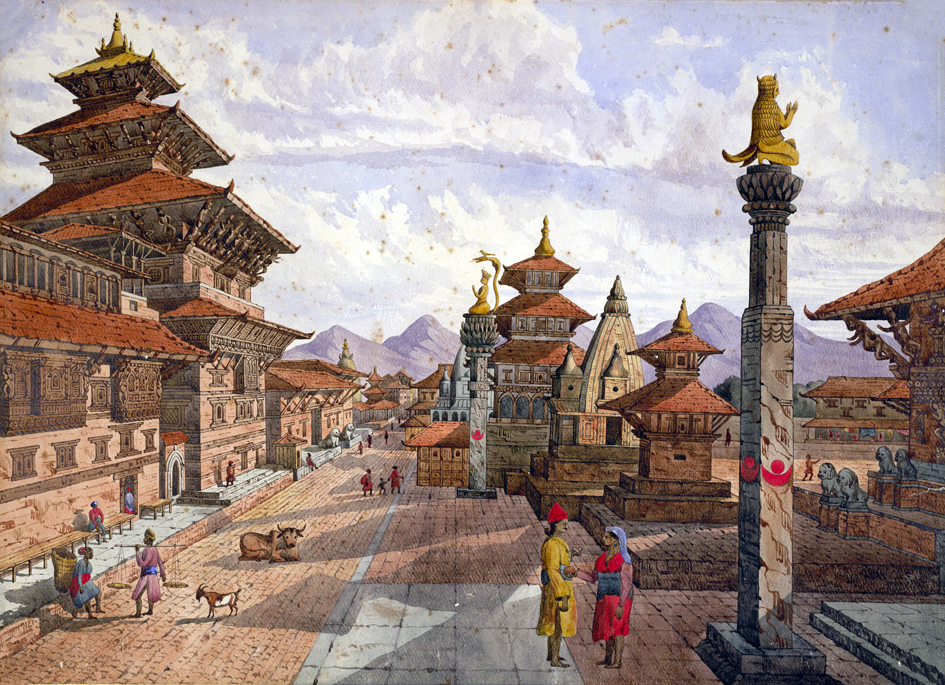
Photo: Zulufive · CC0 · Wikimedia Commons At the heart of the city of Lalitpur lies Patan Durbar Square, a marvel of Newar architecture. Its red brick paving, bordered by stone, leads you between the royal palace of the Malla kings and a dense cluster of temples, shrines and courtyards. The main temples stand opposite the western face of the palace, their entrances facing east towards it. A centre of both Hinduism and Buddhism, the square counts 136 courtyards and 55 major temples. It was heavily damaged by the earthquake of April 2015.
Mount Everest
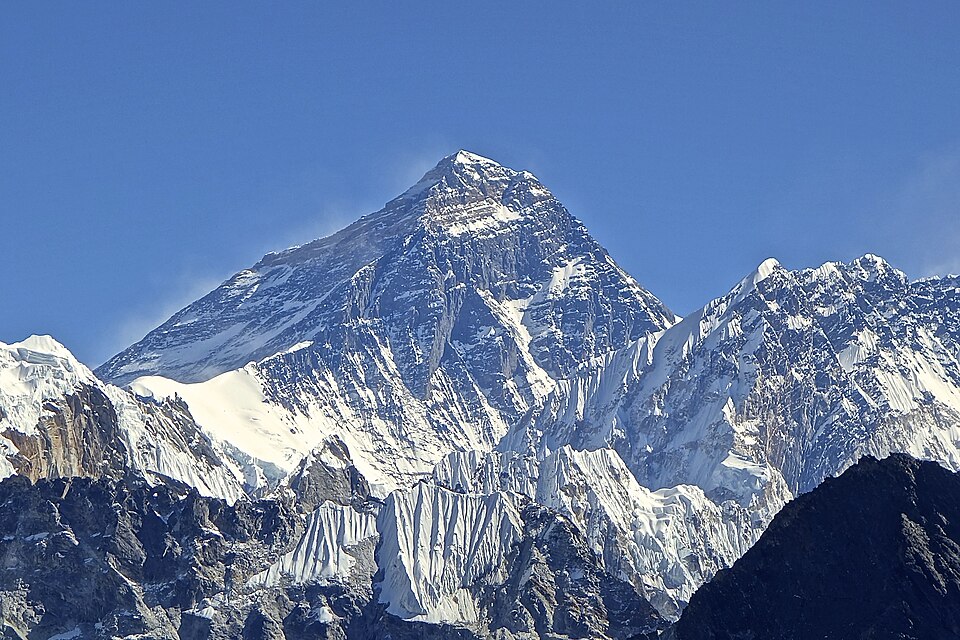
Photo: Rdevany · CC BY-SA 3.0 · Wikimedia Commons Our final stop is the roof of the world. Mount Everest, known in Nepali as Sagarmatha, is the highest mountain on Earth above sea level, and its summit marks part of the border between China and Nepal. A joint survey by Nepalese and Chinese authorities in 2020 measured its height as 8,848.86 metres. There are two main climbing routes, the standard one from the southeast in Nepal and another from the north in China. Even without great technical difficulty, the mountain is dangerous, with altitude sickness, wind, avalanches and the Khumbu Icefall.