 Sofa VoyageSuomeksi
Lima
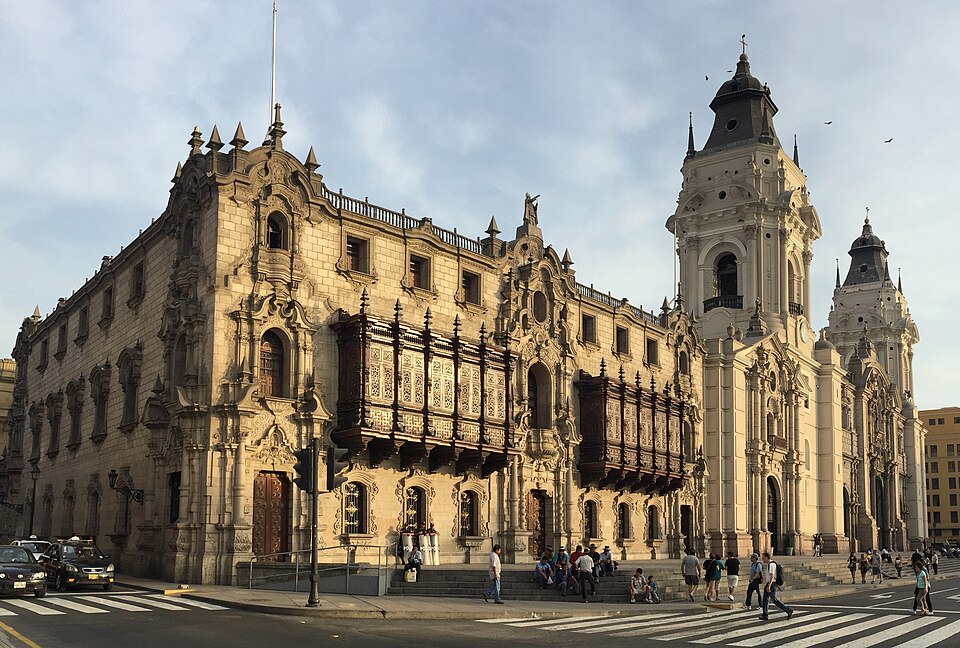
Welcome to Lima, the capital and largest city of Peru. It spreads across the valleys of the Chillón, Rímac and Lurín rivers, in the desert zone of Peru's central coast, overlooking the Pacific Ocean. Its name comes from Limaq, what the native Peruvians called this agricultural region. Lima became the capital and most important city of the Viceroyalty of Peru, and after the War of Independence the capital of the Republic. Today around one third of Peru's people live in its metropolitan area, and it is one of the largest Spanish-speaking cities in the world. Let's begin in the old centre.
Sights
Plaza Mayor
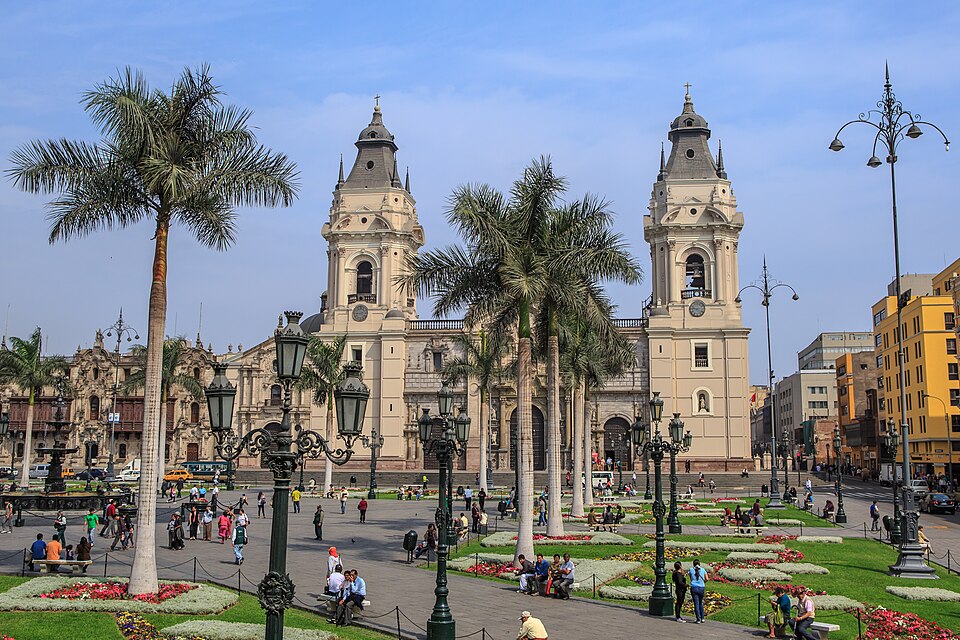
Photo: Murray Foubister · CC BY-SA 2.0 · Wikimedia Commons Welcome to the Plaza Mayor, also called the Plaza de Armas, the main square of historic Lima. It dates back to the city's foundation by Francisco Pizarro on 18 January 1535. Following Spanish rules for new cities in the Americas, Lima grew outward in a grid from this square. Around you stand the Government Palace, the Metropolitan Cathedral, the Archbishop's Palace and the Municipal Palace. Even in the 17th century it impressed visitors: the historian Bernabé Cobo called it the finest and best formed plaza he had ever seen, even in Spain.
Basilica and Convent of San Francisco
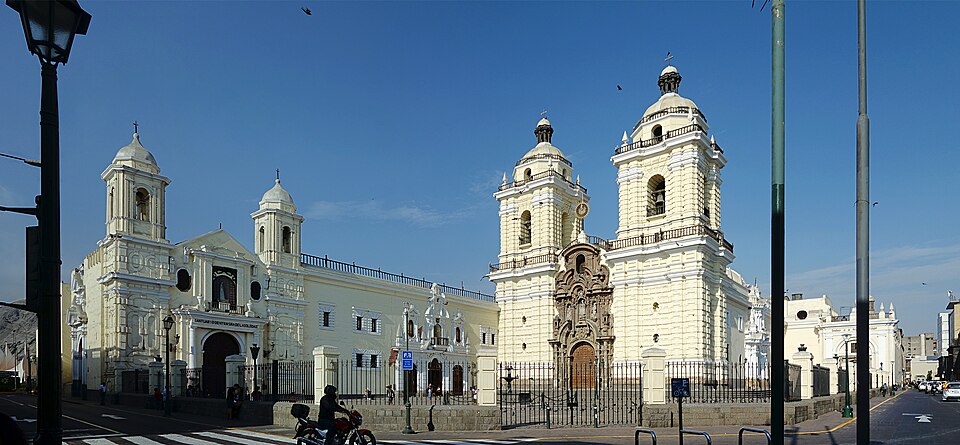
Photo: Velvet · CC BY-SA 4.0 · Wikimedia Commons Now we reach the Basilica and Convent of San Francisco, which together with two neighbouring churches forms a great religious complex in the historic centre. The Spanish scholar Ramón Menéndez Pidal called it the largest and noblest monument that the conquest erected in these prodigious lands. The church and convent are part of the Historic Centre of Lima, added to the UNESCO World Heritage List in 1991.
Cathedral of Lima
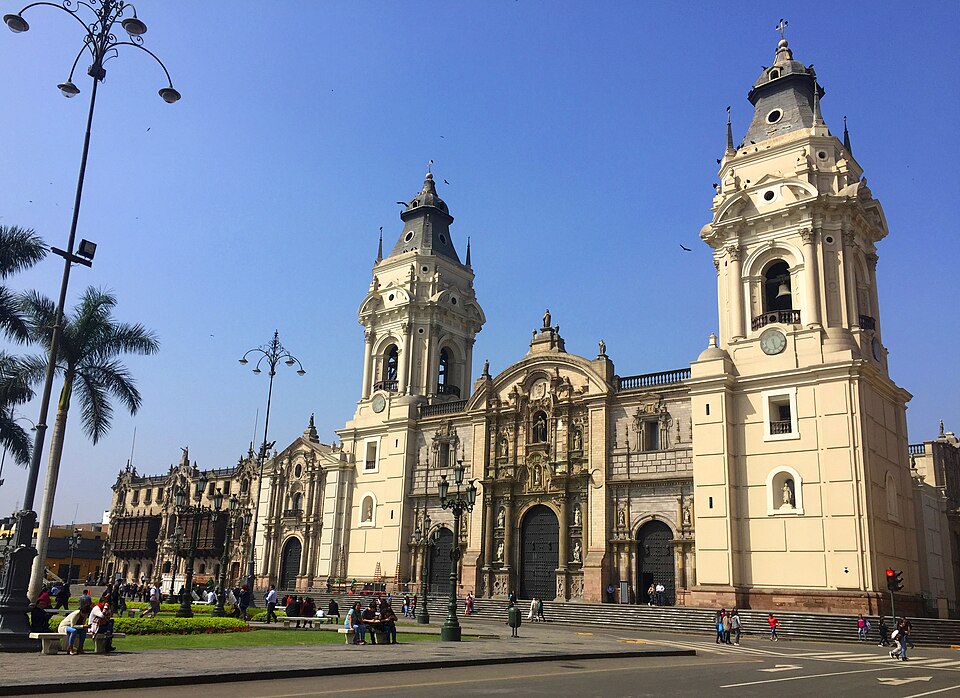
Photo: Gatodemichi · CC BY-SA 4.0 · Wikimedia Commons On the eastern side of the square rises the Metropolitan Cathedral of Lima, the oldest and largest church in Peru, dedicated to Saint John the Evangelist. Francisco Pizarro laid its first stone in 1535, but the building you see took shape between 1602 and 1797. It stands on the site of the Inca shrine of Puma Inti and the palace of the prince Sinchi Puma. When Pizarro founded the city, he had Sinchi Puma give up the land on paper, certified by a notary, so the new church would not appear to be a usurpation.
Larco Museum
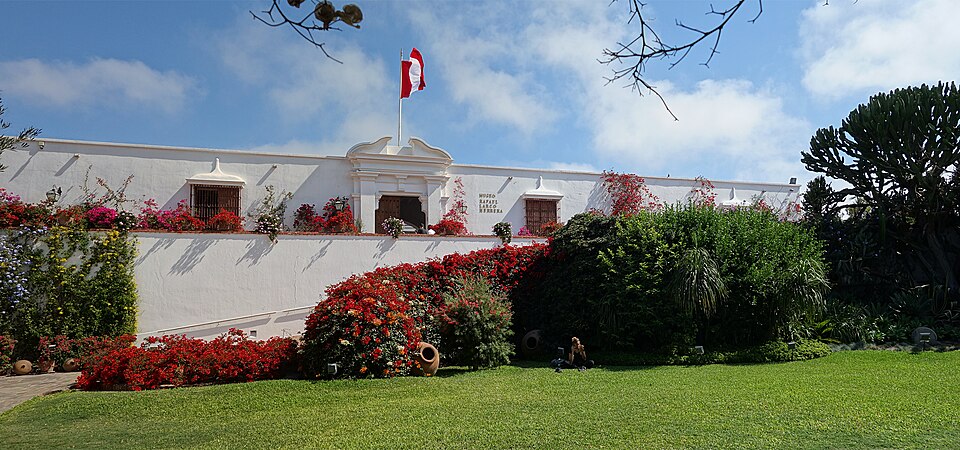
Photo: Velvet · CC BY-SA 4.0 · Wikimedia Commons Step into the Larco Museum, a private museum of pre-Columbian art housed in an 18th century colonial building in Pueblo Libre. Its galleries walk you through 5,000 years of Peruvian history before the Spanish arrived. The collection began in 1925, when Rafael Larco Herrera acquired about 600 ceramic pieces from his brother-in-law, sparking a passion for collecting in his son, Rafael Larco Hoyle. The museum is also well known for one rather unexpected gallery, devoted to pre-Columbian erotic pottery.
Miraflores District
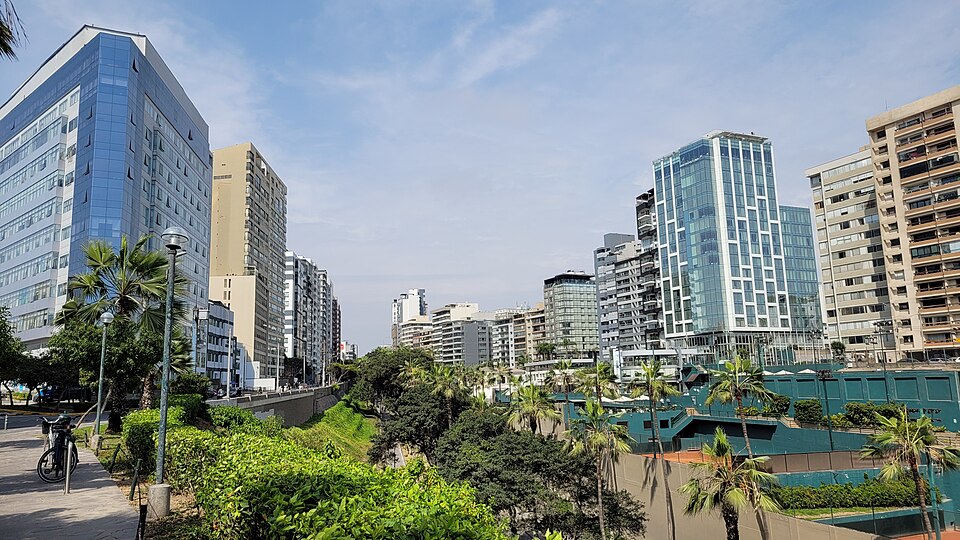
Photo: Mojnsen · CC BY-SA 4.0 · Wikimedia Commons Now head south to Miraflores, one of Lima's wealthiest districts, full of upscale shops, office buildings and colourful flat-roofed houses. It became a district in 1857. Because of the Battle of Miraflores in 1881, during the War of the Pacific, it bears the title Ciudad Heroica, the Heroic City. Its name means look at the flowers, and some say that is thanks to the bougainvillea that blooms almost all year round. Long before the Spanish came, people of the ancient Lima culture lived here.
Huaca Pucllana
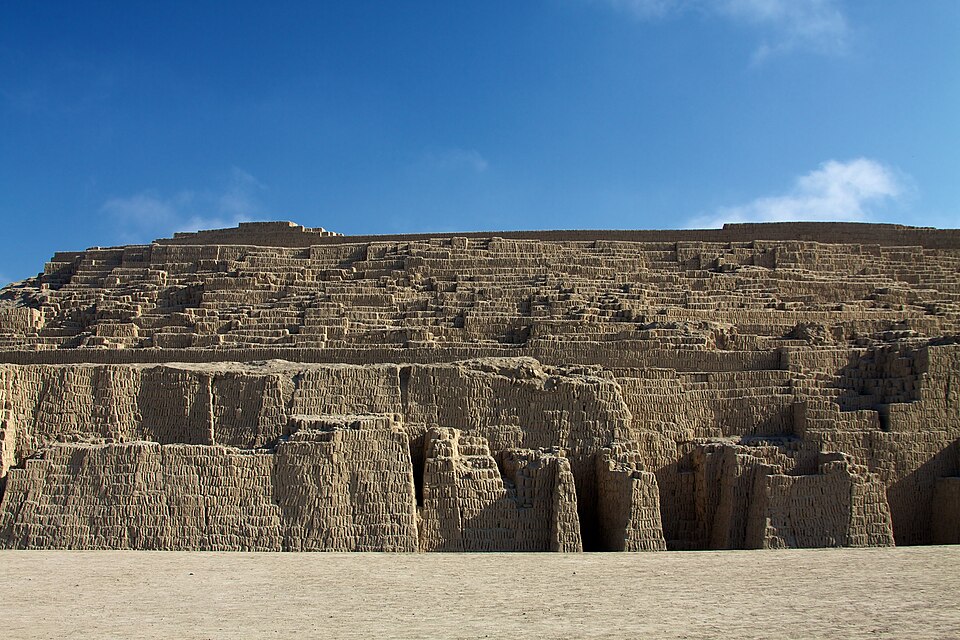
Photo: McKay Savage · CC BY 2.0 · Wikimedia Commons Right in the middle of Miraflores rises a surprise: Huaca Pucllana, a great pyramid of adobe and clay built from seven staggered platforms. It was an important ceremonial and administrative centre of the Lima Culture, which flourished on this coast between 200 and 700 AD. Its elite priests used it to display their religious power and their control over the area's water. In one section, deep pits held offerings of fish and other sea creatures to win the favour of the gods. Archaeologists also found an intact tomb of the later Wari culture, known as the Lord of the Unkus.
Government Palace of Peru

Photo: User:Pedro Felipe · CC BY-SA 4.0 · Wikimedia Commons We end on the northern side of the Plaza Mayor at the Government Palace, the seat of Peru's executive and the official residence of the president. It is also known as the House of Pizarro, because Francisco Pizarro built the first palace here in 1535. The site was once a revered huaca, with a shrine to Taulichusco, the last indigenous governor of Lima. The old viceregal palace was largely destroyed by fires, and the building you see dates from 1926 to 1938. Stay for the daily Changing of the Guard ceremony.