 Sofa VoyageSuomeksi
Mexico City
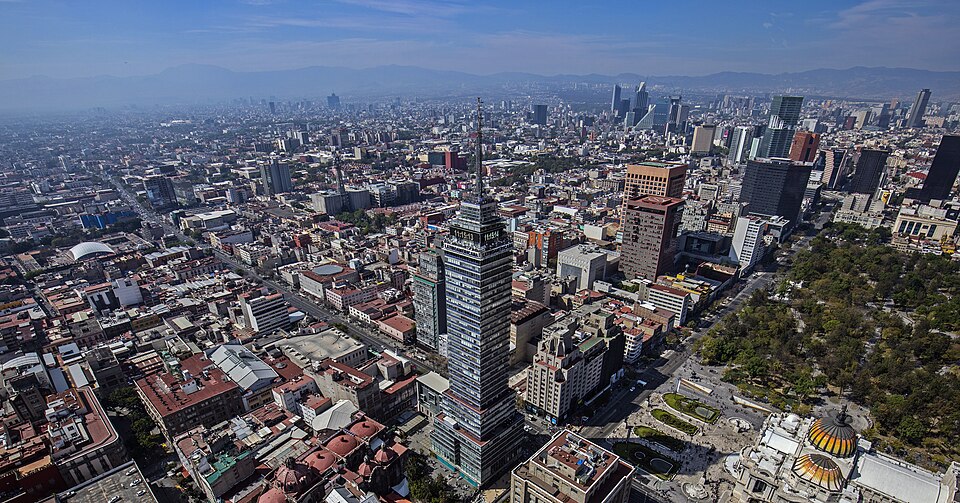
Welcome to Mexico City, the capital of Mexico and the most populous city in North America. It sits in the Valley of Mexico on the high Central Plateau, at an altitude of 2,240 metres. This is the oldest capital city in the Americas, and one of only two founded by Indigenous peoples. It began around 1325 as Tenochtitlan, a Mexica city built on islands in Lake Texcoco. After the siege of 1521 it was nearly destroyed and rebuilt to Spanish standards. Today Greater Mexico City is home to more than 21 million people. Let us begin where the old and new cities meet, in the great central square.
Sights
Zócalo
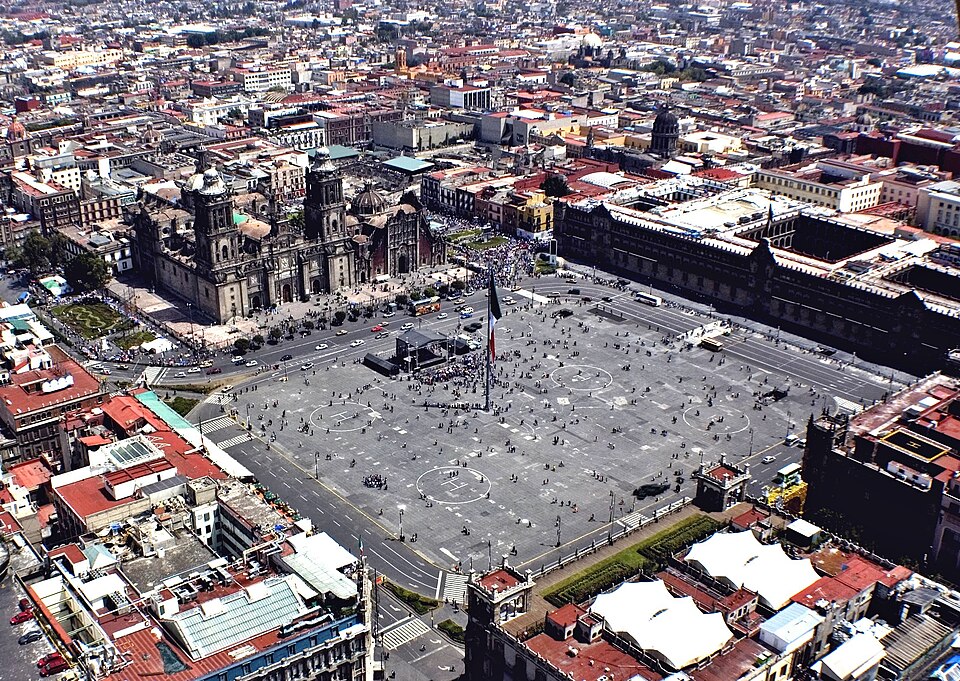
Photo: Comisión Mexicana de Filmaciones from México D. F., México · CC BY-SA 2.0 · Wikimedia Commons You are standing in the Zócalo, the main square of central Mexico City. Before the Spanish conquest, this was the main ceremonial centre of the Aztec city of Tenochtitlan. Its formal name is Constitution Square, yet almost everyone calls it the Zócalo, which means plinth. There is a story behind that: a column to independence was planned here, but only its base was ever built. The plinth was buried long ago, but the name lived on, and many other Mexican cities now use the word for their own main squares. For almost 700 years, this space has hosted ceremonies, parades, celebrations and protests.
Teotihuacan
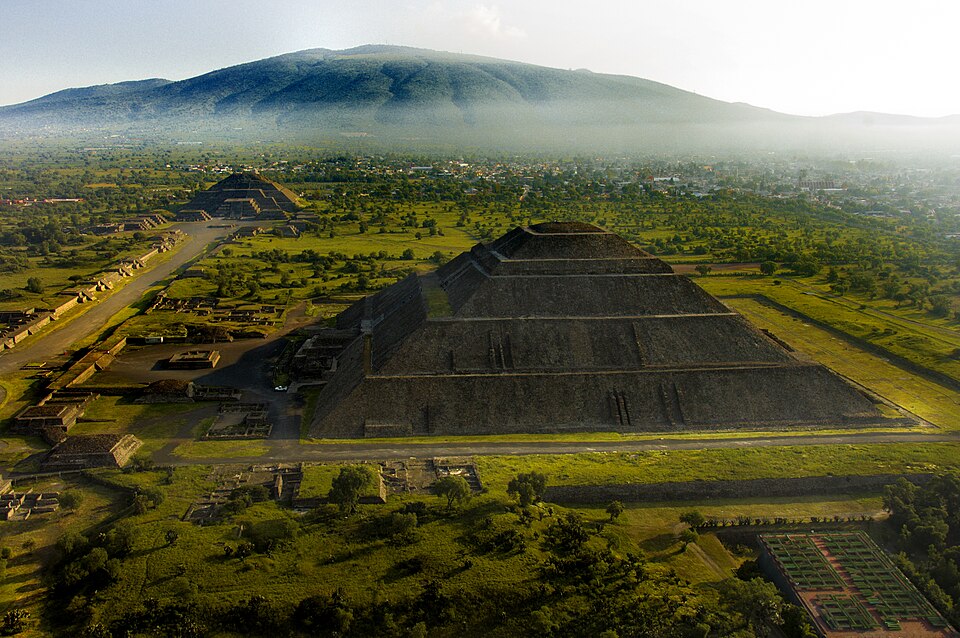
Photo: Hdlrosa · CC BY-SA 4.0 · Wikimedia Commons Some 40 kilometres northeast of the city, the Pyramid of the Sun and the Pyramid of the Moon rise above the ruins of Teotihuacan. This was not an Aztec city at all; it predates the Aztec Empire by many centuries. At its height, in the first half of the first millennium, it was the largest city in the Americas, with perhaps around 100,000 inhabitants living in multi-family apartment compounds. Walk along the Avenue of the Dead and look for its vivid, well-preserved murals. When the Aztecs later found these magnificent ruins, they claimed a common ancestry with the people who had built them.
Palacio de Bellas Artes
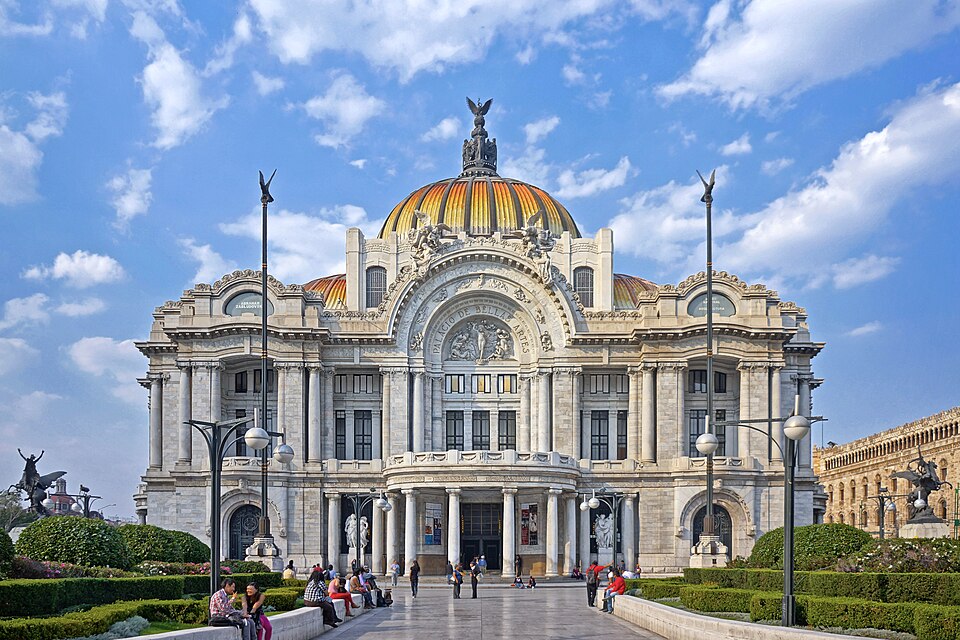
Photo: Xavier Quetzalcoatl Contreras Castillo · CC BY-SA 3.0 · Wikimedia Commons Before you stands the Palacio de Bellas Artes, the Palace of Fine Arts, sometimes called the art cathedral of Mexico. It was planned to celebrate the centennial of the War of Independence in 1910, and the Italian architect Adamo Boari began the work in 1904. But the soft subsoil and the turmoil of the Mexican Revolution stopped construction completely by 1913. Work only resumed in 1932 under Federico Mariscal, and the palace was inaugurated in 1934. Outside and in, it wears different styles: the exterior is Art Nouveau and Neoclassical, while the interior is Art Deco. Inside are celebrated murals by Diego Rivera, Siqueiros and others.
Metropolitan Cathedral
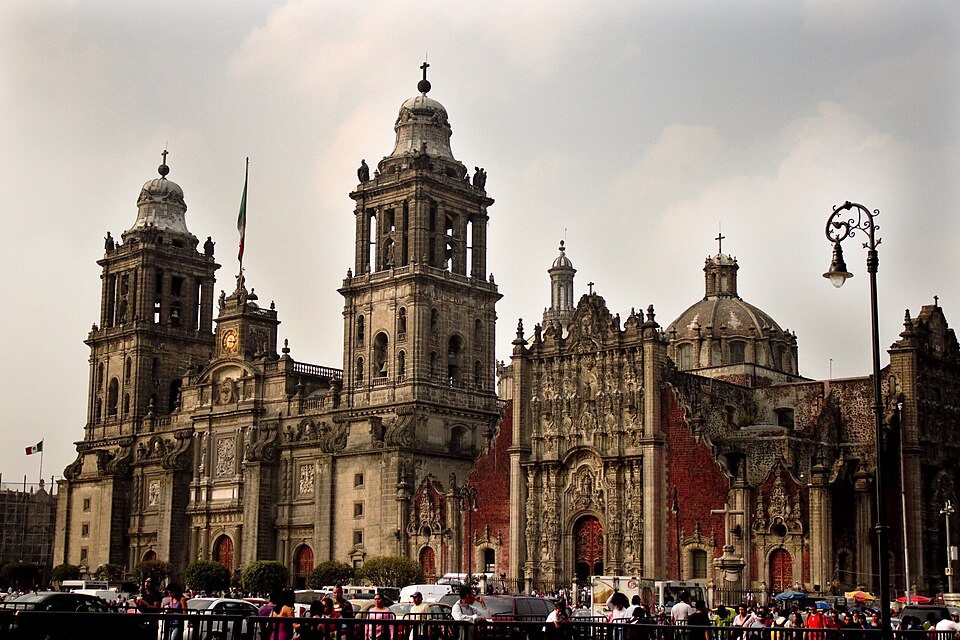
Photo: Ulisesmorales · CC BY-SA 3.0 · Wikimedia Commons On the northern side of the Zócalo rises the Metropolitan Cathedral, built on top of the former Aztec sacred precinct. Construction took just under 250 years, from 1573 to 1813, around an earlier church that it eventually replaced entirely. Because the work spanned so many generations, the building blends Gothic, Baroque, Churrigueresque and Neoclassical styles, and almost every major artist of the viceroyalty worked on it at some point. Look up at the two bell towers, which hold 25 bells and reach 67 metres. Emperors were crowned here, and independence heroes such as Miguel Hidalgo were buried here until 1925.
National Museum of Anthropology
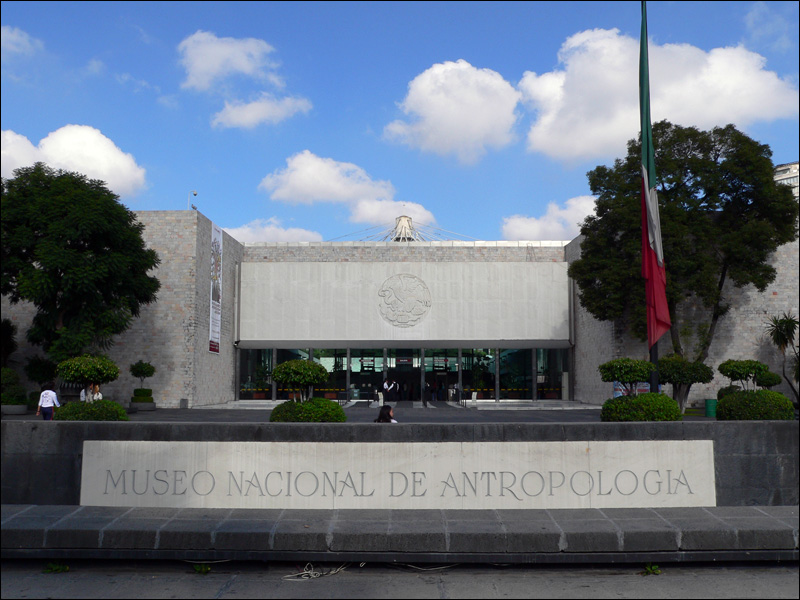
Photo: kornemuz · CC BY-SA 3.0 · Wikimedia Commons In the green expanse of Chapultepec Park, once a retreat of Aztec emperors, you reach the National Museum of Anthropology, the largest and most visited museum in Mexico. It opened in 1964 and holds treasures of the country's pre-Columbian heritage. The star of the collection is the Stone of the Sun, often called the Aztec calendar stone, and nearby you can meet the Aztec statue of Xochipilli. Not everyone has loved the museum's emphasis on the Aztec hall. The poet Octavio Paz complained that glorifying Tenochtitlan in this way turned the museum into a temple.
Chapultepec Castle
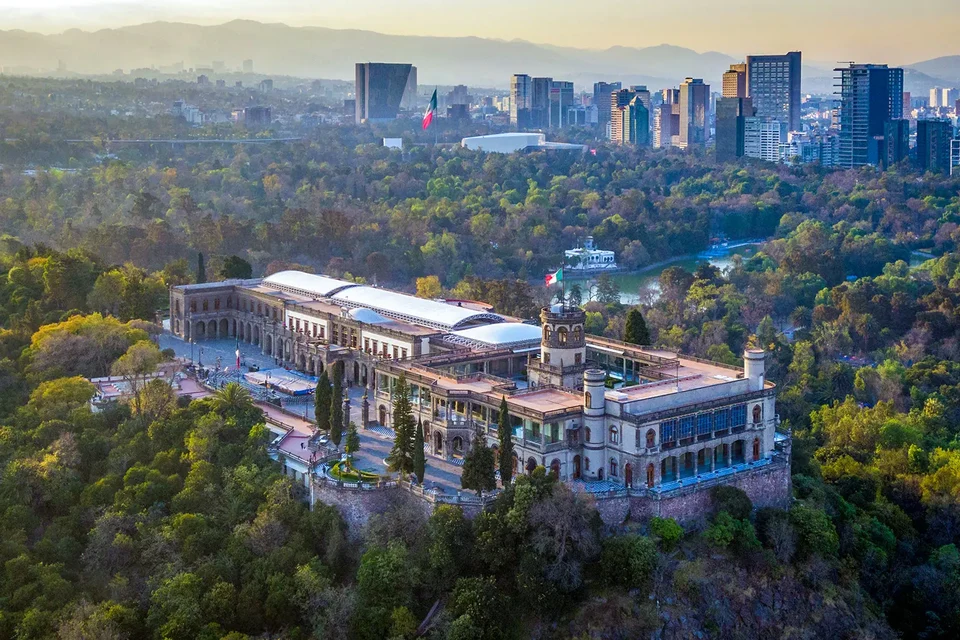
Photo: Sisgeo · CC BY-SA 4.0 · Wikimedia Commons Climb Chapultepec Hill, whose Nahuatl name means on the hill of the grasshopper, and you reach Chapultepec Castle. The hill was a sacred place for the Aztecs. The castle was built in colonial times as a summer house for the viceroy, and since then it has been a gunpowder store, a military academy, an observatory and the residence of Emperor Maximilian and Empress Carlota. Later Mexican presidents lived here until 1934. Here is a rare distinction: along with Iturbide Palace, this is one of the only royal palaces in North America ever inhabited by monarchs. Since 1939 it has housed the National Museum of History.
Frida Kahlo Museum
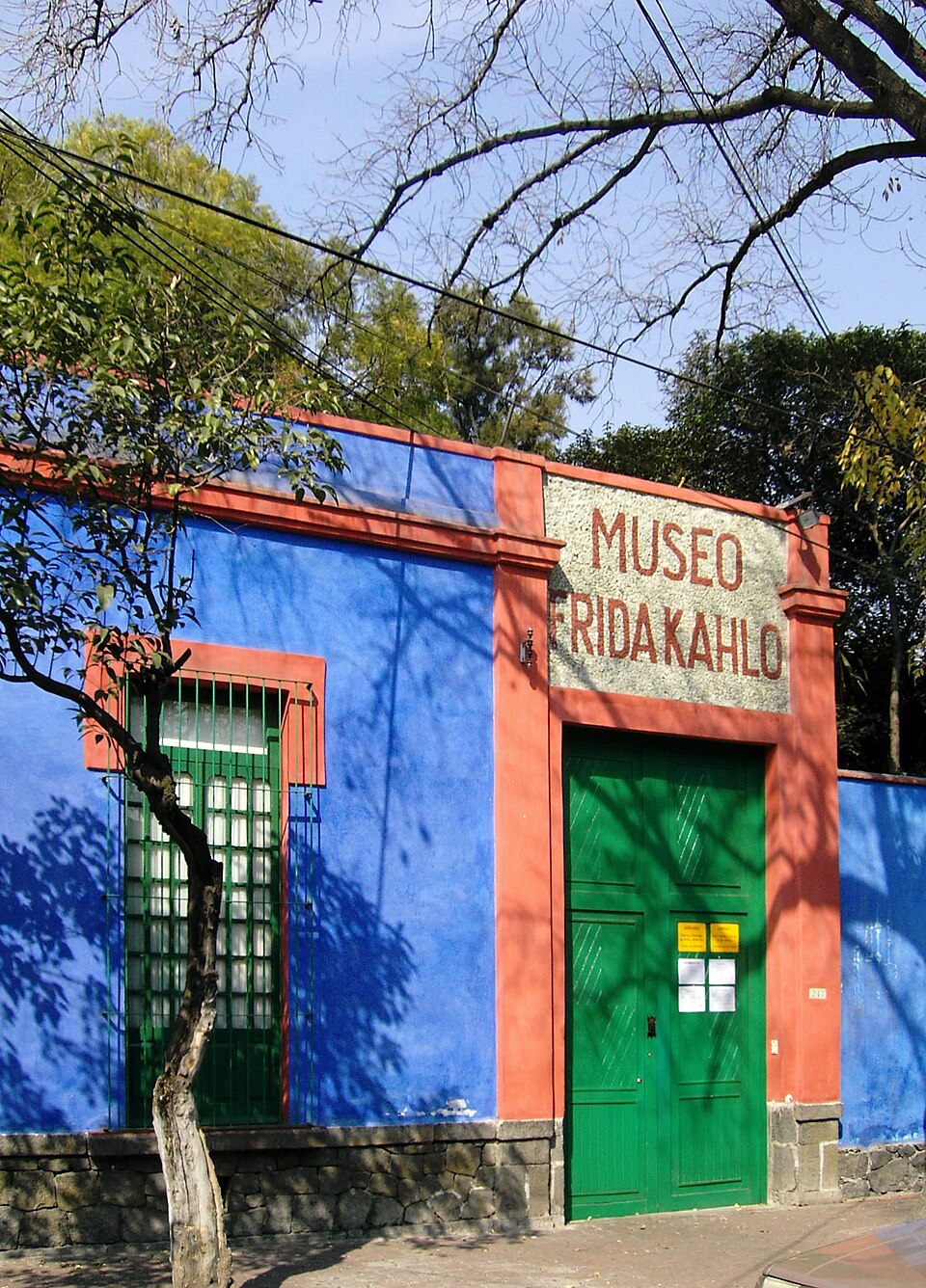
Photo: No machine-readable author provided. Nachtwächter assumed (based on copyright cl · CC BY-SA 3.0 · Wikimedia Commons In the leafy district of Coyoacán, look for the cobalt-blue walls of the Blue House, La Casa Azul. This is where Frida Kahlo was born, grew up, lived for years with her husband Diego Rivera, and later died in a room upstairs. In 1957, Rivera donated the house and everything in it to become a museum in her honour. Step inside and the rooms remain much as they were in the 1950s, filled with works by Kahlo and Rivera, the couple's Mexican folk art, pre-Hispanic objects, photographs and personal belongings.
Templo Mayor
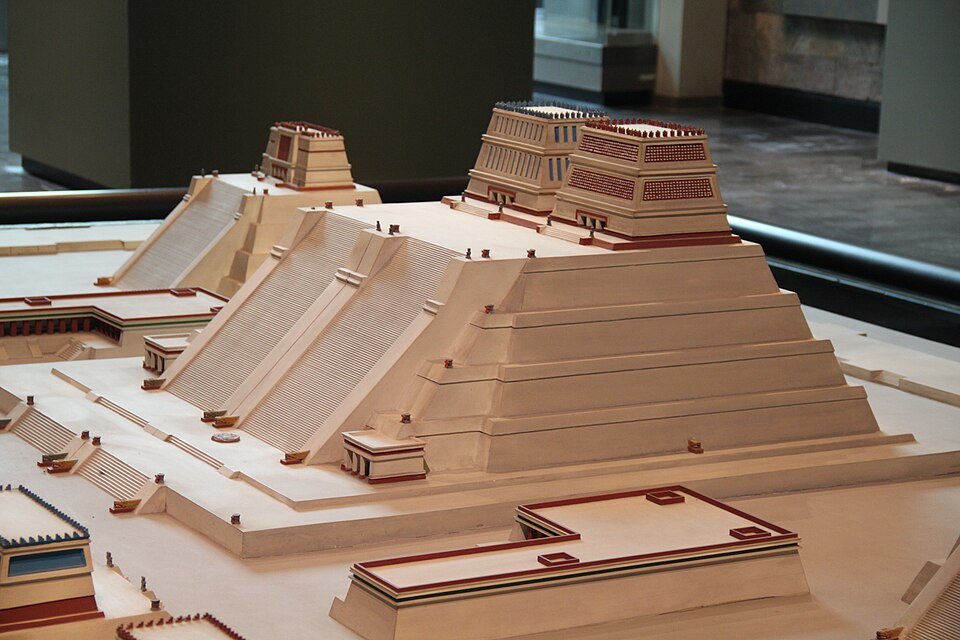
Photo: Gary Todd from Xinzheng, China · CC0 · Wikimedia Commons Just northeast of the Zócalo lie the remains of the Templo Mayor, the main temple of the Mexica capital Tenochtitlan. To the Mexica, it was the centre of the universe. The pyramid was dedicated to two gods at once, Huitzilopochtli, god of war, and Tlaloc, god of rain and agriculture, each with a shrine on top and a separate staircase. First built sometime after 1325, the temple was rebuilt six times, layer upon layer. In 1521 the Spanish almost totally destroyed it, and the Metropolitan Cathedral was built nearby. Today its ruins form part of the city's UNESCO-listed historic centre.