 Sofa VoyageSuomeksi
Mogadishu

Welcome to Mogadishu, the capital and largest city of Somalia, known locally as Xamar or Hamar. It lies in the coastal Banaadir region on the Indian Ocean, and for millennia it has been a port linking traders across that ocean. From the 9th to the 13th century it was the capital of the Sultanate of Mogadishu, which for centuries controlled the Indian Ocean gold trade. In the early modern period it was considered the wealthiest city on the East African coast, with a thriving textile industry. After long years of civil war, the city has entered a period of major reconstruction. Let's explore.
Sights
Mosque of Islamic Solidarity
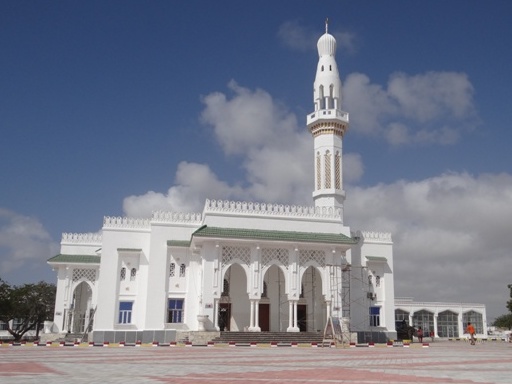
Photo: Welimo28 · CC BY-SA 4.0 · Wikimedia Commons We begin by the sea at the Mosque of Islamic Solidarity, overlooking the Somali Sea. It was built in 1987 with support from a Saudi foundation, and it is an iconic building in Somali society. It can hold up to 10,000 worshippers, making it the largest mosque in the Horn of Africa. Closed after the civil war began in the early 1990s, it was reopened in 2006 and later refurbished.
Arba'a Rukun Mosque
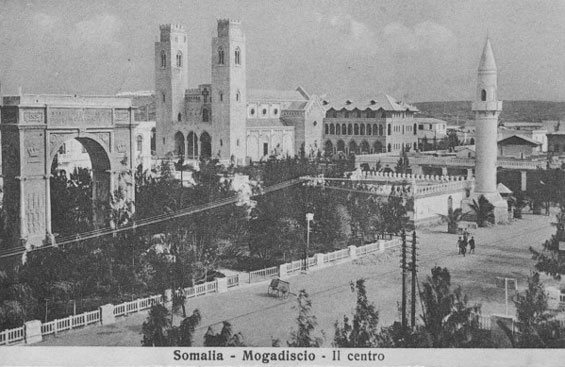
Photo: Unknown author Unknown author · Public domain · Wikimedia Commons In the medieval Shangani district stands the Arba'a Rukun Mosque, one of the oldest Islamic places of worship in Mogadishu. It was built around 1269, at the same time as the Fakhr al-Din Mosque. Look closely at the mihrab, the prayer niche: it bears an inscription from that same year, preserving the name of the mosque's founder, Khusra ibn Mubarak al-Shirazi.
Fakhr al-Din Mosque
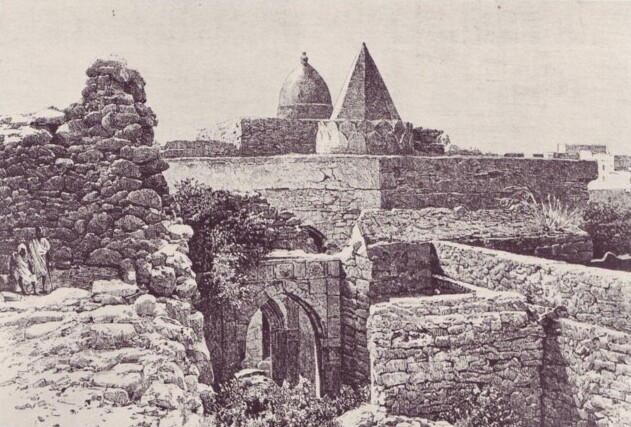
Photo: Public domain · Wikimedia Commons In the historic Hamar Weyne district, home to about 25 small mosques, stands the Fakhr al-Din Mosque. An inscription dated 1269 credits its construction to Sultan Fakr ad-Din. The building has a compact rectangular plan, and its mihrab is made of marble brought from northern India. You can pick it out among the surrounding buildings by its two conical domes, one round and the other hexagonal.
Mogadishu Cathedral
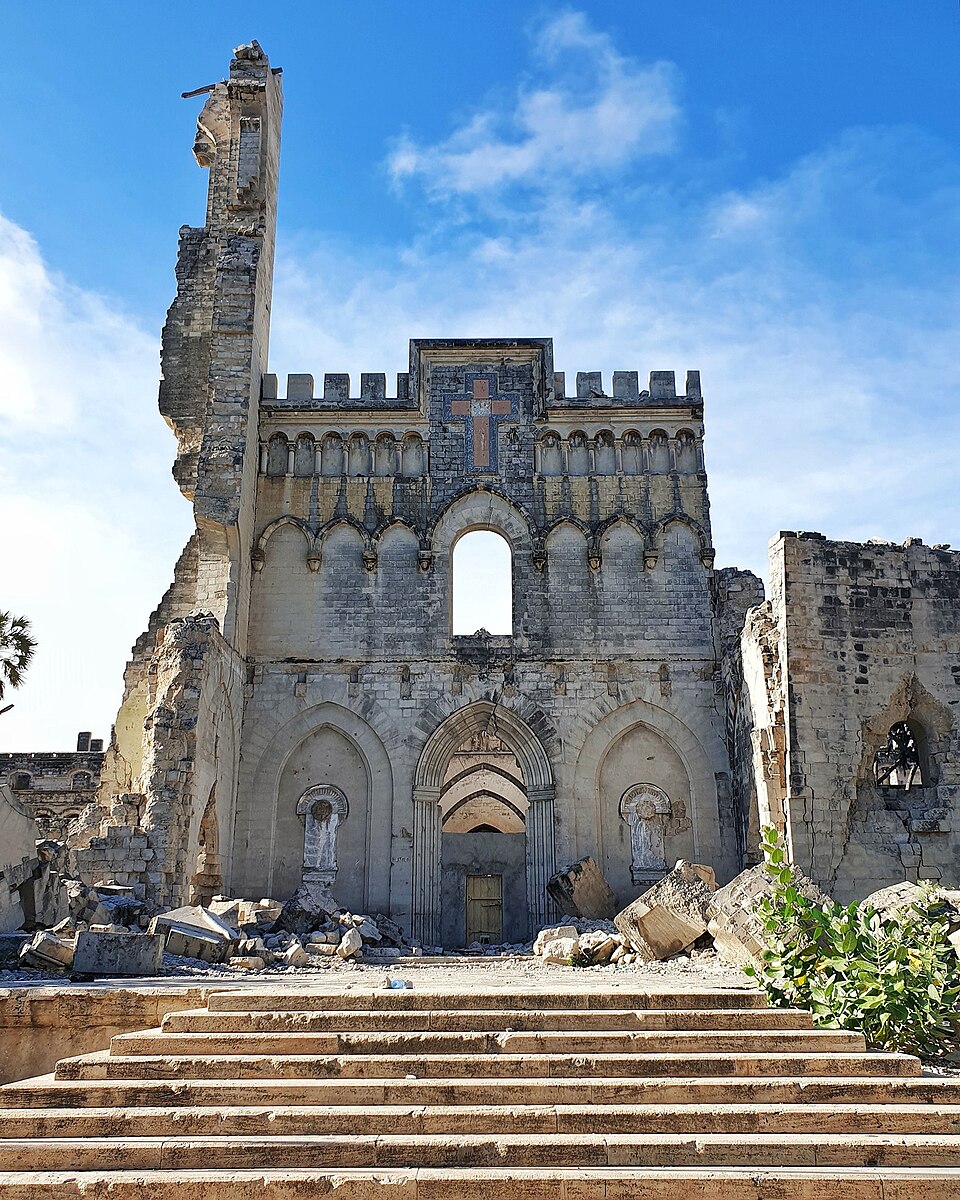
Photo: Mar Sharb · CC BY 2.0 · Wikimedia Commons Before you stand the ruins of Mogadishu Cathedral, built by the Italian colonial authorities between 1923 and 1928. The architect Antonio Vandone designed it in a Norman style, based on the Cathedral of Cefalù in Sicily, and it was once the largest cathedral in eastern Africa. From 1928 to 1991 it was the seat of the Catholic diocese of Mogadishu. Much of the building was destroyed in 2008, and what remains is a reminder of the city's turbulent history.
Lido Beach
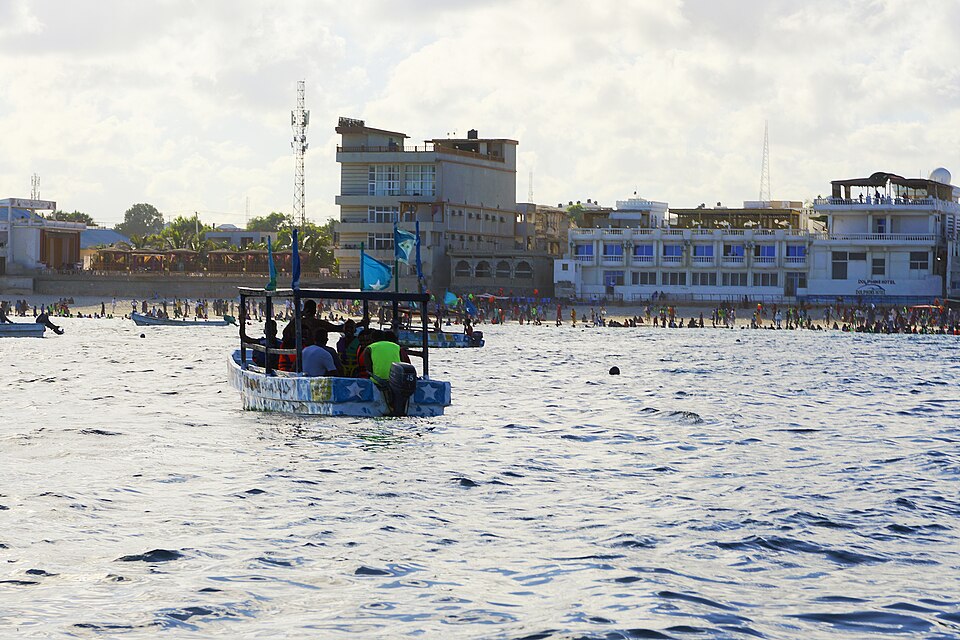
Photo: Dan Sloan · CC BY-SA 2.0 · Wikimedia Commons Now to the shore in northern Mogadishu and Lido Beach, overlooking the Somali Sea. Its name comes from the Italian word for beach, and locals simply call it Liido. It was first developed in the late 1930s for Italian colonists, and expanded in the 1950s, when a nearby hotel became the tallest building in the city. During the long civil war the beach fell into disuse, but it has since come back to life as a place for the people of Mogadishu to gather by the sea.
Mogadishu Lighthouse

Photo: Drew Binsky · CC BY-SA 4.0 · Wikimedia Commons We end in the old harbour at the Mogadishu Lighthouse, also known as Al-Munaara. The Italian colonial government built it in 1938 in an Arabic style, as part of a new plan for the city, and it guided ships into one of the key ports of the Horn of Africa. The lighthouse stopped operating in the early 1990s. Badly damaged during the civil war, much of the structure collapsed in 2023, and efforts began to conserve this long-loved landmark of the city.