 Sofa VoyageSuomeksi
Montevideo
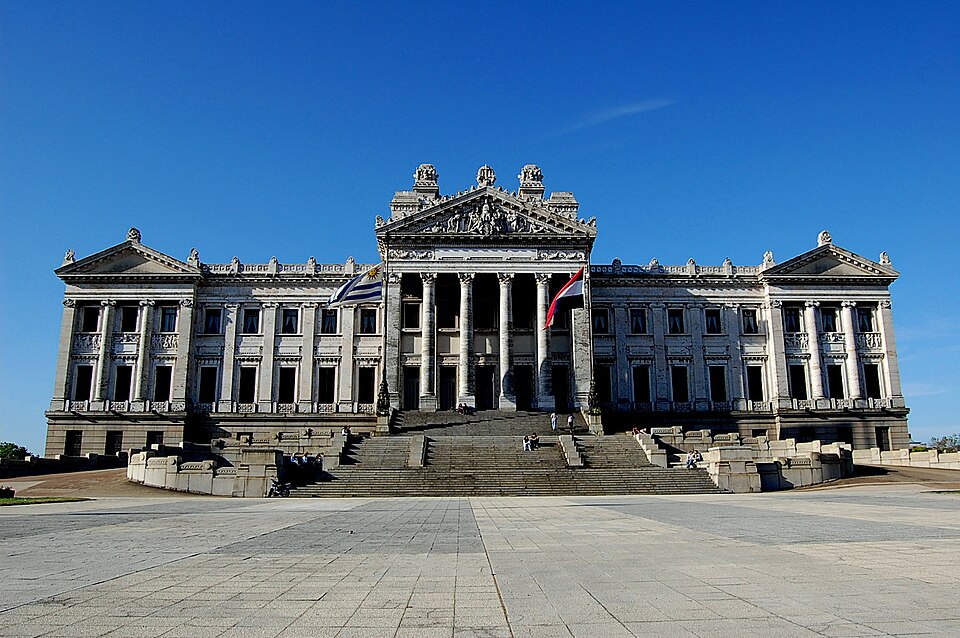
Welcome to Montevideo, the capital and largest city of Uruguay, on the northeastern bank of the Río de la Plata. More than a third of the country's people live in the city itself. A Portuguese garrison stood here briefly in 1723, before the Spanish soldier Bruno Mauricio de Zabala drove it out, and his diary records the city's foundation in December 1726. Montevideo hosted every match of the first FIFA World Cup in 1930, and it is known for its European architecture and strong art deco influence. Let us start in the heart of the city, at its great square.
Sights
Palacio Salvo
Photo: Coquimbo58 · CC0 · Wikimedia Commons Towering over Plaza Independencia is the Palacio Salvo, an eclectic skyscraper finished in 1928 on the initiative of the brothers Ángel, José and Lorenzo Salvo. It rises 105 metres over 27 storeys, and for a brief time it was the tallest building in Latin America. At its completion it was also the tallest reinforced concrete structure in the world. Its architect, the Italian immigrant Mario Palanti, used a similar design for his Palacio Barolo across the river in Buenos Aires. It has been a National Historical Monument since 1996.
Plaza Independencia
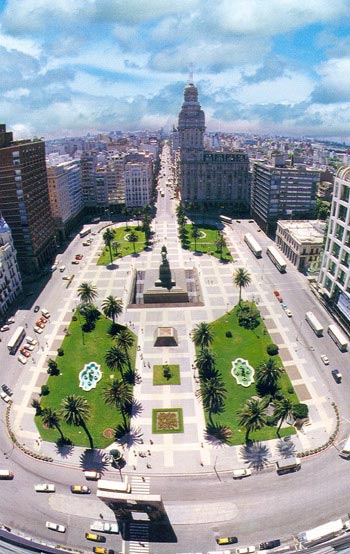
Photo: Wesborland at English Wikipedia · Public domain · Wikimedia Commons This is Plaza Independencia, Montevideo's main square, at the boundary between the Old City and the modern centre. It was laid out in the 19th century on the site of the old Citadel of Montevideo, marking the moment when the fortified colonial city opened up to expansion. The architect Carlo Zucchi designed it, reportedly inspired by the Rue de Rivoli in Paris. Around you stand the Palacio Salvo, the Solís Theatre, the Estévez Palace, once the seat of government, and the Executive Tower. This square has long been the stage for major demonstrations and official ceremonies.
Solís Theatre
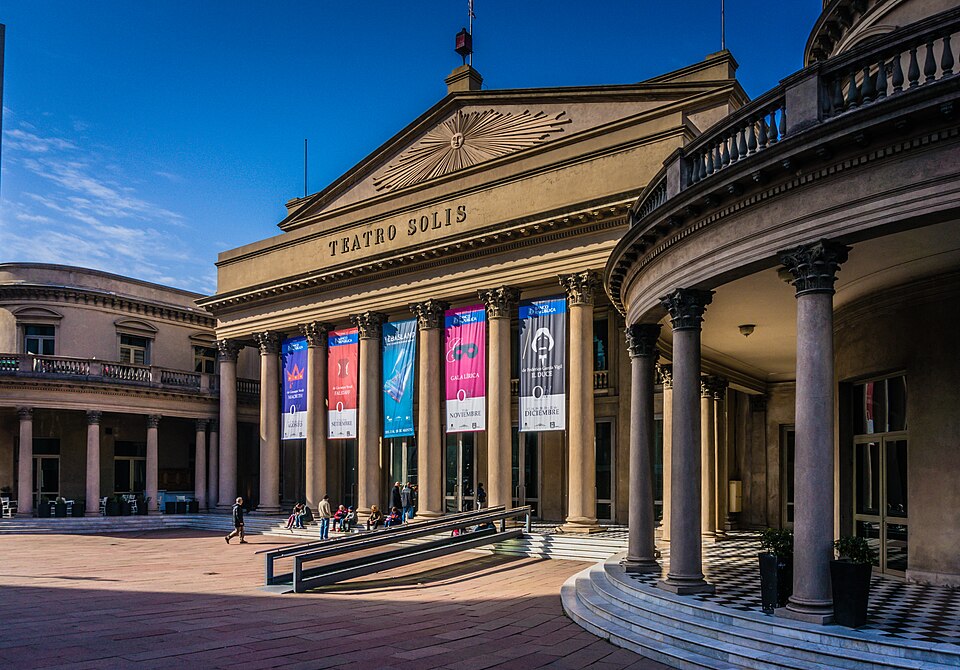
Photo: GameOfLight · CC BY-SA 3.0 · Wikimedia Commons Right next to Plaza Independencia stands the Solís Theatre, Uruguay's most important and renowned theatre, which opened in 1856. It was designed by the Italian architect Carlo Zucchi, the same man who laid out the square. The theatre takes its name from the explorer Juan Díaz de Solís, the first European to land in what is now Uruguay. A great moment in the country's musical life happened on this stage in 1878, when La Parisina by Tomás Giribaldi, considered the first Uruguayan national opera, had its premiere.
Montevideo Metropolitan Cathedral
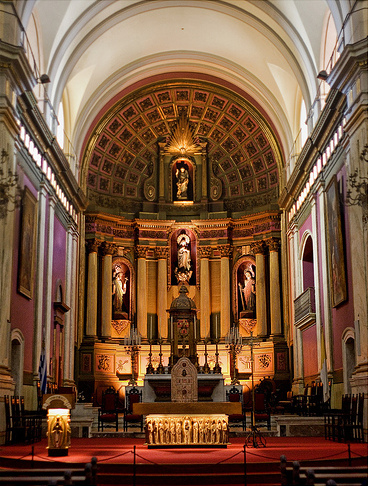
Photo: FelipePitta - http://www.felipepitta.com · Public domain · Wikimedia Commons Across Constitution Square from the Cabildo, in the Ciudad Vieja, stands the Metropolitan Cathedral, the main Catholic church of Montevideo. A brick church stood here as early as 1740, and the foundations of the present neoclassical building were laid in 1790. It was consecrated in 1804 and dedicated to the Immaculate Conception and to the city's patron saints, Philip and James. Inside, look for the image of the Virgin of the Thirty-Three, patron saint of Uruguay. The cathedral is said to have inspired the guitar piece La Catedral by Agustín Barrios.
Mercado del Puerto
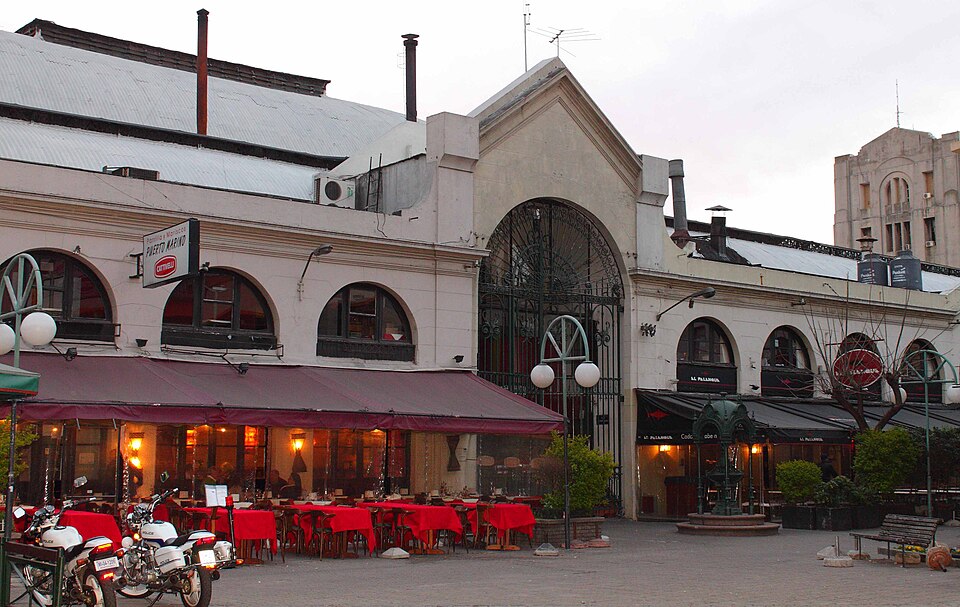
Photo: Rodrigo Pissano · CC BY-SA 3.0 · Wikimedia Commons Follow the smell of wood smoke to the Mercado del Puerto, the Port Market, in the Old City near the harbour. It was built as a covered marketplace, but today it is a lively home for restaurants serving traditional Uruguayan food, above all asado grilled over open-fire parrillas. You may hear live tango here too. And on the last day of every year, the market hosts a big midday New Year's Eve street party, complete with a traditional water and cider fight that draws locals and visitors alike.
Colonia del Sacramento
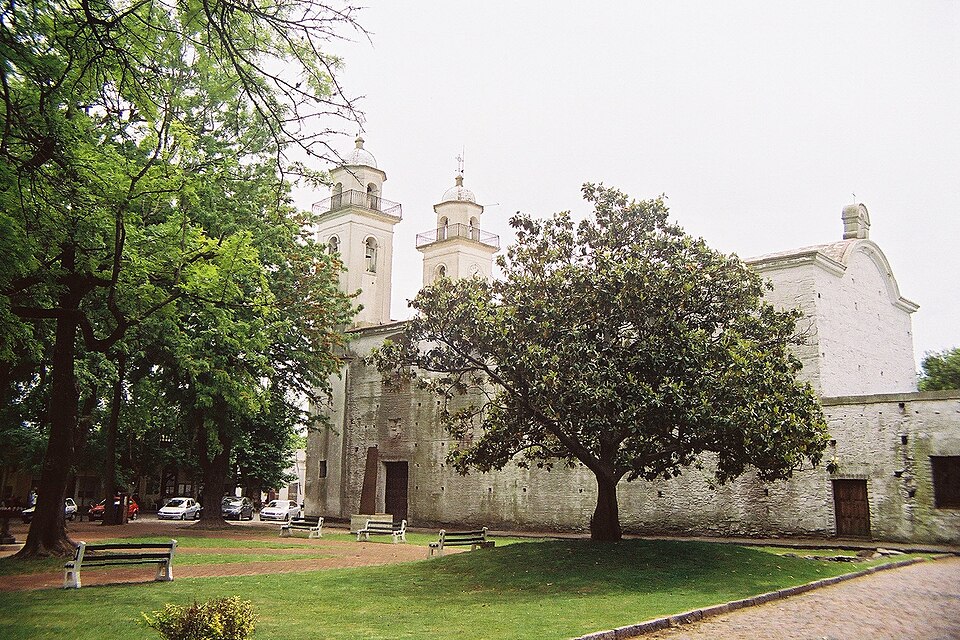
Photo: JGHowes , photographer ( Canon AE-1 camera). · Attribution · Wikimedia Commons Across the Río de la Plata from Buenos Aires lies Colonia del Sacramento, one of the oldest towns in Uruguay. It was founded by the Portuguese: in January 1680, Manuel Lobo arrived with 5 ships carrying about 400 soldiers and craftsmen to establish a post on the southern border of Brazil. The Spanish soon responded, sending a large force to besiege the new town. That long rivalry between Portugal and Spain shaped the place, and its historic quarter is a UNESCO World Heritage Site.