 Sofa VoyageSuomeksi
Muscat
Welcome to Muscat, the capital and most populous city of Oman. It lies on the Gulf of Oman near the strategically important Strait of Hormuz, with the Hajar Mountains dominating the view. Low white buildings are a typical feature of its architecture. Since the 1st century, Muscat has been known as a leading port for trade between west and east, and in the 18th century it was a regional military power whose influence reached as far as East Africa and Zanzibar. From 1970 the city developed rapidly. Let us explore its mosques, forts and palace.
Sights
Sultan Qaboos Grand Mosque
Before you stands the Sultan Qaboos Grand Mosque, the largest mosque in Oman, with room for 20,000 worshippers. In 1992 Sultan Qaboos bin Said directed that his country should have a grand mosque. Building began in December 1994 at Bausher and took six years and seven months, with completion in 2001 in a contemporary Islamic style. Some 270,000 tonnes of Indian sandstone were imported for its construction. Five minarets rise around it, the tallest reaching 90 metres, and together they are the mosque's most striking feature from outside.
Royal Opera House Muscat
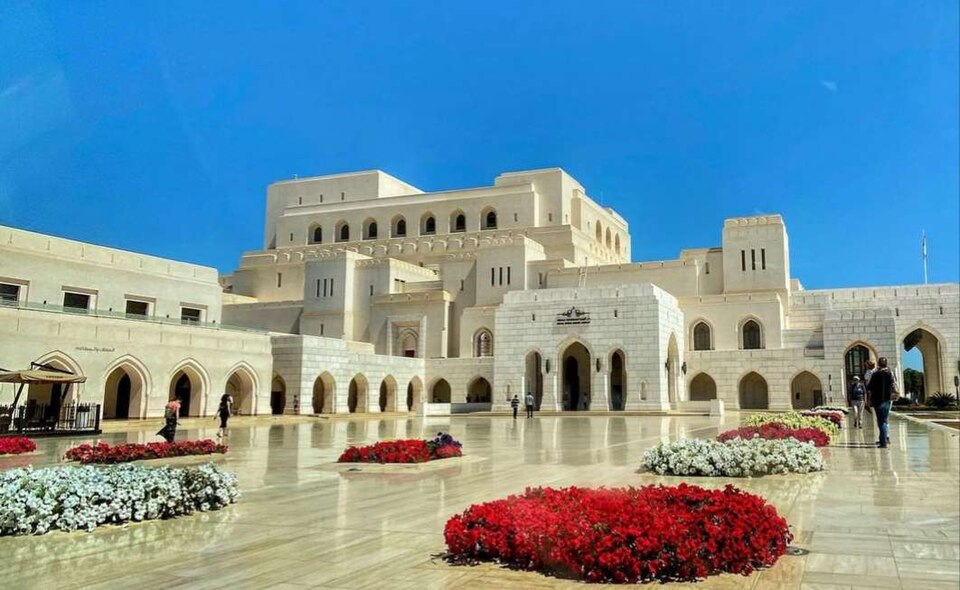
Photo: Arsalaan Ahmad · CC BY-SA 4.0 · Wikimedia Commons On Sultan Qaboos Street in the Shati Al-Qurm district stands the Royal Opera House Muscat, the country's leading venue for music and culture. It was built on the royal orders of Sultan Qaboos and opened in 2011, in a contemporary Omani style. It seats up to 1,100 people and presents opera, orchestral music, ballet and other stage productions. Its main auditorium is a flexible space that can be adapted for different kinds of performance, and the complex also includes landscaped gardens, a cultural market and restaurants.
Al Alam Palace

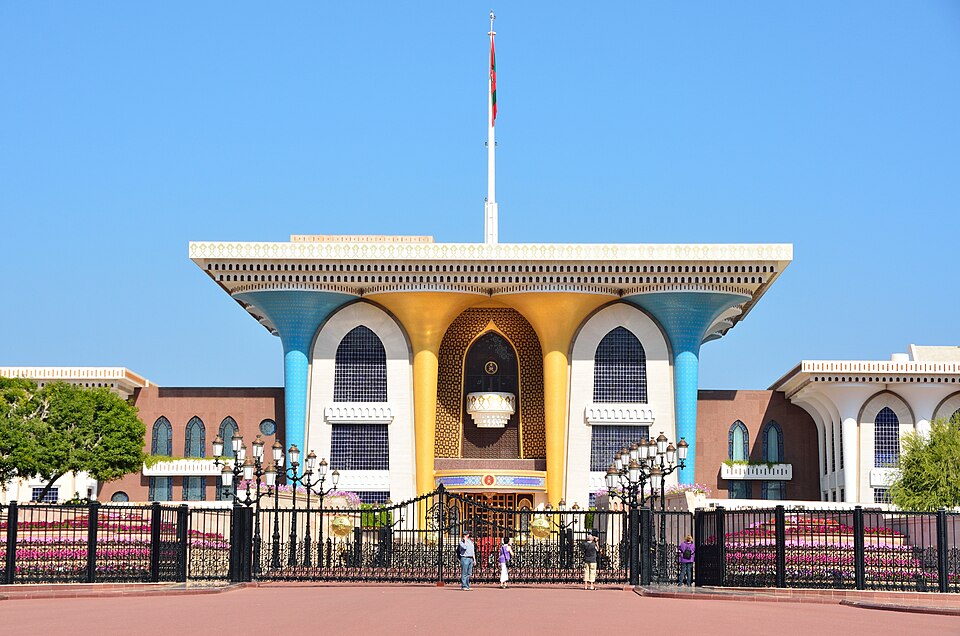
Photo: Andrew Moore · CC BY-SA 2.0 · Wikimedia Commons Here in Old Muscat, between two forts, stands Al Alam Palace, whose name means Palace of the Flag. It is the ceremonial palace of the Sultan, used to welcome foreign dignitaries and heads of state. An earlier palace stood here from the early 1800s, but it was demolished in 1971. The present palace was commissioned by Sultan Qaboos bin Said and completed in 1972 in a flamboyant style, with gold and blue columns on its façade. The grounds are off limits, but you may stop by the gates to take a photograph.
Al Jalali Fort
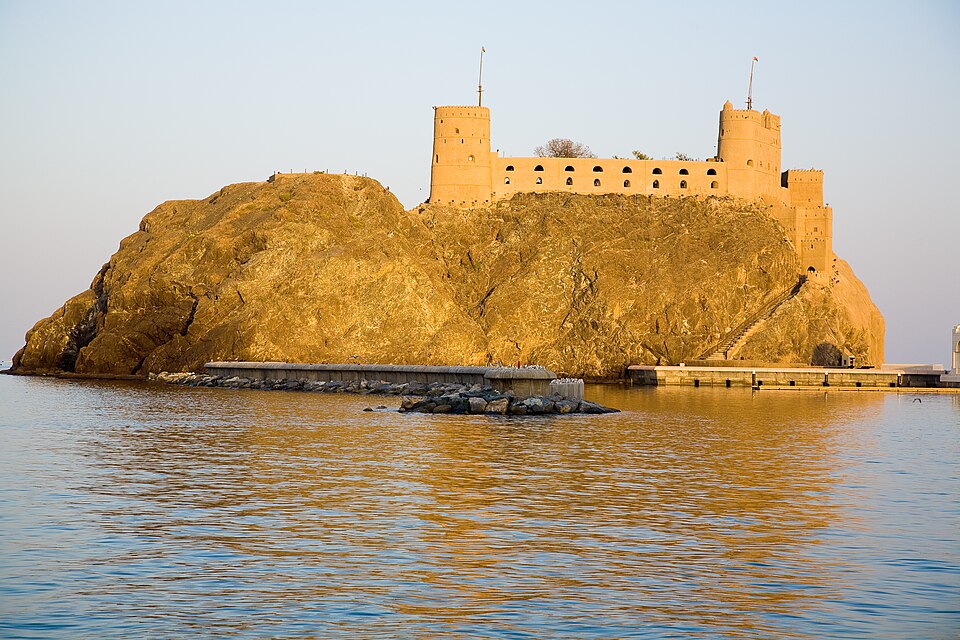
Photo: Andries Oudshoorn · CC BY-SA 2.0 · Wikimedia Commons Guarding the harbour of Old Muscat is Al Jalali Fort, built by the Portuguese in the 1580s on an earlier Omani fortress, after Muscat had twice been sacked by Ottoman forces. It fell to Omani forces in 1650. At times it served as a refuge or a jail for members of the royal family, and for much of the 20th century it was Oman's main prison. Since its restoration in 1983 it has housed a museum of Omani cultural history, with cannons, old muskets, maps and rugs, open only to dignitaries visiting the country.
Al-Mirani Fort
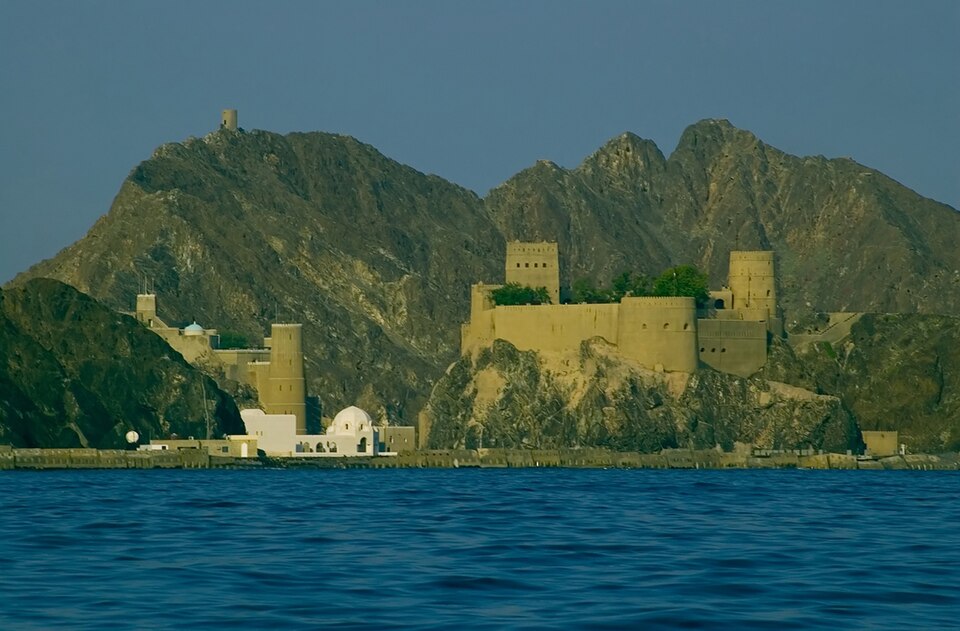
Photo: Fotofu from Great Britain · CC BY 2.0 · Wikimedia Commons Also watching over the harbour of Old Muscat is Al-Mirani Fort. A fort already stood here before the Portuguese arrived, and they rebuilt it in 1587. This was the first fort in Oman to use cannons. During the Ottoman capture of Muscat in 1552, the fort held out under siege for 18 days before it was taken and its fortifications destroyed.
Bait Al Zubair

Photo: Francesco Bini · CC BY-SA 4.0 · Wikimedia Commons On Al Saidiya Street in Old Muscat you will find Bait Al Zubair, a museum built largely around its owner's private collection. Inside are ancient weapons, including the khanjar, along with household equipment and traditional costumes. Do not miss the garden, where a scale model of an Omani village awaits.