 Sofa VoyageSuomeksi
Nassau

Welcome to Nassau, the capital and largest city of the Bahamas, on the island of New Providence. The city was named in honour of William the Third of England, Prince of Orange-Nassau, and it was historically known as a stronghold of pirates. Its modern growth began in the late 18th century, when thousands of Loyalists and the people they enslaved arrived after the American War of Independence. Later, thousands of Africans freed from slave ships by the Royal Navy were resettled here. Today Nassau is the heart of the country's commerce and government. Let's explore its forts, steps and shores.
Sights
Fort Charlotte

Photo: Ahodges7 · CC BY-SA 3.0 · Wikimedia Commons On a hill above the harbour, a short walk west of downtown, stands Fort Charlotte. The British colonial governor Lord Dunmore built it in the late 18th century, after the American Revolutionary War, as one of several forts meant to defend Nassau against invading Spaniards. Here is a surprise: the fort has never been used in battle.
Queen's Staircase
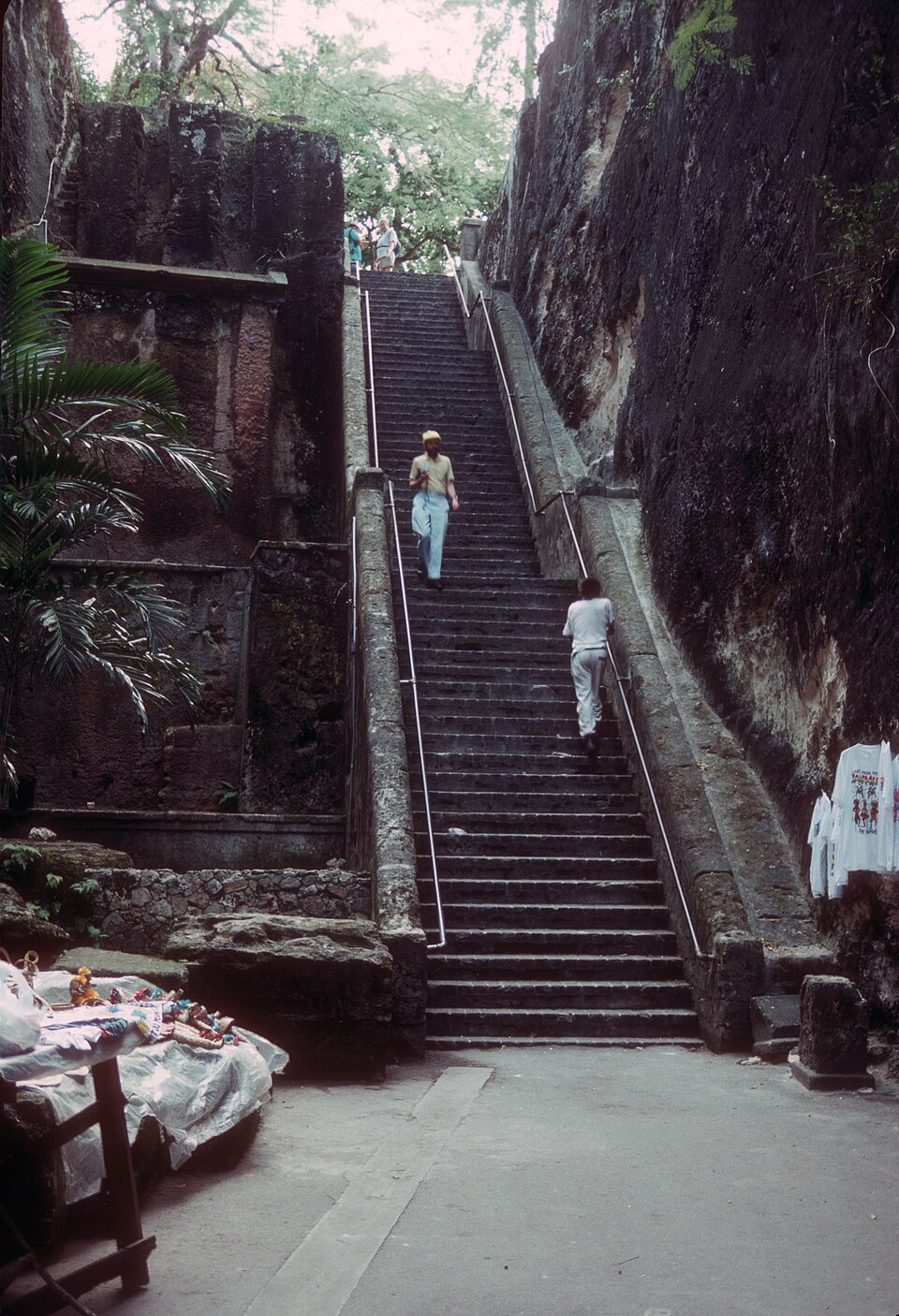
Photo: JERRYE AND ROY KLOTZ MD · CC BY-SA 3.0 · Wikimedia Commons Now climb the Queen's Staircase, known locally as the 66 steps, though there are 65 today. Its story is a sobering one: between 1793 and 1794, 600 enslaved people carved it out of solid limestone to create a direct route from Fort Fincastle down to the town. In the 19th century it was named after Queen Victoria. As you climb the 31 metre rise, water cascades alongside the steps into a pool below, and tropical plants and trees grow between high stone walls.
Fort Fincastle
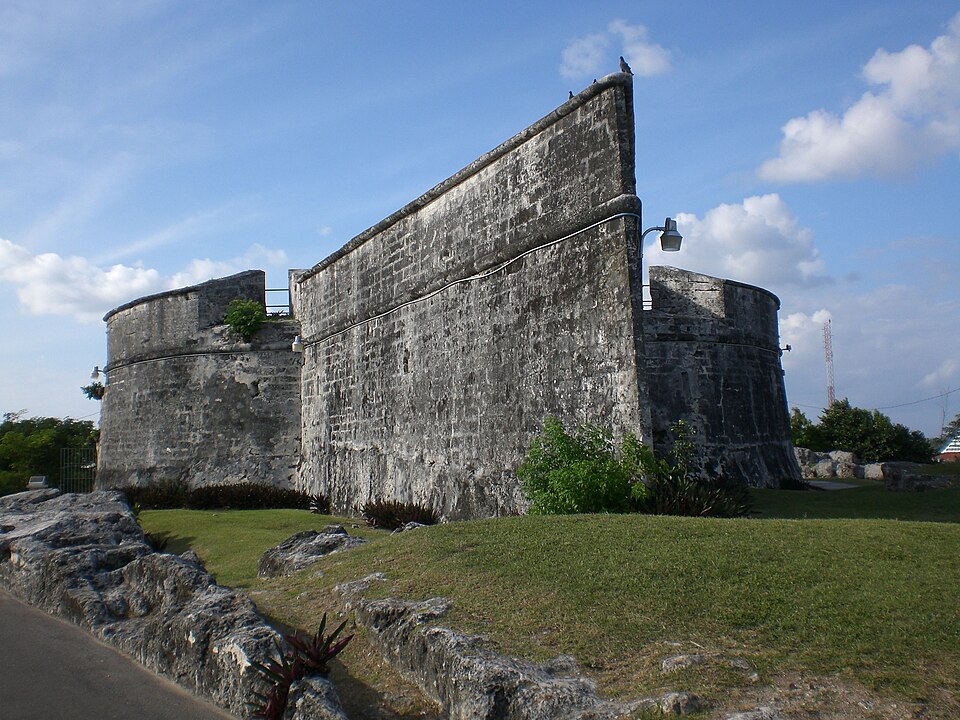
Photo: Taugenichts80 · CC BY-SA 3.0 · Wikimedia Commons At the top of the staircase, on Bennet's Hill, the highest point of Nassau, you reach Fort Fincastle. Lord Dunmore built it in 1793 to protect the town from pirates, naming it after his second title, Viscount Fincastle. Look at its outline: the fort is shaped like a paddle steamer. It once mounted several cannons and a howitzer, and it served as a lighthouse until 1817. From here you can look out over the city, Paradise Island and the eastern approaches to the island.
Paradise Island
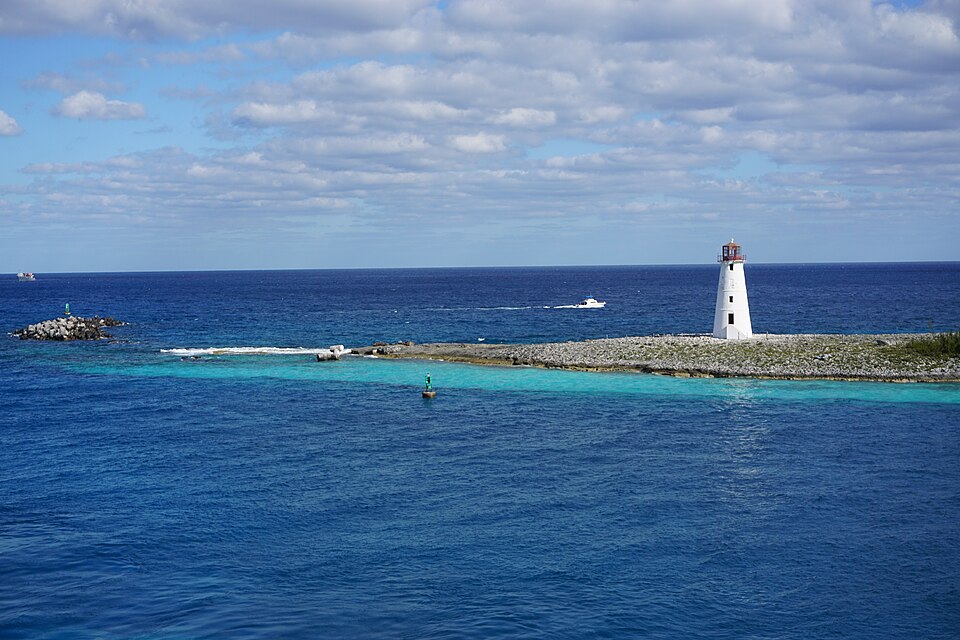
Photo: Philip Gabrielsen · CC BY-SA 4.0 · Wikimedia Commons Just across the harbour lies Paradise Island, linked to Nassau by two bridges. It was once called Hog Island, until Huntington Hartford, heir to the A&P supermarket fortune, bought it and renamed it Paradise Island in 1962. He built landmarks such as the Ocean Club and a golf course, and even installed the Cloisters, a 14th century French Augustinian monastery that William Randolph Hearst had dismantled in the 1920s. Today the island is best known for the sprawling Atlantis resort, with its water park, aquarium and beaches.
Bahamian Parliament Building
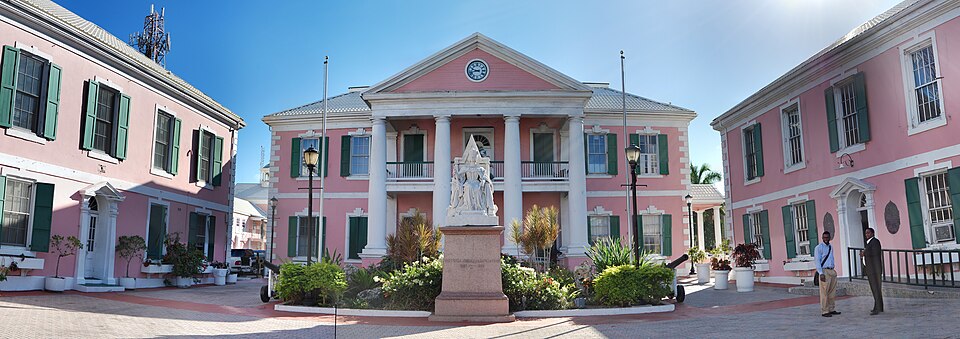
Photo: UpstateNYer · CC BY-SA 3.0 · Wikimedia Commons On Parliament Square, along Bay Street, stands the coral pink home of the House of Assembly of the Bahamas. It was built in 1815 by Loyalist refugees from the newly independent United States, in a British colonial style often compared to the American Federal style. In the square in front of it, a statue of Queen Victoria keeps watch.
National Art Gallery of the Bahamas
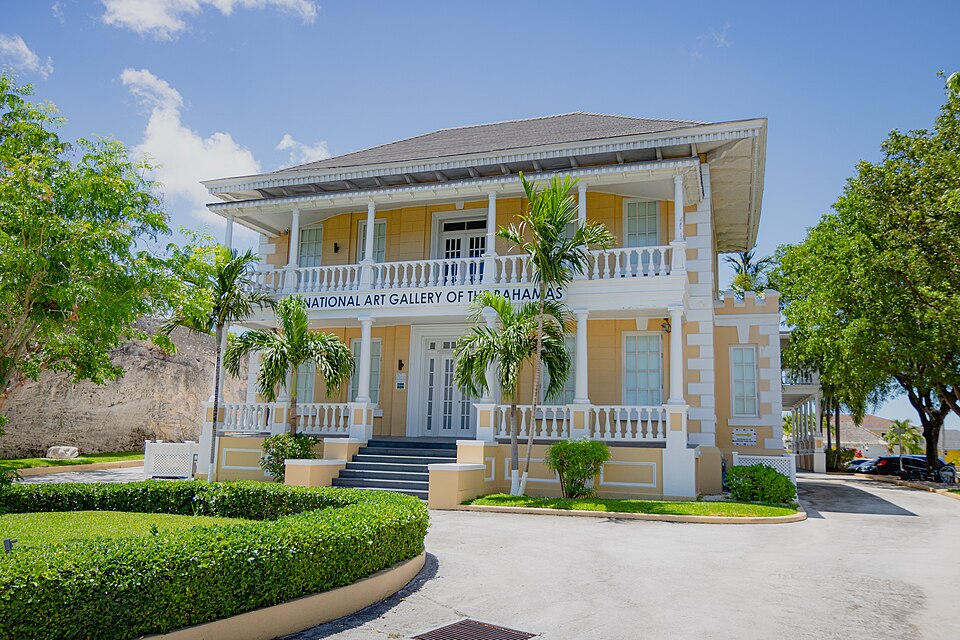
Photo: NAGB-Communications · CC BY-SA 4.0 · Wikimedia Commons We end at the National Art Gallery of the Bahamas, the first institution of its kind in the country's history. Announced in 1996, it was part of a wider effort to record, preserve and interpret the story of the independent nation founded in 1973. The gallery collects, preserves and exhibits Bahamian art, and it reaches out to the community through exhibitions and educational workshops.