 Sofa VoyageSuomeksi
Panama City
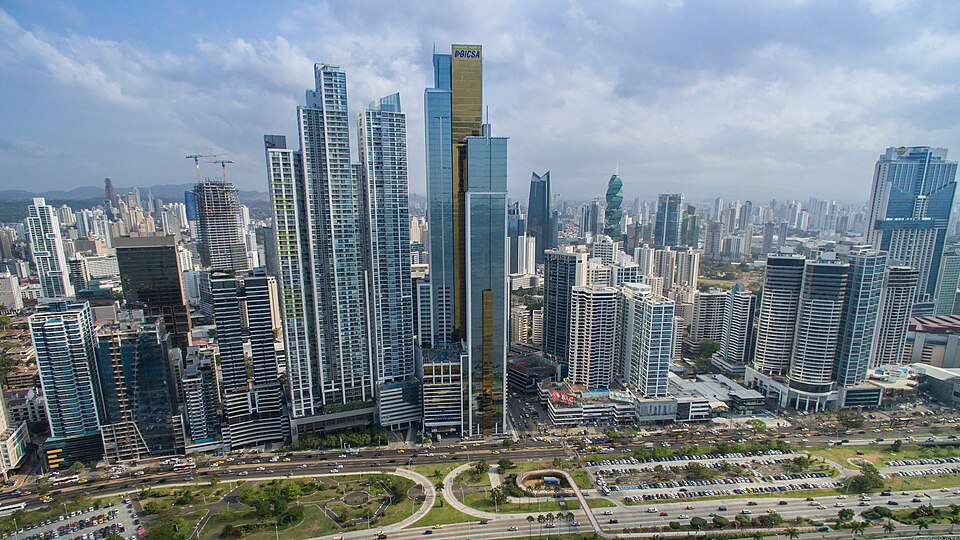
Welcome to Panama City, the capital and largest city of the Republic of Panama, standing at the Pacific entrance of the Panama Canal. Founded on 15 August 1519 by the Spanish conquistador Pedro Arias Dávila, it became a stopover on one of the most important trade routes in the Americas, through which passed most of the gold and silver Spain mined there. In 1671 the privateer Henry Morgan sacked and burned the original city, and it was re-established in 1673 on a peninsula 8 kilometres away. Today it is the country's political centre and a hub for banking and commerce. Let us explore the canal, the old quarters and more.
Sights
Panama Canal
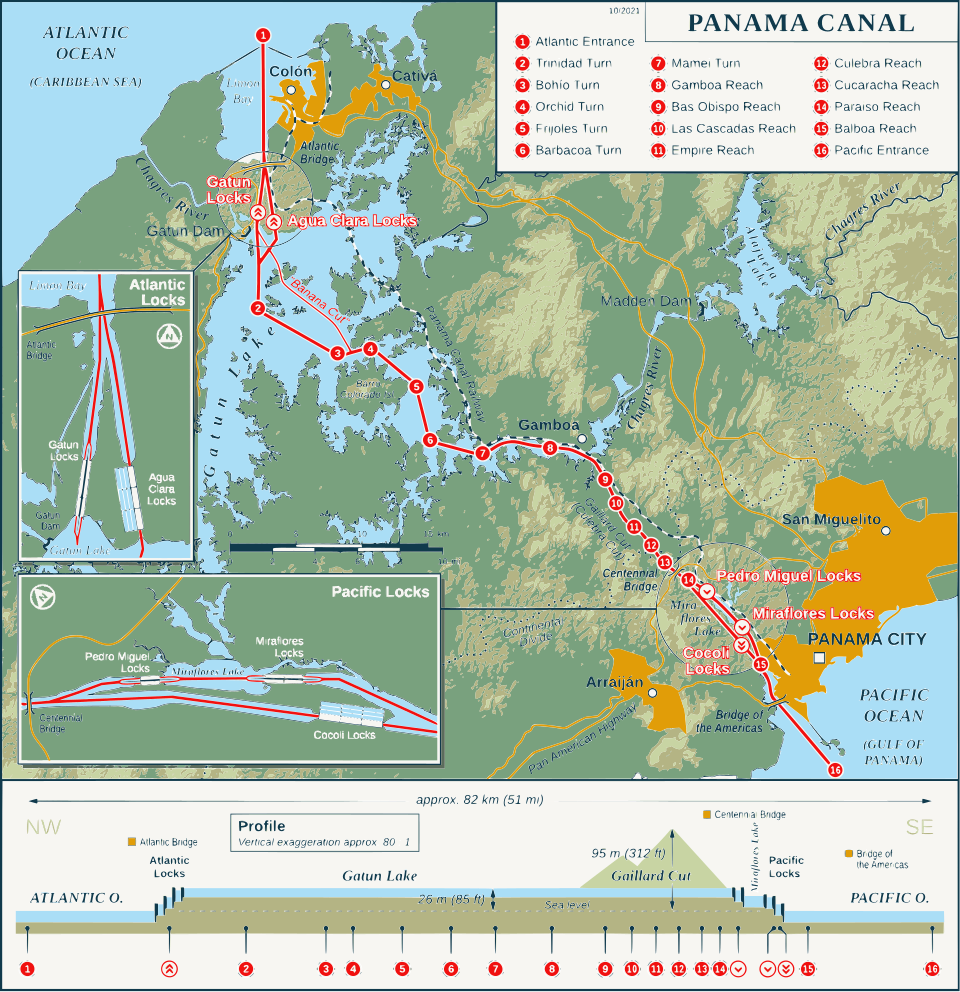
Photo: Thoroe · CC BY-SA 2.0 · Wikimedia Commons Before you lies one of the great shortcuts of the world, the Panama Canal, an 82-kilometre waterway linking the Caribbean Sea with the Pacific Ocean across the narrowest point of the isthmus. Ships no longer need to take the long and hazardous route around the tip of South America. Locks at each end lift vessels up to Gatun Lake, an artificial freshwater lake 26 metres above sea level, and then lower them again on the other side. Imagine this: a single ship's passage uses an average of 200 million litres of fresh water.
Casco Viejo

Photo: Garcia.dennis · CC BY-SA 4.0 · Wikimedia Commons Wander the streets of Casco Viejo, the historic district of Panama City. It was built after the original city was almost entirely destroyed in 1671, and the new city was founded on 21 January 1673 on a peninsula surrounded by the sea and protected by defensive walls. Here the first institutions and buildings of modern Panama City are preserved. Three large fires in the 18th century reshaped the quarter, and much of what you see dates from the late 19th and early 20th centuries.
Biomuseo

Photo: user:ArnoldReinhold · CC BY-SA 4.0 · Wikimedia Commons On the Amador Causeway, at the southern entrance of the canal, you cannot miss the colourful Biomuseo, designed by the architect Frank Gehry, his first design in Latin America. It opened on 2 October 2014. The museum tells a remarkable story: the isthmus of Panama formed very recently in geological time, and its rise changed the ecology of the Western Hemisphere. Its eight permanent galleries trace that natural and cultural history, and outside you can explore a botanical garden.
Panamá Viejo

Photo: Melpanama · CC BY 3.0 · Wikimedia Commons In the suburbs of the modern capital, you can walk among the ruins of Panamá Viejo, the original Panama City. Founded in 1519, it was the first permanent European settlement on the Pacific Ocean, and soon became a base for expeditions to Peru and a stop for gold and silver on their way to Spain. In 1671 it was destroyed during the attack by the Welsh privateer Henry Morgan. Together with the historic district, it has been a UNESCO World Heritage Site since 1997.
Bridge of the Americas

Photo: U.S. Navy photo by Mass Communication Specialist 2nd Class Joshua Lee Kelsey · Public domain · Wikimedia Commons Look across the Pacific entrance to the canal at Balboa and you will see the Bridge of the Americas, originally known as the Thatcher Ferry Bridge. It was built by the United States between 1959 and 1962. Earlier crossings over the canal used moveable designs with limited capacity, so this bridge greatly increased road traffic across the waterway. Until 2004 it was a key link in the Pan-American Highway.