 Sofa VoyageSuomeksi
Riyadh
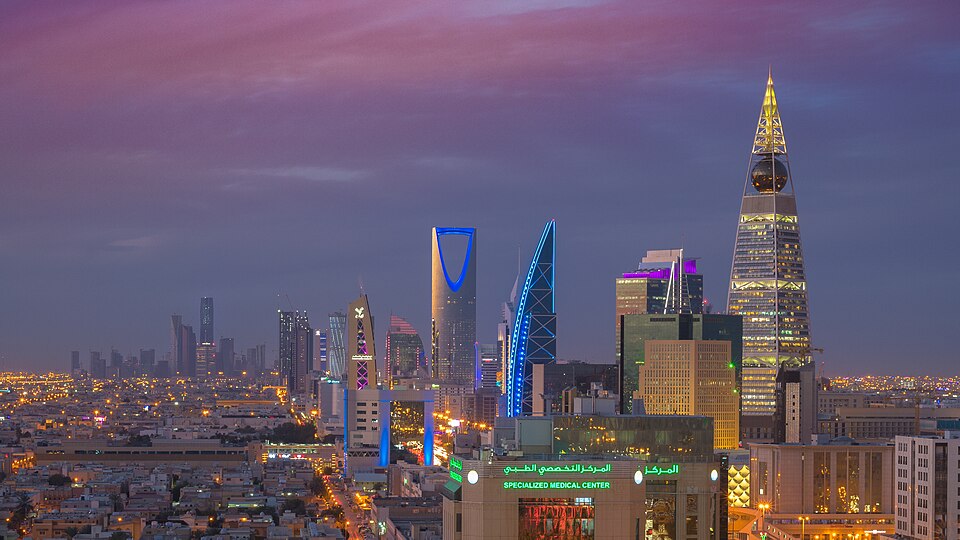
Welcome to Riyadh, the capital and largest city of Saudi Arabia, and the largest city on the Arabian Peninsula. It lies on the eastern bank of Wadi Hanifa on the Najd plateau, about 600 metres above sea level. The name Riyadh was first mentioned in 1590 by an Arab chronicler, and it is thought to refer to the oasis towns that existed here before the town wall was built. In 1902 Ibn Saud regained his ancestral rule here, and in 1932 he named his kingdom Saudi Arabia, with Riyadh as its capital. In the 1950s the old walls came down and the modern metropolis grew. Let us begin.
Sights
Al Masmak Palace
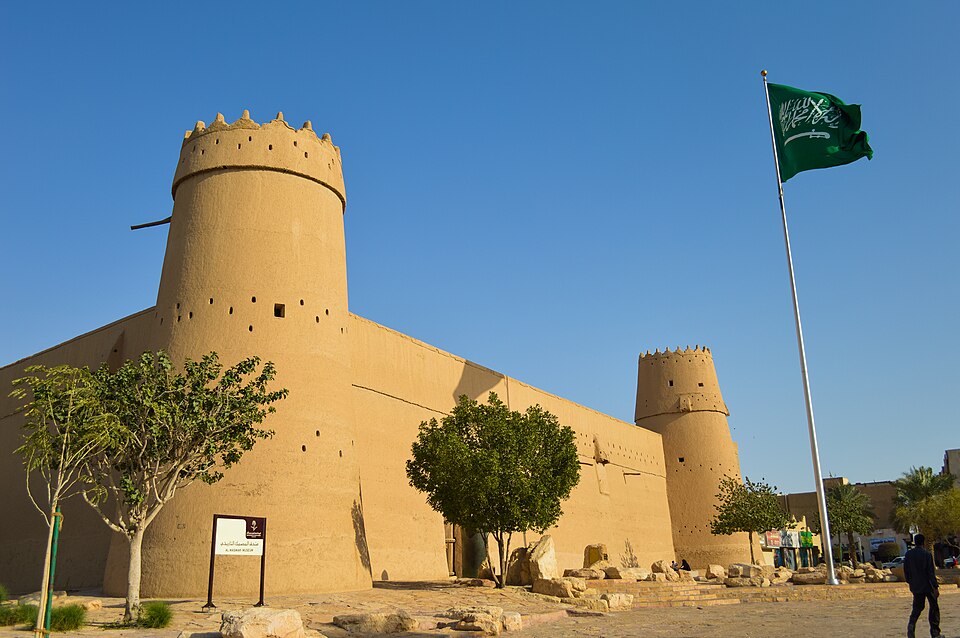
Photo: Francisco Anzola · CC BY 2.0 · Wikimedia Commons In the old ad-Dirah quarter stands Al Masmak, a fort of clay and mudbrick with four watchtowers and thick walls on a foundation of stone. Its construction began in 1865 under Abdullah bin Faisal Al Saud and was completed in 1895, after the Rashidi dynasty had taken over the town. This fort was the main stage of the Battle of Riyadh in 1902, the prelude to the unification of Saudi Arabia. Today it is a museum, opened to the public in 1995, where you can step inside the story of the kingdom's beginnings.
Diriyah
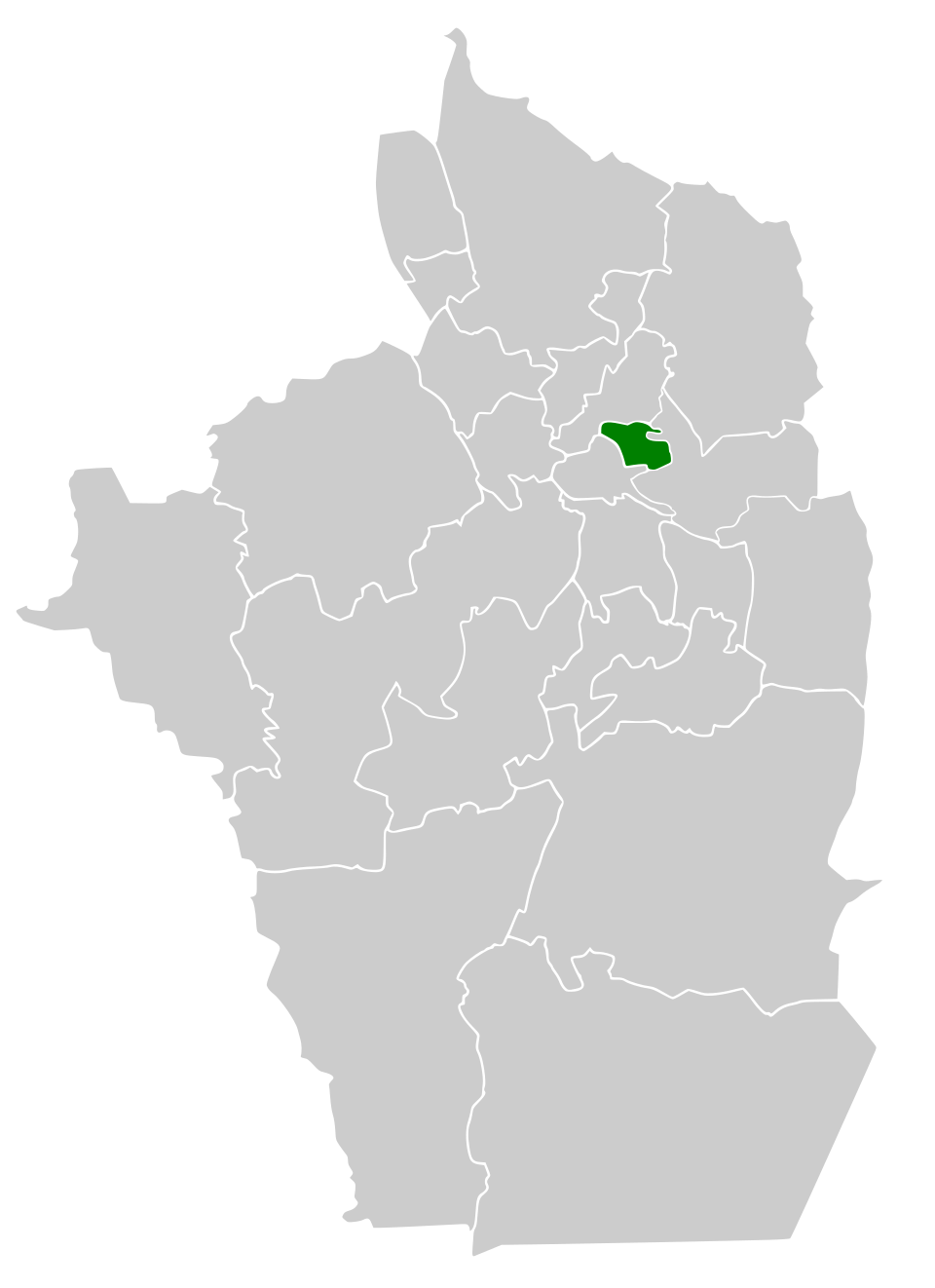
Photo: FShbib · CC BY-SA 4.0 · Wikimedia Commons On the north-western outskirts of Riyadh lies Diriyah, whose name means place of armour. This was the original home of the House of Saud and the capital of the first Saudi dynasty from 1727 to 1818. Walk through the At-Turaif District, the first Saudi capital here, declared a UNESCO World Heritage Site in 2010. If you want to see the whole layout of the old town at a glance, a large detailed model of it is on display in the National Museum in Riyadh.
National Museum of Saudi Arabia
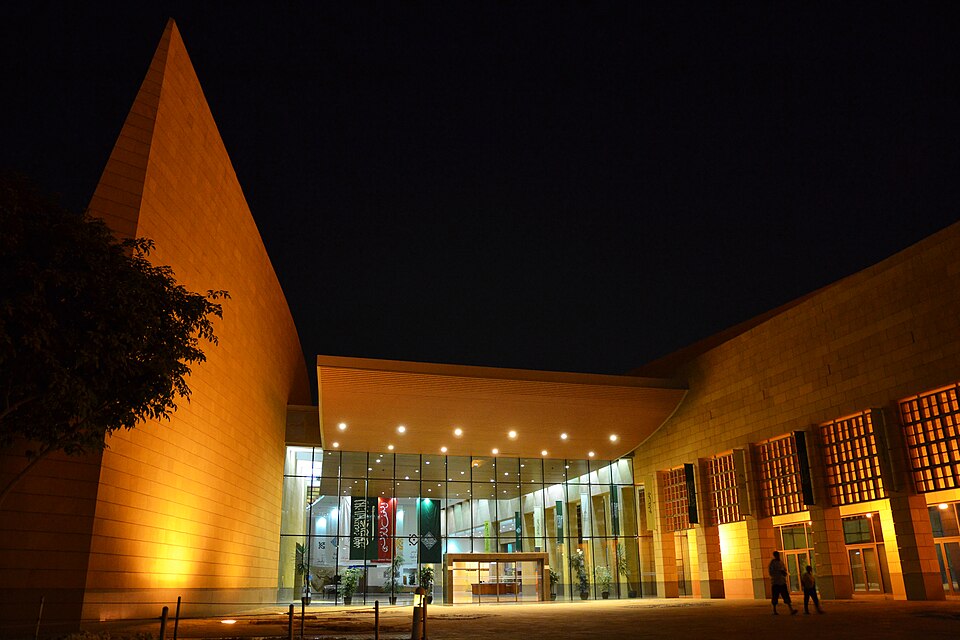
Photo: Sammy Six · CC BY 2.0 · Wikimedia Commons Here is the National Museum of Saudi Arabia, established in 1999 as part of the King Abdulaziz Historical Centre. It was built at remarkable speed, with only 26 months for planning and construction. The lead architect, Raymond Moriyama, took his inspiration from the form and colours of the sand dunes of the Red Sands just outside the city. Notice how the west facade curves like the soft contour of a dune, its layout forming a crescent that points towards Mecca. Inside, galleries trace the history of the Arabian Peninsula.
Murabba Palace
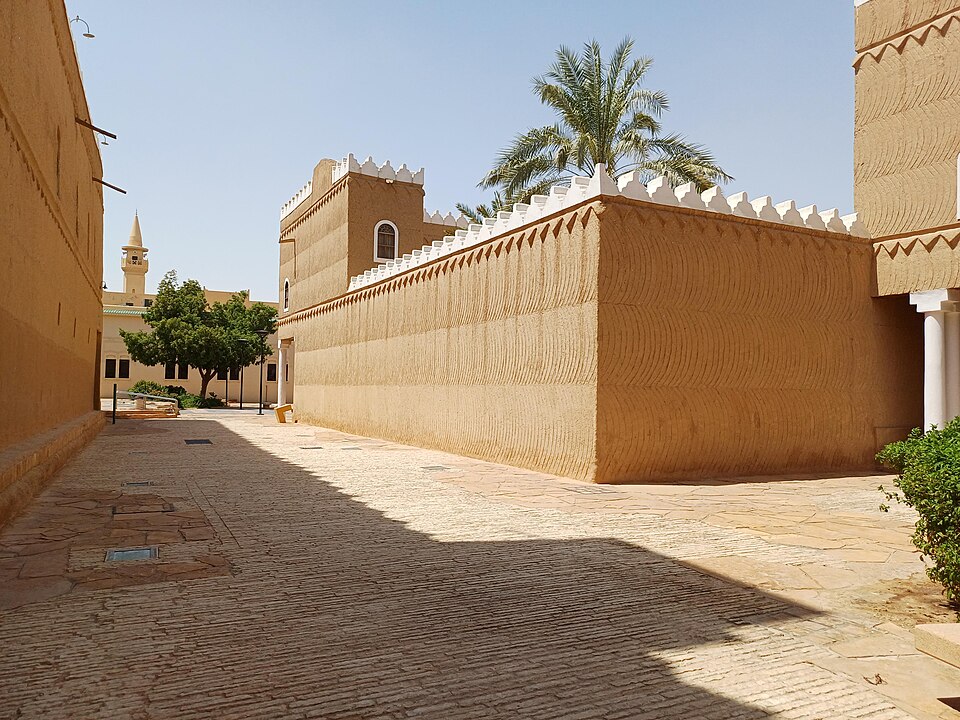
Photo: Radosław Botev · CC BY 3.0 pl · Wikimedia Commons Welcome to Murabba Palace, the Square Palace, one of the first buildings erected outside the walls of old Riyadh. King Abdulaziz ibn Saud built it as a family residence and court, and it was his main residence and workplace from 1938 until his death in 1953. The king took a personal part in the construction. Here is a surprising detail: building the palace introduced new technologies to Saudi society, including the use of cars for transport and electricity from generators. Since 1999 it has been open as a museum.
Kingdom Centre
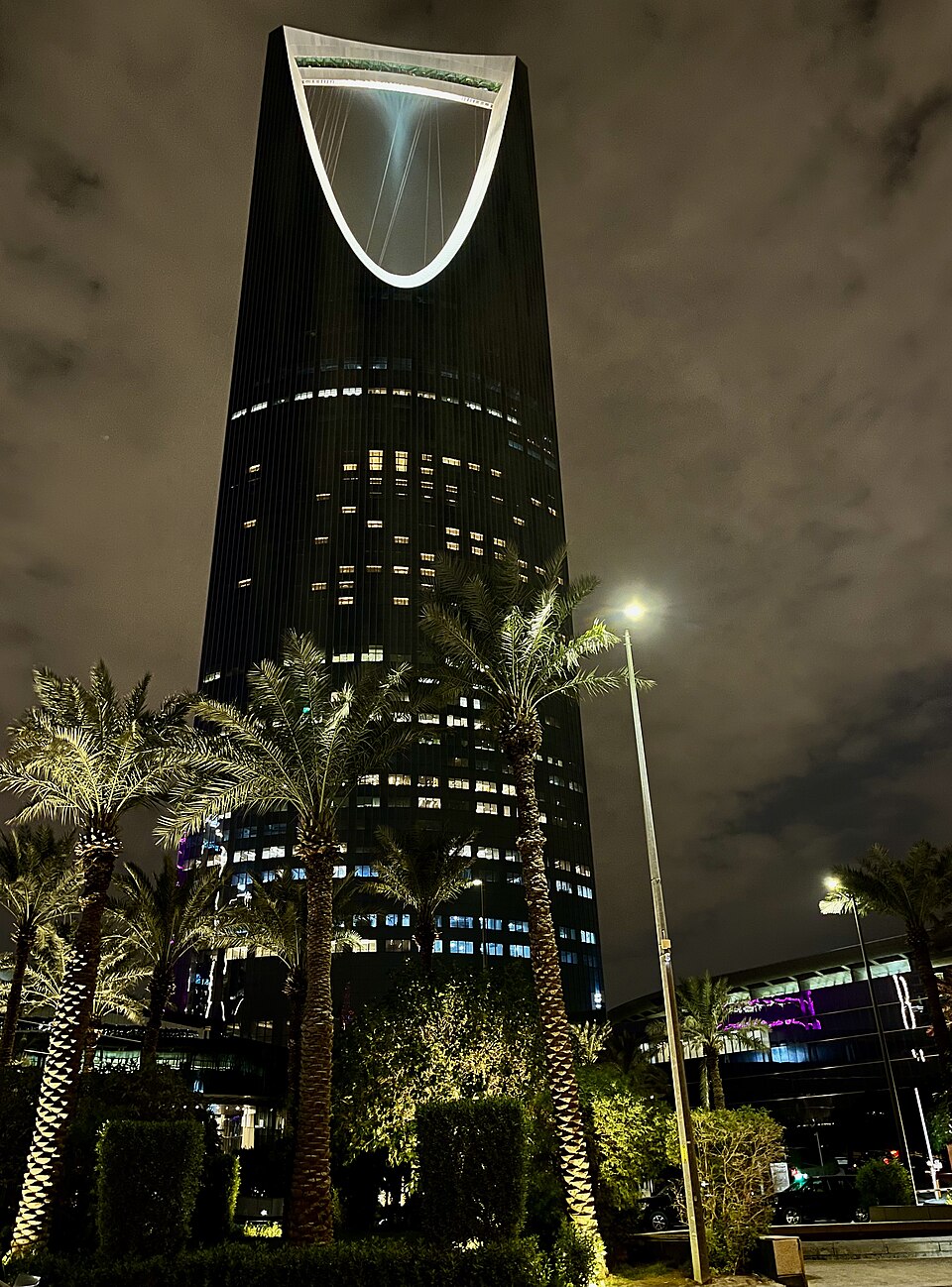
Photo: Hamza A. Durrani · CC BY-SA 4.0 · Wikimedia Commons Look up at the Kingdom Centre, a 99-storey skyscraper 302 metres tall. When it was completed in 2002 it became the tallest tower in Saudi Arabia. Its most striking feature is the opening in its upper third, an inverted parabolic arch topped by a skybridge. This 300-tonne steel corridor, with windows on both sides, is open to visitors who ride two lifts to reach it. The tower also contains the King Abdullah Mosque, the world's most elevated mosque from ground level, along with a shopping mall and a hotel.
Al Faisaliah Tower

Photo: Hamza A. Durrani · CC BY-SA 4.0 · Wikimedia Commons Here is Al Faisaliah Tower, 267 metres high, completed in 2000 and the first skyscraper built in Saudi Arabia. Designed by Foster and Partners and named after King Faisal, it was the tallest building in the country until 2002. Its design was inspired by the form of the Umar ibn al-Khattab Mosque in Al-Jouf Province. Step into the lobby to see a stained-glass installation created by the artist Brian Clarke together with Norman Foster.