 Sofa VoyageSuomeksi
Santo Domingo
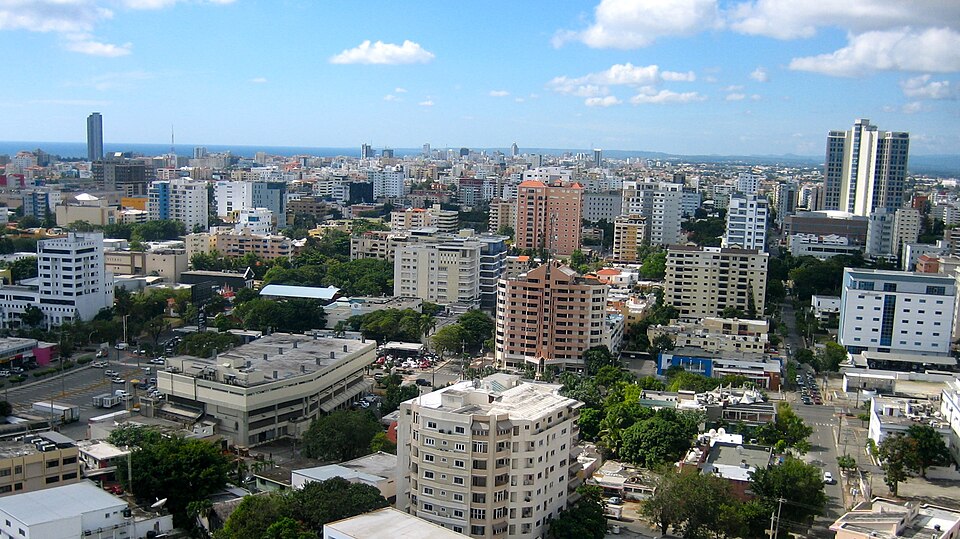
Welcome to Santo Domingo, the capital and largest city of the Dominican Republic. Founded by the Spanish in 1496, it is the oldest continuously inhabited European settlement in the Americas, and it was the first seat of Spanish colonial rule in the New World. Here stood the first university, cathedral, castle, monastery and fortress in the New World, and its Colonial Zone is a UNESCO World Heritage Site. From 1936 to 1961 the dictator Rafael Trujillo renamed it Ciudad Trujillo after himself, but after his assassination the city took back its original name. Let us explore.
Sights
Ciudad Colonial

Photo: Desox7x · CC0 · Wikimedia Commons Welcome to the Ciudad Colonial, the Colonial City, which locals simply call La Zona. This historic central neighbourhood is the oldest continuously inhabited European-established settlement in the Americas, and UNESCO has declared it a World Heritage Site. It lies on the west bank of the Ozama River, covering just over one square kilometre within a walled perimeter. Packed into that small space are landmarks such as the Alcázar de Colón, the Ozama Fortress and the cathedral, which is why it is the city's main attraction.
Cathedral of Santo Domingo
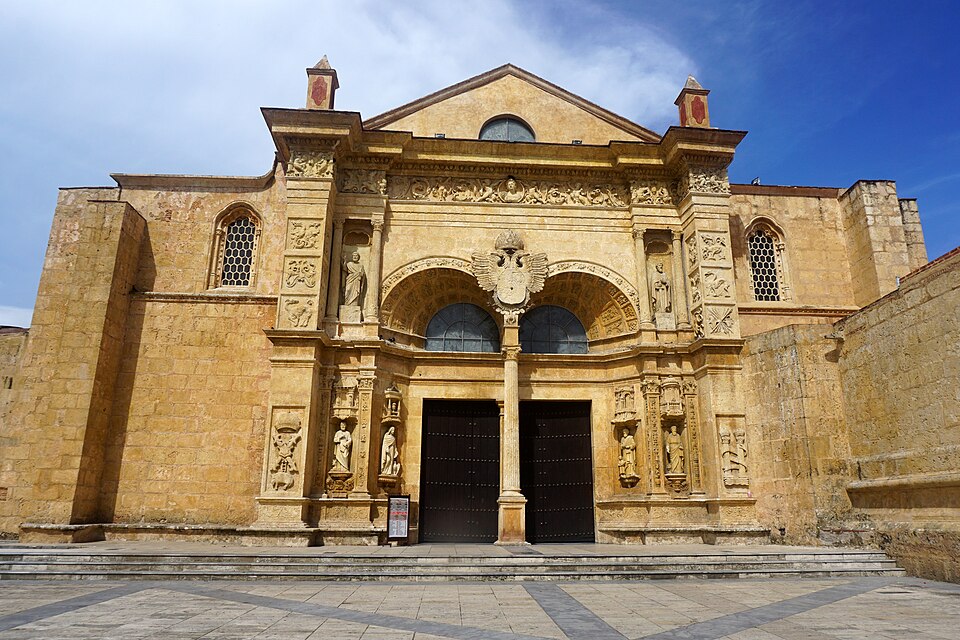
Photo: Mariordo (Mario Roberto Durán Ortiz) · CC BY-SA 4.0 · Wikimedia Commons In front of you is the Cathedral of Santa María la Menor, often called the Cathedral of the Americas. Begun in 1504 and completed in 1550, it is the oldest existing cathedral in the Americas. Its archbishop holds the honorary title of Primate of the Indies, because this was the first diocese in the New World after Columbus. Admire the façade of golden-tinted coral limestone. The building is a notable example of true Gothic architecture outside Europe.
Alcázar de Colón

Photo: Caribeanvybz · CC BY-SA 4.0 · Wikimedia Commons Here stands the Alcázar de Colón, the first fortified European palace built in the Americas. Mostly Gothic with Renaissance touches, it was built between 1511 and 1514 and was home to Diego Columbus, the first-born son of Christopher Columbus. His children were born within these walls, and three generations of the family lived here. The palace fell into ruin by the mid-18th century and lay abandoned until 1957, when it was restored as a museum. Look out for its tapestries, spanning the 15th to 17th centuries.
Fortaleza Ozama

Photo: Mariordo (Mario Roberto Durán Ortiz) · CC BY-SA 4.0 · Wikimedia Commons Overlooking the Ozama River is the Ozama Fortress, part of the city walls that UNESCO recognises as the oldest military construction of European origin in the Americas. It was built between 1502 and 1508, begun under Governor Nicolás Ovando. In the 16th century its 18 metre tower was the tallest European-built structure in the Americas. Inside are tunnels and dungeons where prisoners were held, and remarkably, Christopher Columbus himself was once imprisoned here.
Columbus Lighthouse

Photo: Epizentrum · CC BY-SA 4.0 · Wikimedia Commons Now we come to the Columbus Lighthouse, a mausoleum monument dedicated to Christopher Columbus. It is based on plans drawn in 1931 by the Scottish architect J. L. Gleave, but construction only began in 1986. It was inaugurated in 1992, in time for the 500th anniversary of Columbus's first voyage. The concrete structure is shaped like a cross, meant to represent the Christianisation of the Americas. A total of 157 beams of light shine up into the sky, so powerful that they can be seen from neighbouring Puerto Rico.
Los Tres Ojos National Park

Photo: Danu Widjajanto · CC BY-SA 4.0 · Wikimedia Commons Step down into Los Tres Ojos, the Three Eyes, an open-air limestone cave and one of the country's most popular attractions. It formed centuries ago when caves collapsed along tectonic fractures, leaving a bowl-shaped hollow that filled with water. Indigenous peoples once used it for religious rituals. A staircase carved into the rock leads you to the first lake, and a boat carries visitors across another to reach a fourth lake. The waters are fed by an underground river and framed by stalactites and stalagmites.