 Sofa VoyageSuomeksi
Sarajevo
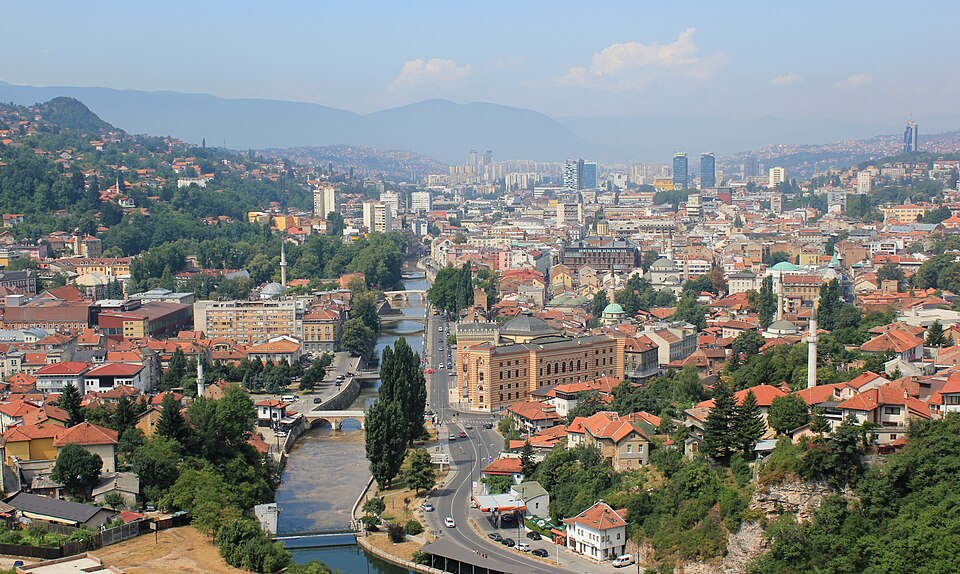
Welcome to Sarajevo, the capital and largest city of Bosnia and Herzegovina. It lies in a valley along the Miljacka River, surrounded by the Dinaric Alps in the heart of the Balkans. Because of its long history of religious and cultural diversity, Sarajevo is sometimes called the Jerusalem of Europe, and it is one of the few major European cities with a mosque, a Catholic church, an Orthodox church and a synagogue in the same neighbourhood. The modern city arose in the 15th century as an Ottoman stronghold. In 1914 it was the site of the assassination that sparked the First World War, and in 1984 it hosted the Winter Olympics. Let us begin in the old bazaar.
Sights
Baščaršija
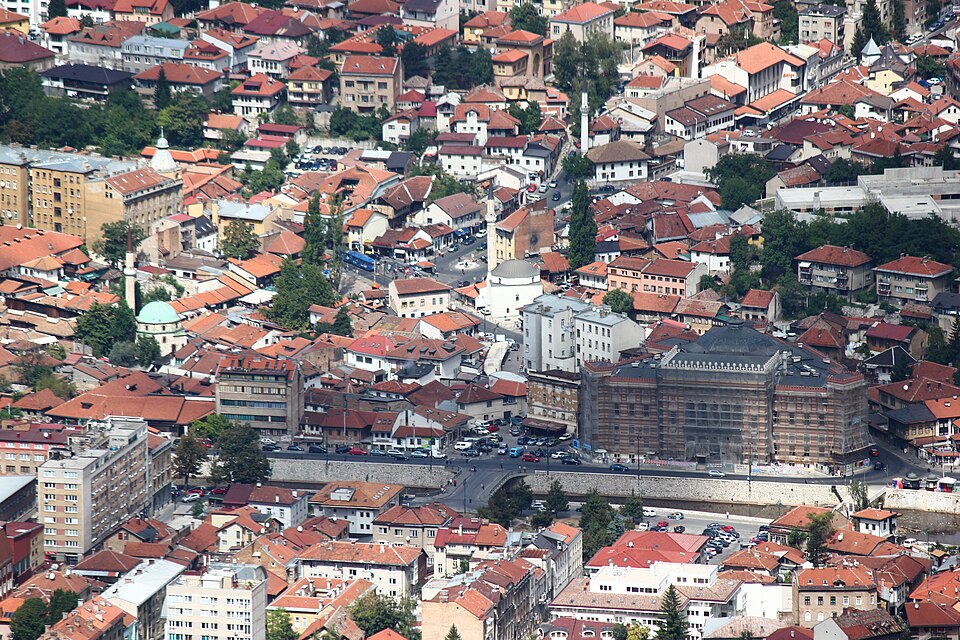
Photo: Julian Nyča · CC BY-SA 3.0 · Wikimedia Commons Welcome to Baščaršija, Sarajevo's old bazaar and the historical and cultural centre of the city. It was built in the 15th century, when Isa-beg Ishaković founded the city, on the north bank of the Miljacka. The name comes from Turkish: baš means head or main, and čaršija means bazaar, so this is the main market. Among its historic buildings you will find the Gazi Husrev-beg Mosque and the old clock tower, and today it is Sarajevo's major tourist attraction.
Gazi Husrev-beg Mosque

Photo: Bjoertvedt · CC BY-SA 3.0 · Wikimedia Commons Here in Baščaršija stands the Gazi Husrev-beg Mosque, built in the 16th century. It is the largest historical mosque in Bosnia and Herzegovina and one of the most representative Ottoman buildings in the Balkans. Ever since its construction, it has been Sarajevo's central mosque, and it serves as the main congregational mosque of the country's Muslims. It is named after Gazi Husrev-beg, who founded it and who rests in the mausoleum beside it.
Sarajevo City Hall
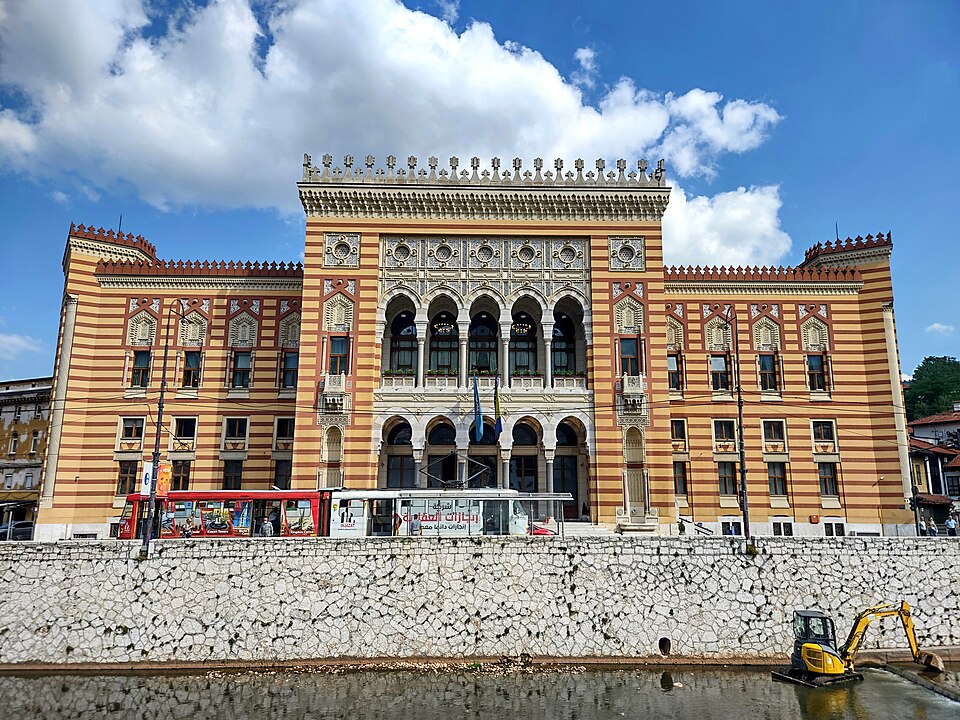
Photo: Ladislav Boháč · CC0 · Wikimedia Commons Before you rises the striking Vijećnica, Sarajevo City Hall. Built between 1892 and 1894, it was the largest and most representative building of the Austro-Hungarian period in the city. Its design, begun by the Czech architect Karel Pařík, is a blend of historical styles, mostly pseudo-Moorish, drawing inspiration from the Islamic art of Spain and North Africa. The building was reopened in 2014 and once again houses the city's mayor and council.
Latin Bridge
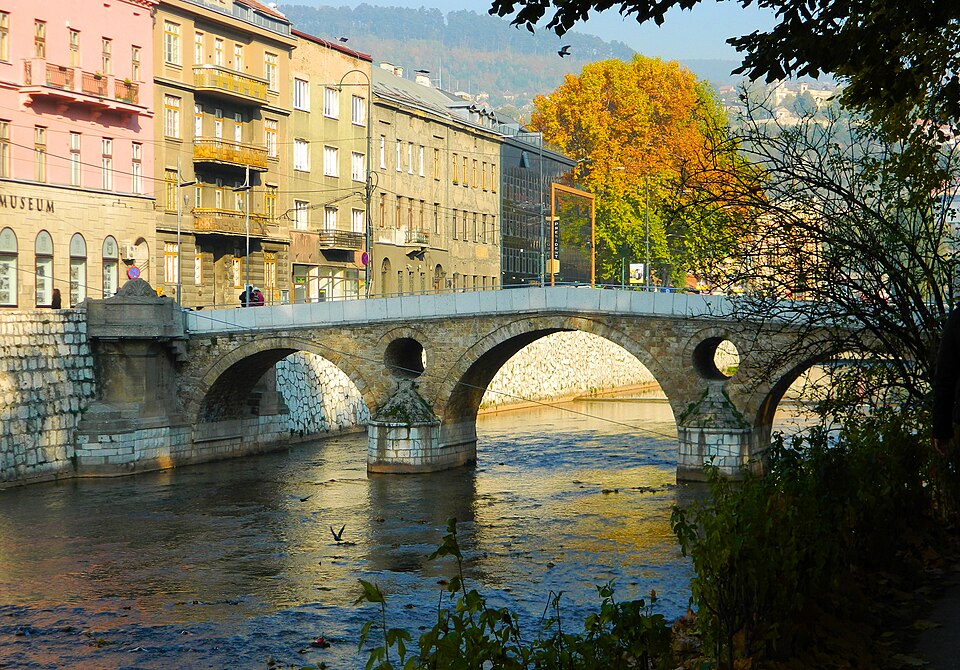
Photo: sundeviljeff · CC BY 2.0 · Wikimedia Commons This modest Ottoman-era bridge over the Miljacka carries a heavy history. At its northern end, in 1914, Gavrilo Princip assassinated Archduke Franz Ferdinand of Austria, setting off the crisis that led to the First World War. The bridge takes its name from the Catholic quarter it once led to, known in Ottoman times as Latinluk. Judging by its foundations, it is the oldest of the city's preserved bridges, first built of wood and later rebuilt in stone.
Sebilj in Sarajevo
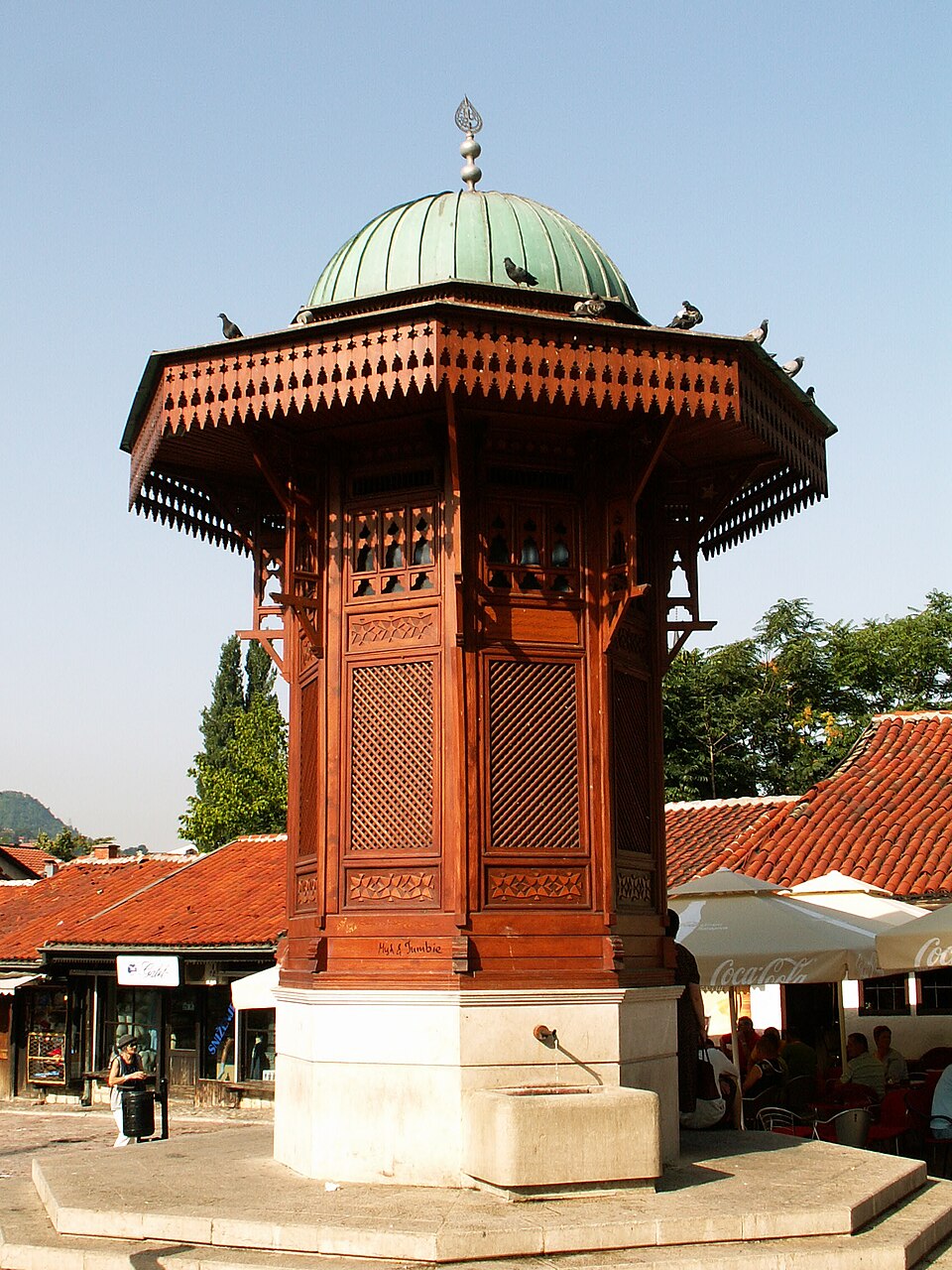
Photo: Jaimrsilva · CC BY-SA 4.0 · Wikimedia Commons In the centre of Baščaršija Square stands the Sebilj, an Ottoman-style wooden fountain. The original was built in 1753 but destroyed by fire in 1852, and the Austrian architect Alexander Wittek rebuilt it in 1891, a few metres from its earlier position. Take a sip if you like: local legend says that anyone who drinks from this fountain will one day return to Sarajevo. Its charm has travelled far, with replicas in cities from Belgrade to St. Louis.