 Sofa VoyageSuomeksi
Taipei
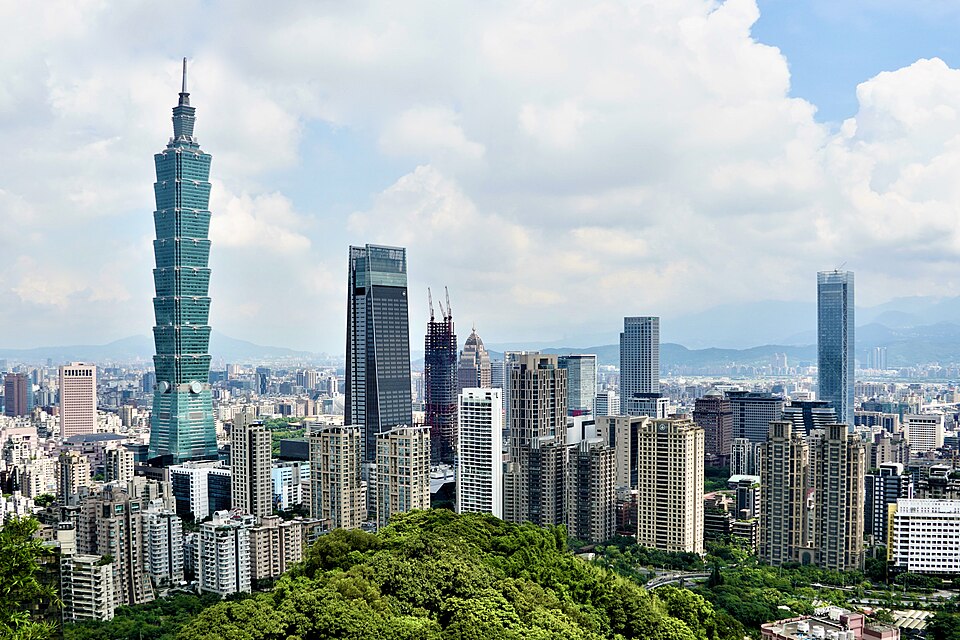
Welcome to Taipei, the capital of Taiwan. The city lies in the north of the island, most of it resting on the Taipei Basin, an ancient lakebed, where the Keelung and Xindian rivers join to form the Tamsui River. Taipei has been the political centre of the island since 1887, when the Qing dynasty made it the seat of Taiwan Province. Roughly one third of Taiwanese citizens live in its wider metropolitan area. Beyond temples, museums and soaring towers, the city is famous for its lively night markets, with mountains and hot springs close by. Let's set off.
Sights
Taipei 101

Photo: Taipei Financial Center Corporation · Public domain · Wikimedia Commons Look up, and keep looking: this is Taipei 101, a 508 metre skyscraper with 101 storeys. From its opening on 31 December 2004 until 2009 it was officially the tallest building in the world. Its design evokes traditional Asian aesthetics in a modern structure, and it was built to withstand the earthquakes of the Pacific Ring of Fire and the region's tropical storms. Its high-speed elevators once held the world record, carrying passengers from the 5th to the 89th floor in just 37 seconds. And if you have watched New Year's Eve celebrations, you may have seen the famous Taipei 101 fireworks.
National Palace Museum
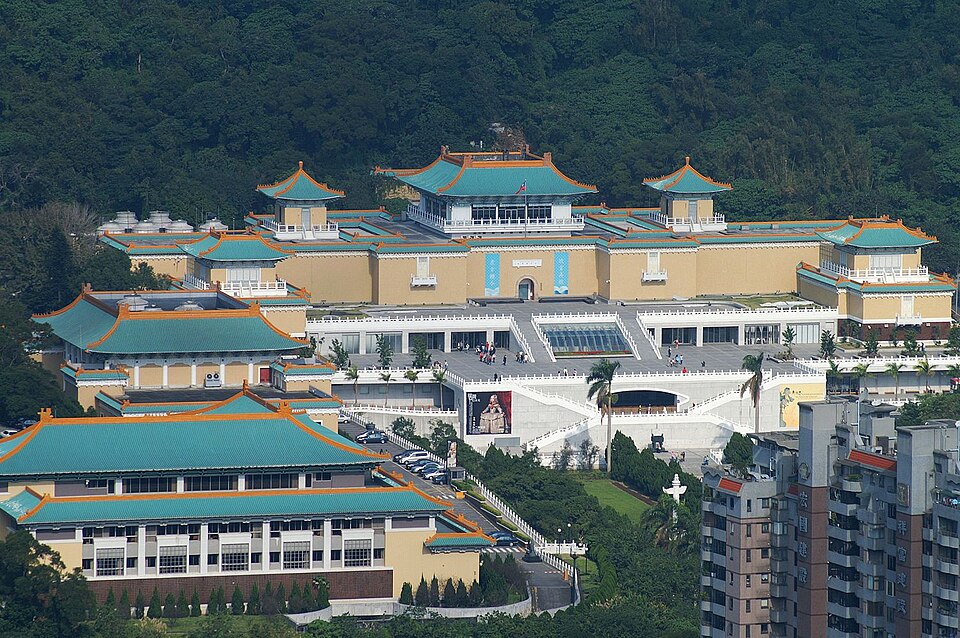
Photo: Peellden · CC BY 3.0 · Wikimedia Commons Welcome to the National Palace Museum in Shilin. The museum was founded in Beijing in 1925 and re-established here in Taipei in 1965. Its permanent collection holds nearly 700,000 artefacts and artworks, many of them relocated from the Beijing Palace Museum and other institutions in mainland China when the Republic of China government retreated to Taiwan. Like its Beijing counterpart, the collection grew from the imperial treasures of the Ming and Qing dynasties in the Forbidden City. Wander the galleries and you travel through 8,000 years of history, from the Neolithic to the modern era.
Chiang Kai-shek Memorial Hall

Photo: AngMoKio · CC BY-SA 3.0 · Wikimedia Commons Across the vast square stands the Chiang Kai-shek Memorial Hall, a national monument built during Taiwan's martial law period in memory of the former President of the Republic of China. In recent years the site has also come to remember the martial law era itself. The hall is white, with a blue octagonal roof, the number eight being traditionally linked in Chinese culture with abundance and good fortune. Count the steps as you climb: each of the two white stairways has 89, representing Chiang's age at his death. The National Theater and National Concert Hall flank the square on either side.
Longshan Temple
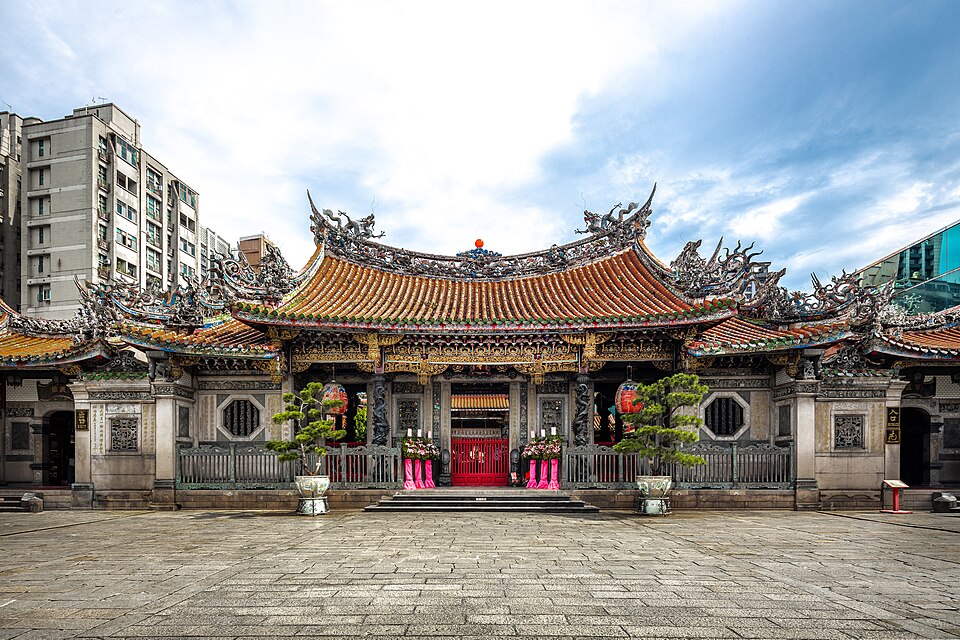
Photo: This Photo was taken by Supanut Arunoprayote . Feel free to use any of my images · CC BY 4.0 · Wikimedia Commons Step into Bangka Lungshan Temple in Wanhua District, a Taiwanese folk temple built in 1738 by settlers from Fujian in honour of Guanyin. The settlers named it after an ancient Lungshan Temple in their home county, founded as a branch of that root temple. Besides its Buddhist elements, it has halls and altars for folk deities such as Mazu and Guan Yu. For the early Chinese settlers it was both a place of worship and a gathering place. The buildings you see are not the originals: the temple has been destroyed in full or in part in numerous earthquakes, and was rebuilt between 1919 and 1924.
Shilin Night Market

Photo: Public domain · Wikimedia Commons As evening falls, follow the crowds to Shilin Night Market, often considered the largest and most famous night market in Taiwan. The heart of it is a food court with 539 stalls, while the side streets and alleys are lined with storefronts, roadside stands, cinemas, arcades and karaoke bars. Vendors start opening around four in the afternoon, and the crowds peak between eight and eleven at night. Don't rush home, though: businesses keep going well past midnight, closing around one or two in the morning.
Jiufen
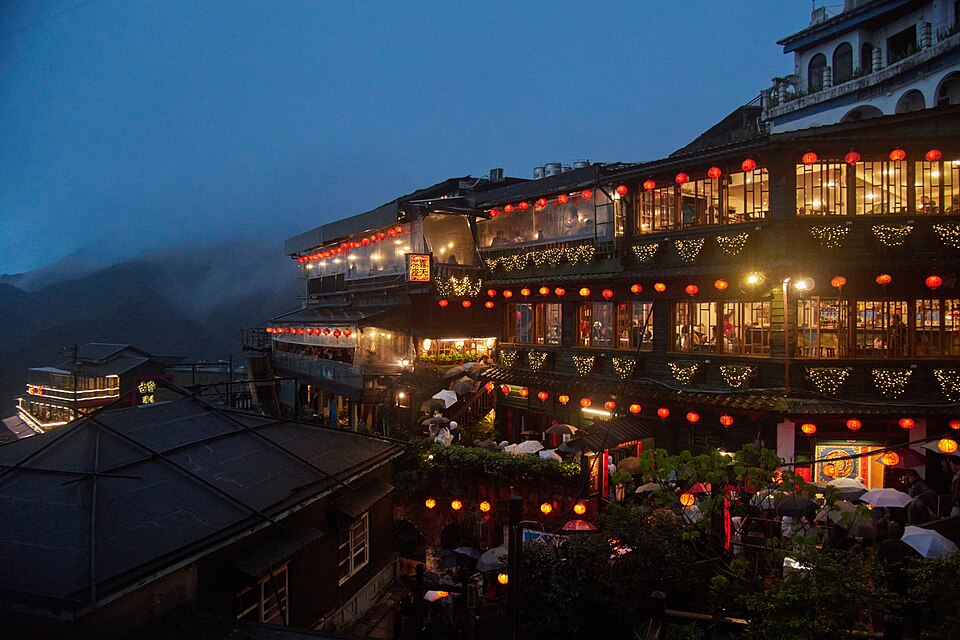
Photo: lumoplank · CC0 · Wikimedia Commons Our last stop takes us out of the city to Jiufen, a historic former gold mining town in New Taipei. Its name has a charming origin: in the early Qing era the isolated village housed nine families, so it requested nine portions every time shipments arrived from town. Gold flakes were discovered in 1890 by workmen during construction work. Today visitors come for Jiufen Old Street, a narrow, winding alley of shops, teahouses and restaurants offering a view of traditional Taiwanese life. Be prepared for the roads up here: they are steep, curving and narrow.