 Sofa VoyageSuomeksi
Valletta
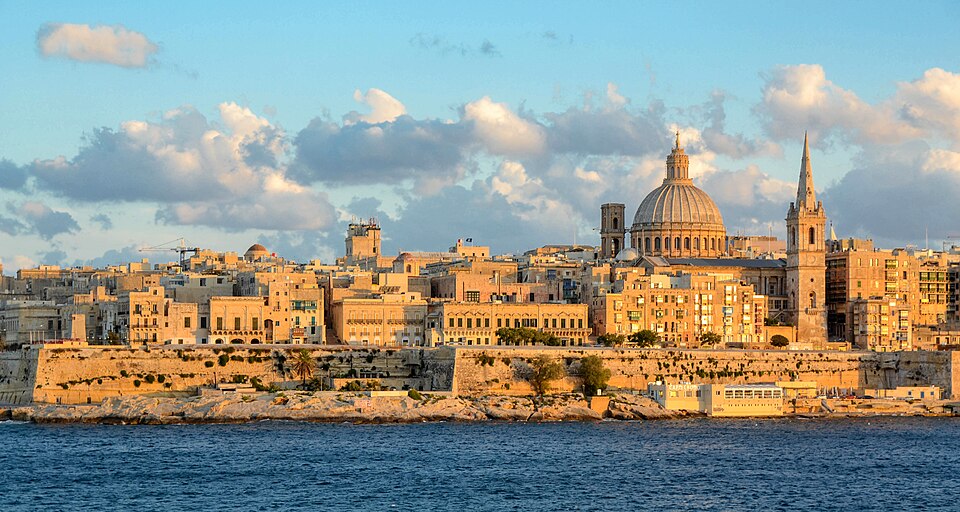
Welcome to Valletta, the capital of Malta, set between the Grand Harbour and Marsamxett Harbour. At just 0.61 square kilometres it is the smallest capital in the European Union, and the southernmost capital in Europe. Its 16th-century buildings were raised by the Knights Hospitaller, and the city is named after Jean Parisot de Valette, who defended the island against the Ottomans in the Great Siege of Malta. With 320 monuments packed into a tiny area, it is one of the most concentrated historic areas in the world, sometimes called an open-air museum. Let us step inside its walls.
Sights
St. John's Co-Cathedral

Photo: Matthew Axiak · CC BY-SA 4.0 · Wikimedia Commons Step inside Saint John's Co-Cathedral, dedicated to Saint John the Baptist. The Order of Saint John built it between 1573 and 1578 as its conventual church, commissioned by Grand Master Jean de la Cassière and designed by the Maltese architect Girolamo Cassar, who shaped several of Valletta's most prominent buildings. In the 17th century Mattia Preti and other artists redecorated the interior in the Baroque style. Look around you: it is considered one of the finest examples of high Baroque architecture in Europe.
Grandmaster's Palace

Photo: Karelj · Public domain · Wikimedia Commons Here is the Grandmaster's Palace, built between the 16th and 18th centuries for the Grand Masters of the Knights Hospitaller, who ruled Malta from 1530 to 1798. Its names trace the island's history. After Napoleonic France expelled the knights it became the National Palace, and under British rule it was the Governor's Palace, where British sovereigns stayed for major events. From 1921 to 2015 it was also the seat of Malta's Parliament. Visitors can explore the State Rooms and the Palace Armoury.
Upper Barrakka Gardens
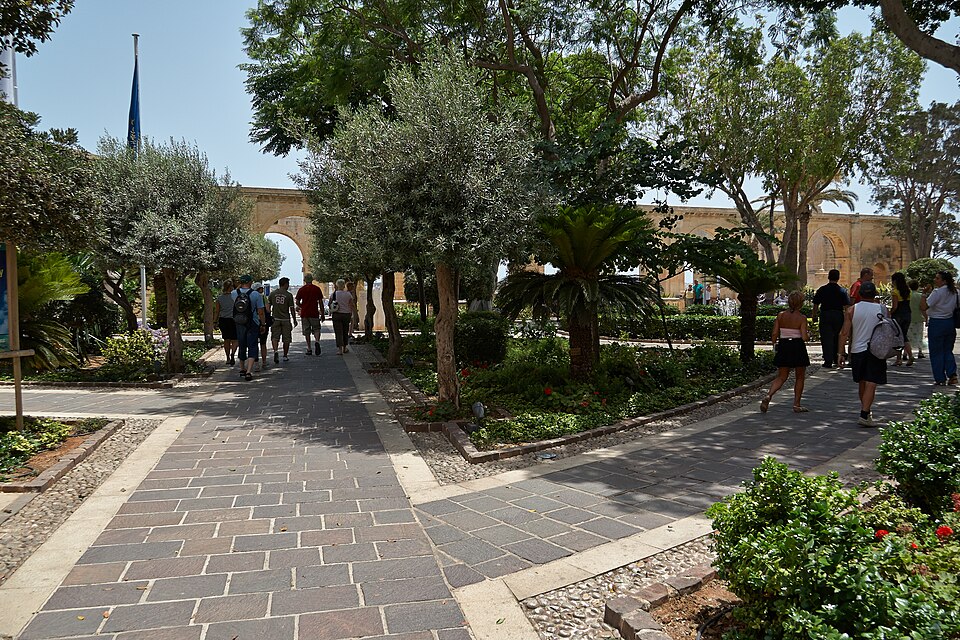
Photo: C T Johansson · CC BY-SA 4.0 · Wikimedia Commons Climb to the Upper Barrakka Gardens, on the highest point of the city walls, for a breathtaking view over the Grand Harbour and the Three Cities. The gardens sit on the upper tier of a bastion built in the 1560s, and the arches around you were built in 1661 by an Italian knight. They were once roofed, but the ceiling was removed after the Rising of the Priests in 1775. At first only knights of the Italian langue could relax here, and the gardens opened to the public in 1800. Below lies the Saluting Battery, and a lift links the gardens to the harbour.
Fort St. Elmo

Photo: Dion Hinchcliffe · CC BY-SA 2.0 · Wikimedia Commons At the seaward tip of the Sciberras Peninsula stands Fort Saint Elmo, a star fort guarding the entrances to both harbours. A watchtower stood here from 1488, dedicated to Erasmus of Formia, better known as Saint Elmo. After an Ottoman fleet sailed unopposed into Marsamxett Harbour in 1551, the tower was demolished and in 1552 work began on a new star fort, designed by the Spanish engineer Pietro Pardo. Its fame comes above all from its role in the Great Siege of Malta in 1565.
Manoel Theatre
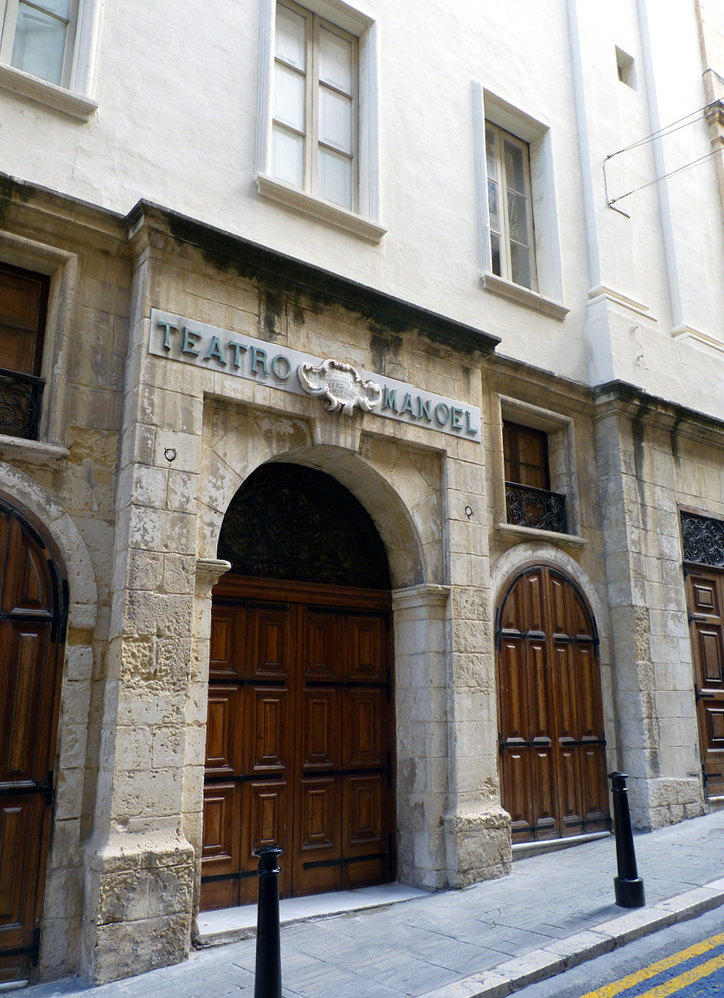
Photo: R Muscat · CC BY-SA 2.0 · Wikimedia Commons Take your seat in the Manoel Theatre, built in 1731 on the orders of Grand Master António Manoel de Vilhena. It is reputed to be the third-oldest working theatre in Europe and the oldest still operating in the Commonwealth. The first play staged here was Maffei's Merope. Look around at this intimate venue of 534 seats: an oval auditorium, three tiers of wooden boxes decorated with gold leaf, and a pale blue ceiling painted to look like a round cupola. It is also home to the Malta Philharmonic Orchestra.
Mdina

Photo: Frank Vincentz · CC BY-SA 3.0 · Wikimedia Commons Inland lies Mdina, a fortified city that was Malta's capital from antiquity to the medieval period. It has never spread beyond its ancient walls, and only a few hundred people live here. A Phoenician colony was established on this natural stronghold around the 8th century BC, and the Romans later called it Melita. The town was refounded in the 11th century as Madīnah, which gave it its name. When the Order of Saint John arrived in 1530 and made Birgu their capital, Mdina lost its importance, earning its nickname, the Silent City.