 Sofa VoyageSuomeksi
Vienna
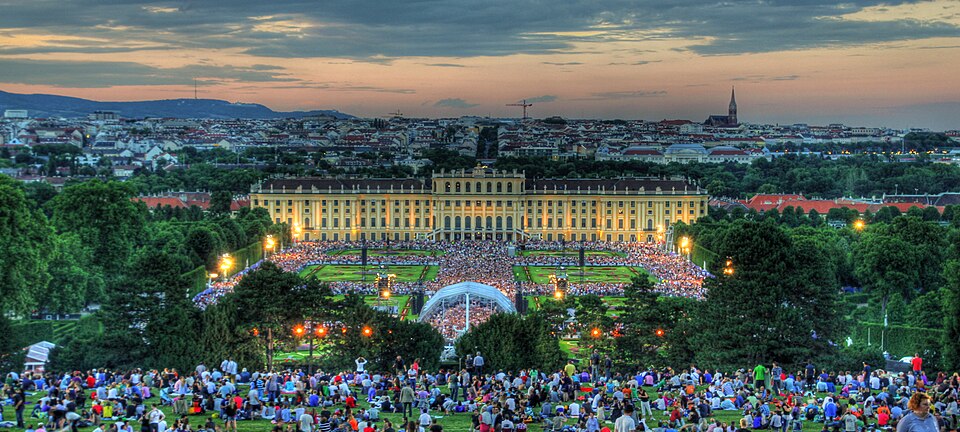
Welcome to Vienna, the capital of Austria and the most populous city on the river Danube. It lies on the eastern edge of the Vienna Woods, the last foothills of the Alps. The Romans founded a camp here called Vindobona, and from the 16th century the Habsburgs made Vienna the seat of the Holy Roman Emperors. In the 18th and 19th centuries it was the largest German-speaking city in the world. Vienna was home to Mozart, Haydn, Beethoven, Schubert and the Strausses, and to Sigmund Freud, the world's first psychoanalyst. Let us step into the imperial city.
Sights
Schönbrunn Palace
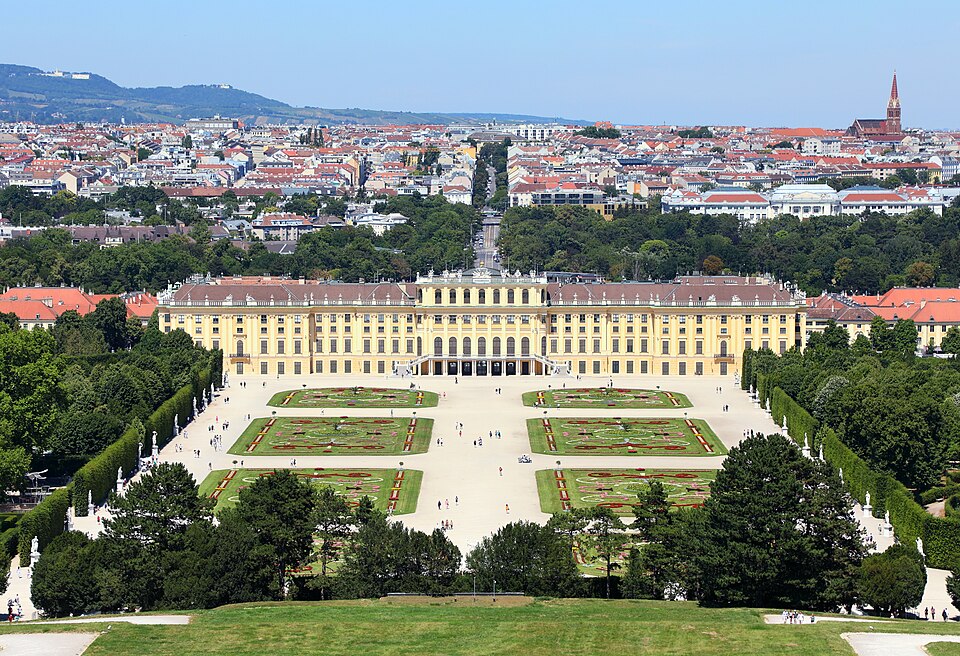
Photo: C.Stadler/Bwag · CC BY-SA 4.0 · Wikimedia Commons Our tour begins at Schönbrunn Palace in Hietzing, the main summer residence of the Habsburg rulers. Its name means beautiful spring, after an artesian well whose water was drunk by the court. This Baroque palace has 1,441 rooms, and the story of the palace and its vast gardens spans more than 300 years. It all began in 1569, when Emperor Maximilian the Second bought a floodplain of the Wien river and turned it into a fenced hunting ground stocked with pheasants, ducks, deer and boar, with exotic turkeys and peafowl kept in a corner of the grounds.
St. Stephen's Cathedral
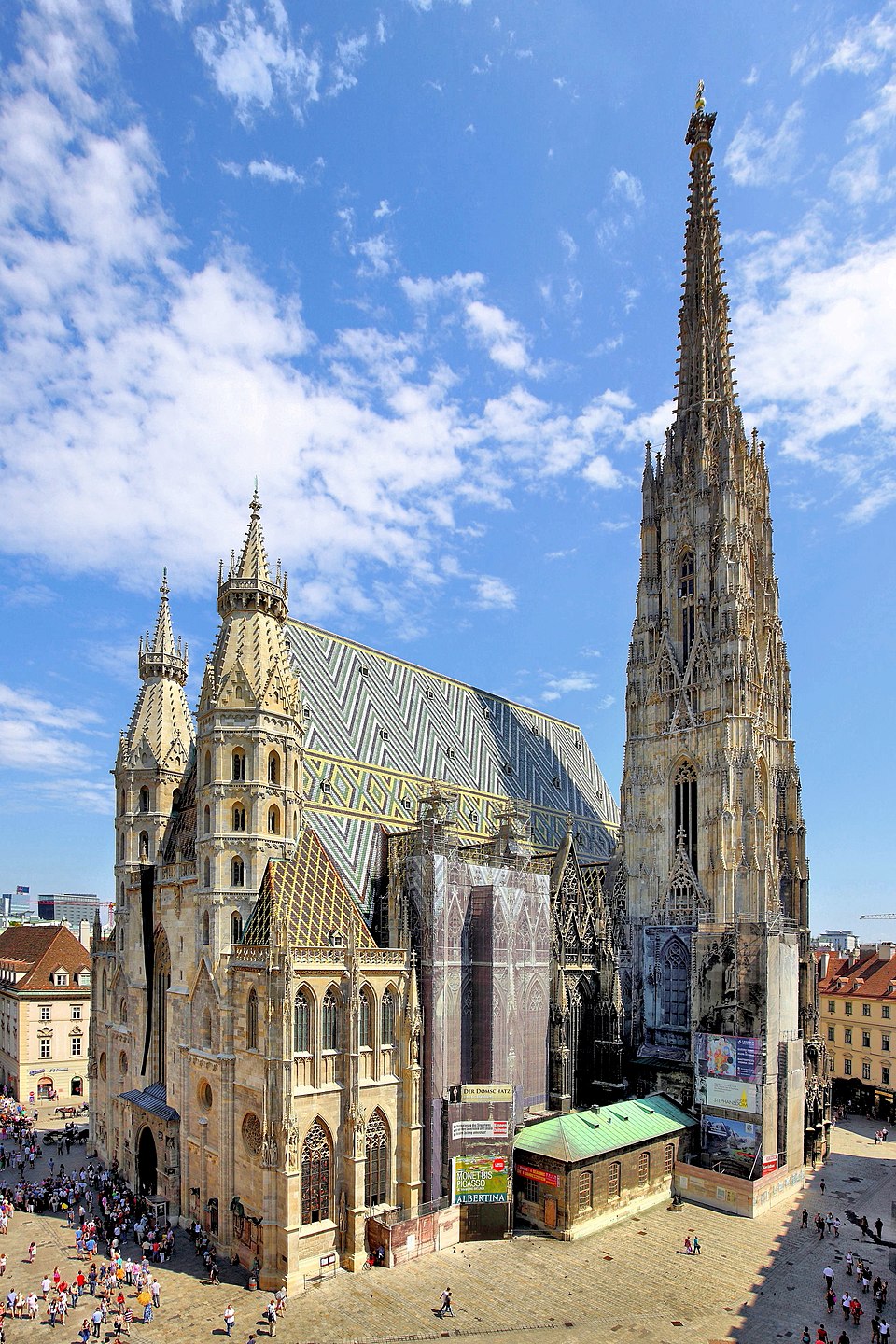
Photo: C.Stadler/Bwag · CC BY-SA 4.0 · Wikimedia Commons In the Stephansplatz rises St. Stephen's Cathedral, the mother church of the Archdiocese of Vienna and the most important religious building in the city. Its present Romanesque and Gothic form was largely begun by Duke Rudolf the Fourth in the 14th century, on the ruins of two earlier churches, the first consecrated in 1147. The cathedral has witnessed many great events in Habsburg and Austrian history. Look up at its roof, covered in multi-coloured tiles, which has become one of the most recognisable symbols of Vienna.
Hofburg
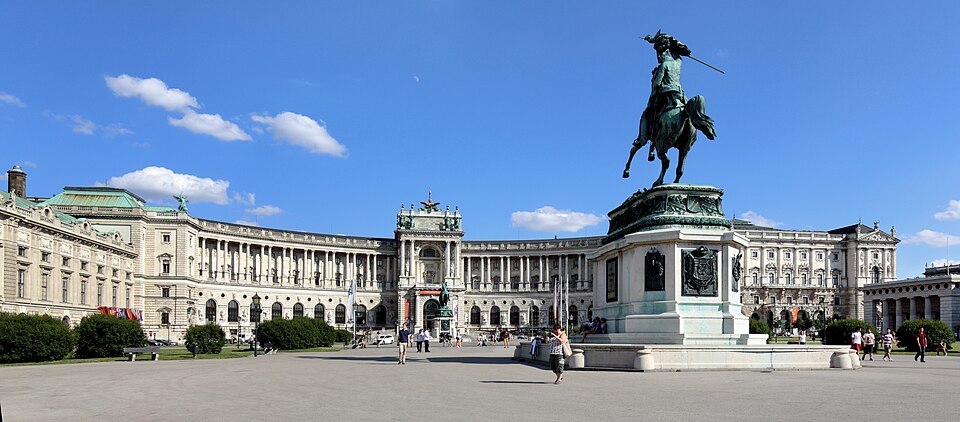
Photo: C.Stadler/Bwag · CC BY-SA 3.0 at · Wikimedia Commons You are now at the Hofburg, the former principal palace of the Habsburgs in the centre of Vienna. It was first built in the 13th century by Ottokar the Second of Bohemia and was expanded again and again. While Schönbrunn was the summer home, the Hofburg served as the imperial winter residence. Since 1279 this area has been a documented seat of government, and since 1946 it has been the official residence and workplace of the president of Austria. Within its walls you will find the imperial chapel, the imperial library, the treasury and even the Spanish Riding School.
Belvedere

Photo: Diego Delso · CC BY-SA 4.0 · Wikimedia Commons On the south-eastern edge of the historic centre lies the Belvedere, two Baroque palaces, the Upper and Lower Belvedere, linked by a formal garden. It was built as the summer residence of Prince Eugene of Savoy, mainly to designs by Johann Lukas von Hildebrandt, and completed in the early 18th century. Its construction followed the prince's successful campaigns against the Ottoman Empire, in a time of prosperity for the city. Today the Belvedere is one of Austria's major art museums, presenting Austrian art from the Middle Ages to the present.
Vienna State Opera
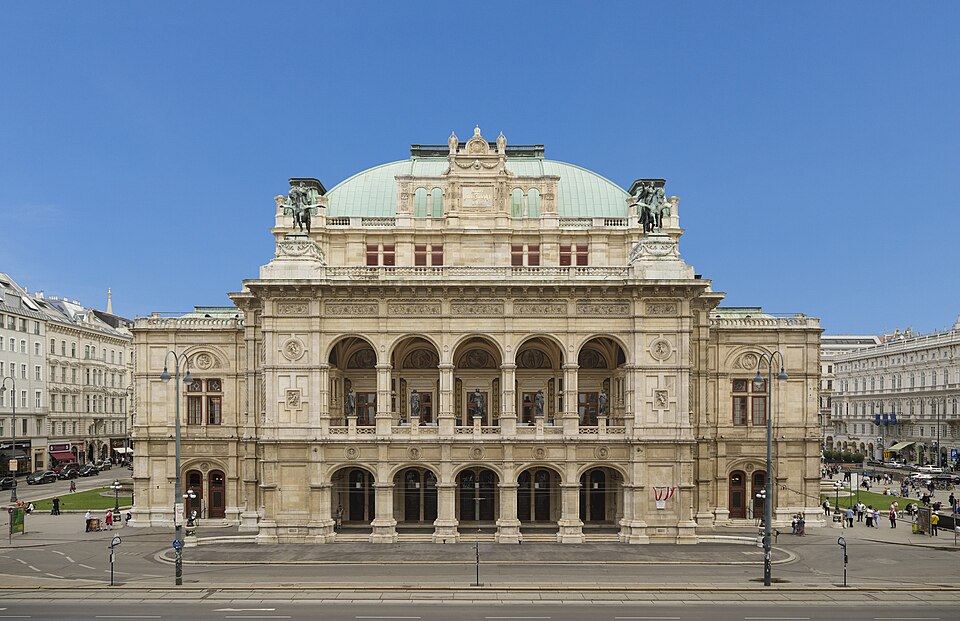
Photo: Wiener Staatsoper GmbH · CC BY-SA 4.0 · Wikimedia Commons On the Ring Road stands the Vienna State Opera, a Renaissance Revival opera house with 1,709 seats. It was the very first major building on the Ring, built from 1861 to 1869, and it opened as the Vienna Court Opera in the presence of Emperor Franz Joseph and Empress Elisabeth. It received its present name in 1921, after the founding of the First Austrian Republic. Here is a fact worth knowing: the members of the Vienna Philharmonic are recruited from the opera's own orchestra. Every carnival season, the building also hosts the famous Vienna Opera Ball.
Kunsthistorisches Museum
Now face the Kunsthistorisches Museum, the largest art museum in Austria, crowned with an octagonal dome 60 metres high. Emperor Franz Joseph commissioned it to give the Habsburgs' formidable art collection a worthy home and open it to the public. It opened around 1891, together with its twin, the Natural History Museum, which mirrors it directly across Maria-Theresien-Platz. Step inside to marble, stucco and gold leaf, and look up as you climb the grand staircase: some of its paintings are by Gustav Klimt.
Wiener Riesenrad
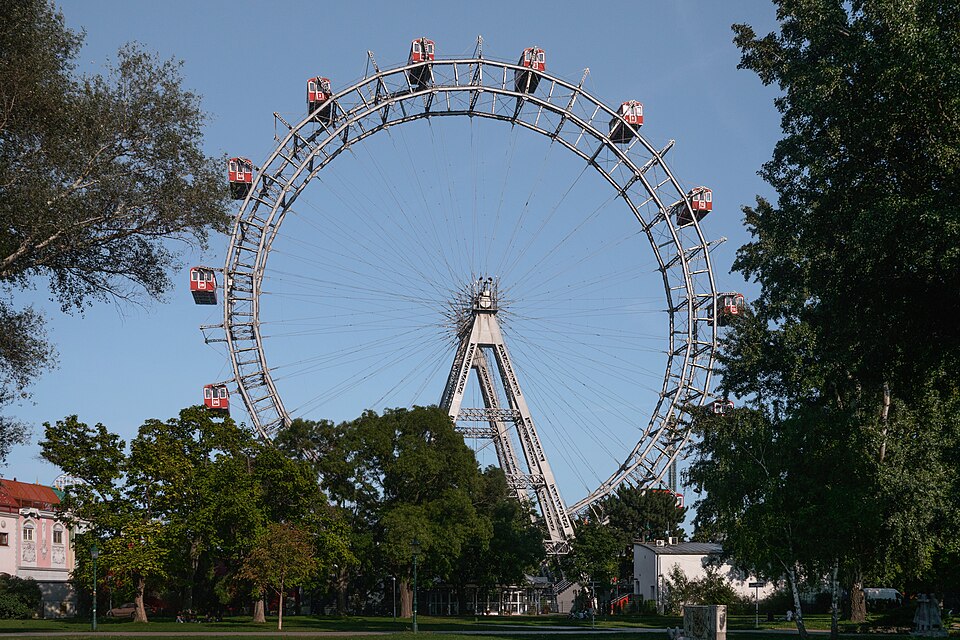
Photo: Thomas Ledl · CC BY-SA 4.0 · Wikimedia Commons At the entrance to the Prater amusement park turns the Wiener Riesenrad, a Ferris wheel 64.75 metres tall. It was built in 1897 to celebrate the Golden Jubilee of Emperor Franz Joseph and is one of the earliest Ferris wheels ever made. From 1920 to 1985 it was the tallest Ferris wheel still standing anywhere in the world. Its story nearly ended early: a demolition permit was issued in 1916, but there was not enough money to tear it down, and so it survived to become a symbol of Vienna.
Karlskirche
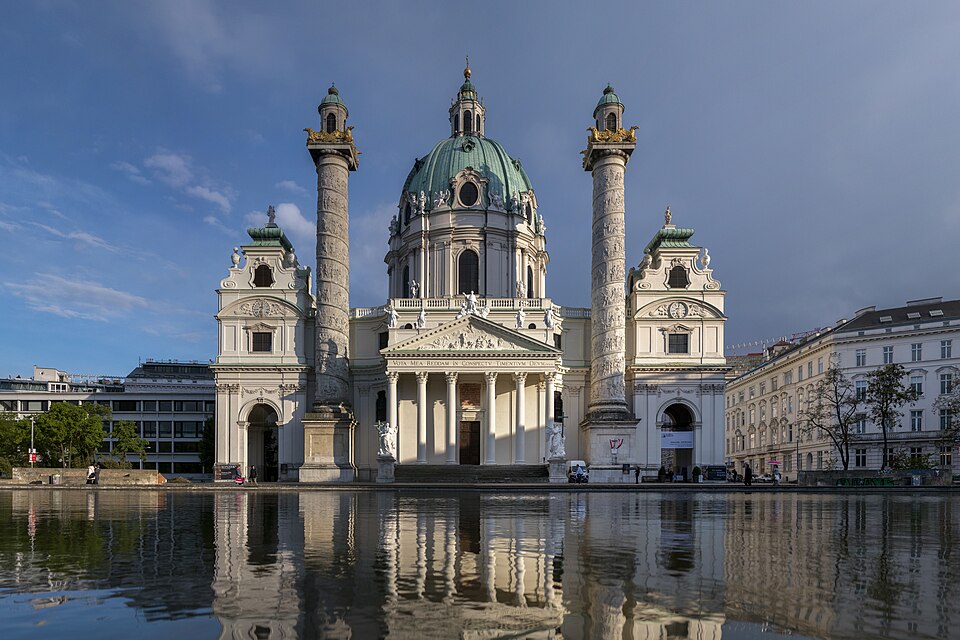
Photo: Thomas Ledl · CC BY-SA 4.0 · Wikimedia Commons End your tour at the Karlskirche on Karlsplatz, a magnificent Baroque church. In 1713, a year after the city's last great plague epidemic, Emperor Charles the Sixth vowed to build a church to his patron saint, Charles Borromeo, revered as a healer of plague victims. Johann Bernhard Fischer von Erlach won the design competition, and after his death his son completed the church in 1737. Originally it had a direct line of sight to the Hofburg, and until 1918 it was the imperial patron parish church.