 Sofa VoyageSuomeksi
Vilnius
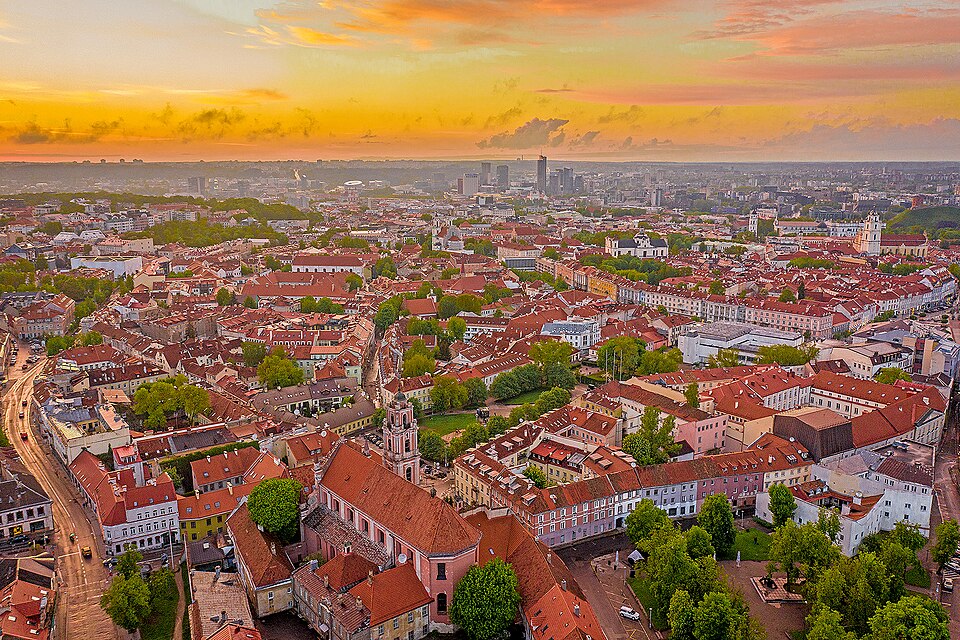
Welcome to Vilnius, the capital and largest city of Lithuania and the most populous city in the Baltic states. Its Old Town is one of the largest and best-preserved in Europe and has been a UNESCO World Heritage Site since 1994. Vilnius gave its name to a style, Vilnian Baroque, and is the easternmost Baroque city in Europe. It has been the capital since at least 1323, when Grand Duke Gediminas first mentioned it in a letter. Before the Second World War it was one of Europe's most important Jewish centres, which led Napoleon to call it the Jerusalem of the North. Let's step into the Old Town.
Sights
Vilnius Cathedral
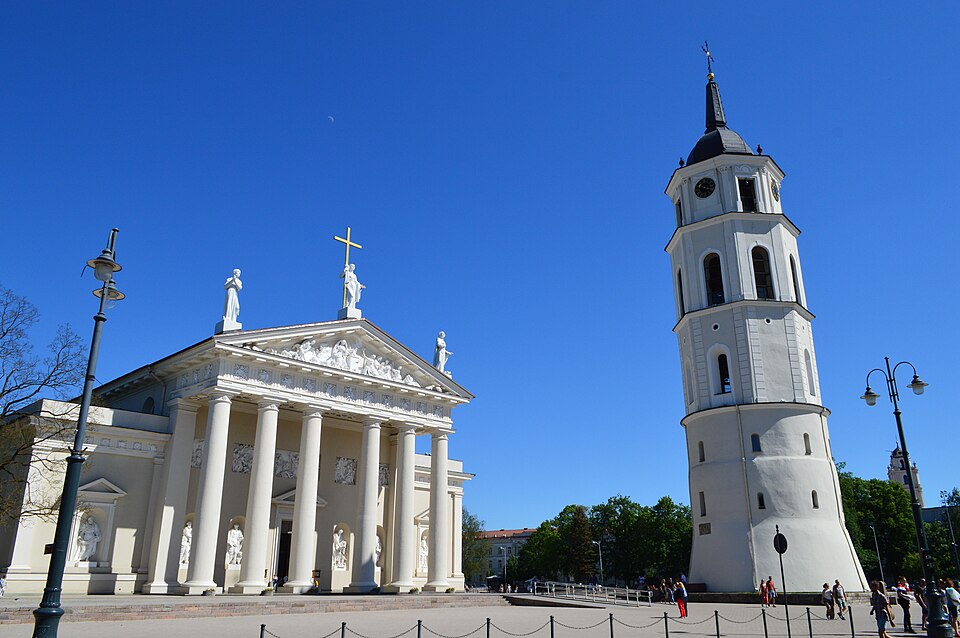
Photo: Scotch Mist · CC BY-SA 4.0 · Wikimedia Commons On Cathedral Square stands Vilnius Cathedral, one of the most important religious and architectural monuments in Lithuania, and the seat of the city's bishops since the 14th century. Its stately Neoclassical look comes largely from a reconstruction designed by Laurynas Gucevičius in the late 18th century. History was made here: this is where the Grand Dukes of Lithuania were inaugurated, with the Cap of Gediminas placed on the ruler's head. Even in modern Lithuania, a Mass here follows the inauguration of each new president.
Gediminas' Tower
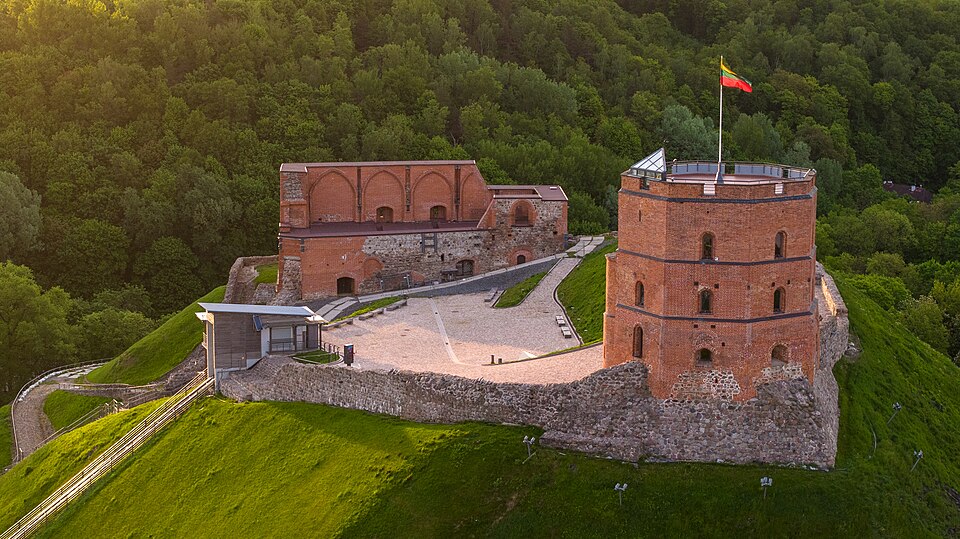
Photo: Gytis Grižas https://www.wikidata.org/wiki/Q16452479 · CC BY-SA 4.0 · Wikimedia Commons Climb the hill, on foot or by lift, to Gediminas's Tower, all that remains of the Upper Castle. It is a symbol of both Vilnius and Lithuania, once pictured on the national currency, the litas, and celebrated in patriotic poems and folk songs. The first wooden fortifications here were built by Grand Duke Gediminas, and the first brick castle was completed in 1409 by Grand Duke Vytautas. Inside, a small museum shows models of the Vilnius castles, but the real reward is the view over the Old Town from the top.
Gate of Dawn
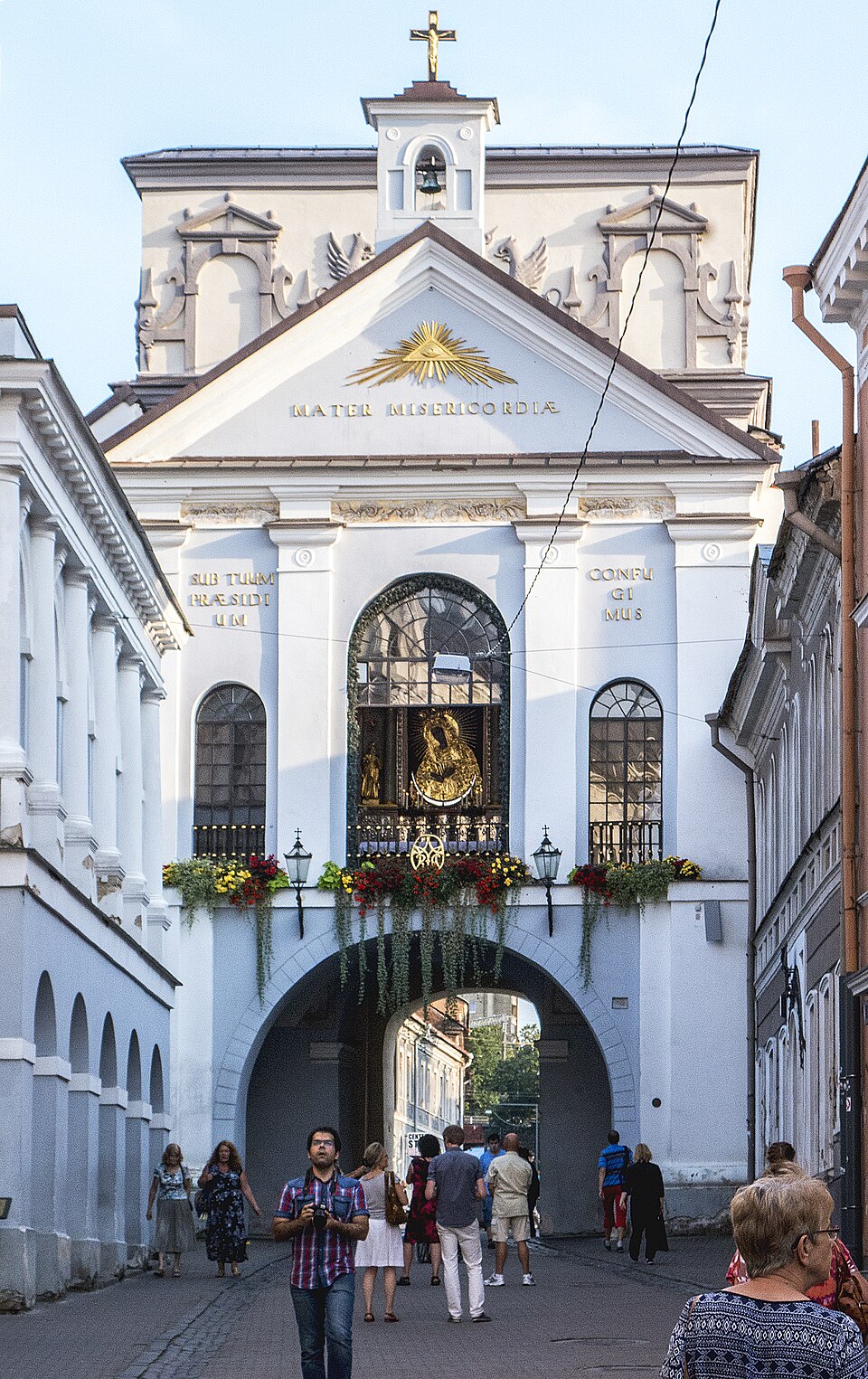
Photo: Jerzy Strzelecki · CC BY-SA 3.0 · Wikimedia Commons Walk up to the Gate of Dawn, one of the nine gates of the old city wall, built between 1503 and 1514. You can still see the firing openings on its outer side, a reminder of its defensive purpose. But today it is above all a major site of Catholic pilgrimage. In the first half of the 17th century, an image of the Virgin Mary was placed here, and it is still revered with special devotion. Look closely at the outside too: old painted figures were plastered over and forgotten, and only rediscovered in 1976.
St. Anne's Church

Photo: Diliff · CC BY-SA 3.0 · Wikimedia Commons In front of you stands St. Anne's Church, a jewel of Gothic architecture in brick, with its slender, flame-like forms. The present church was built around 1495 to 1500 on the initiative of King Alexander Jagiellon, and its exterior has remained almost unchanged ever since. An earlier wooden church on this spot, built for Anna, wife of Vytautas the Great, burned down in 1419. St. Anne's is such a prominent landmark that it helped the Old Town become a UNESCO World Heritage Site.
Užupis
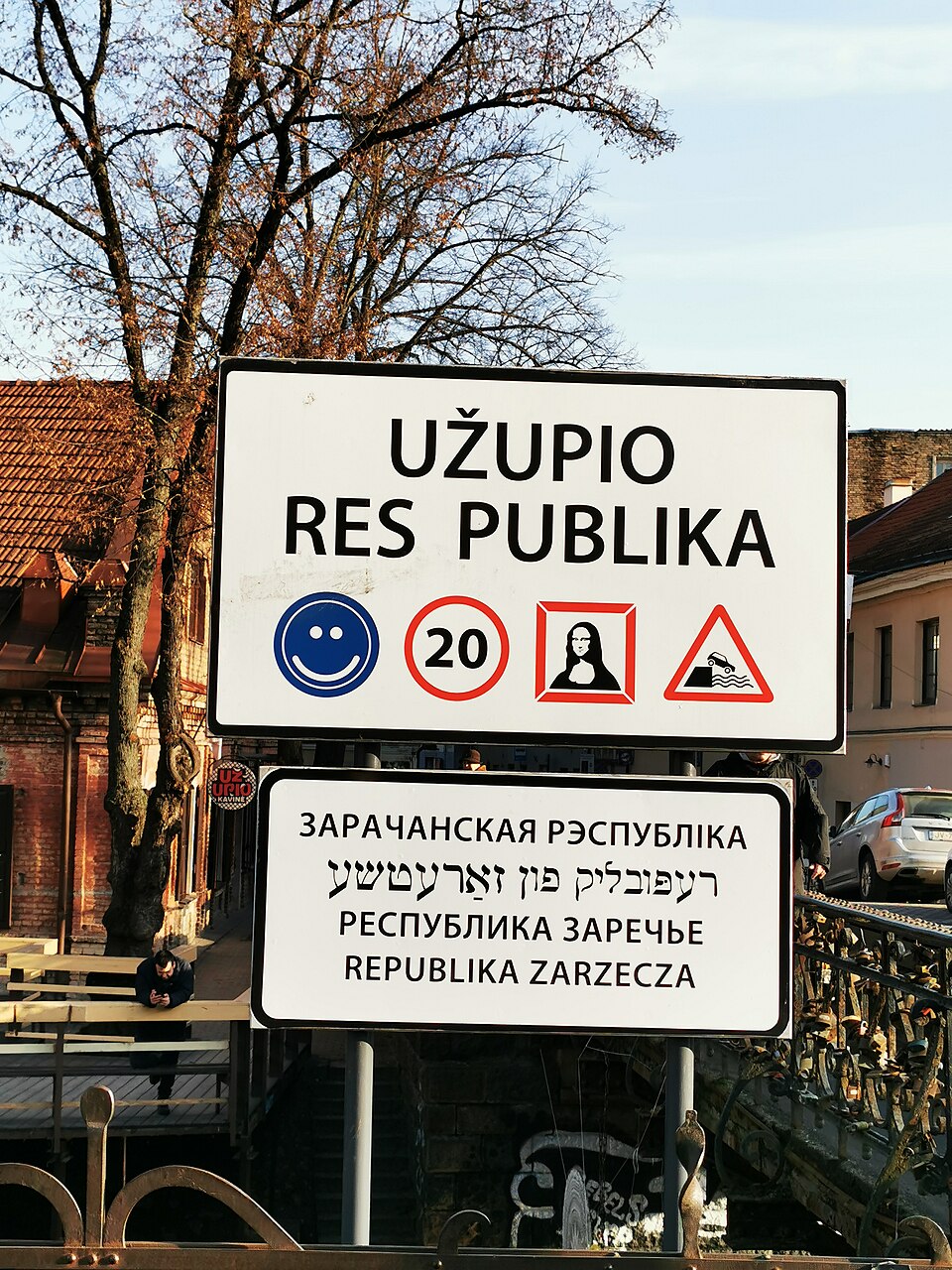
Photo: Jodkovska · CC BY-SA 4.0 · Wikimedia Commons Cross the little bridge over the Vilnia river and you enter Užupis, whose name means beyond the river. This small artistic neighbourhood has been compared to Montmartre in Paris for its bohemian spirit, and of its roughly 7,000 inhabitants nearly 1,000 are artists. Here is the best part: on 1 April 1997, the district declared itself an independent republic, the Republic of Užupis, complete with its own constitution. The first bridges over the river were built in the 16th century, when most of the people living here were Jewish.
Trakai Island Castle
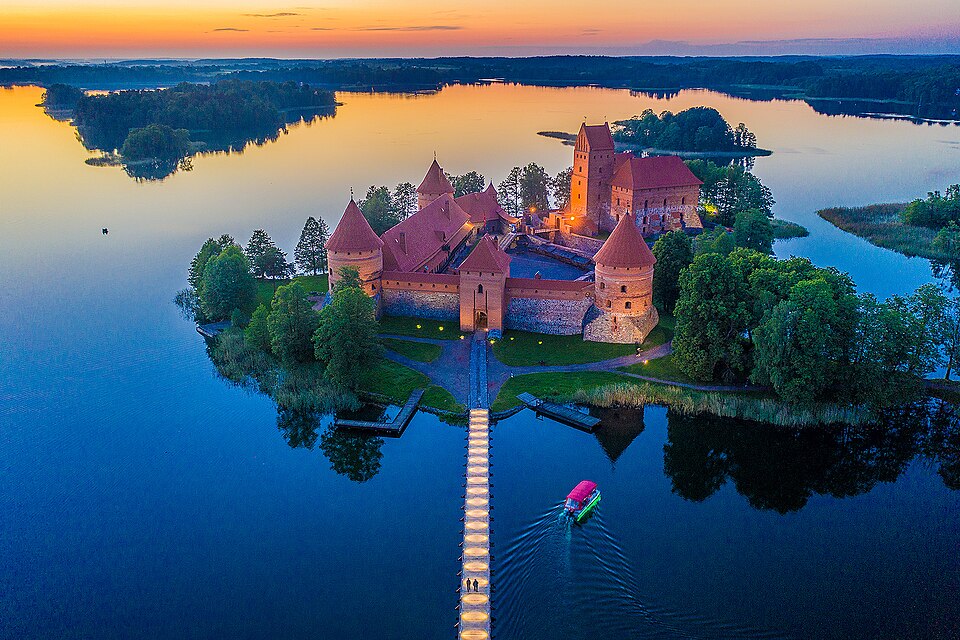
Photo: BigHead · CC BY-SA 4.0 · Wikimedia Commons Outside Vilnius, on an island in Lake Galvė, rises Trakai Island Castle. Grand Duke Kęstutis began building the stone castle in the 14th century and moved his residence and treasury here. His son Vytautas the Great completed major works around 1409 and died in this castle in 1430. Trakai was one of the main centres of the Grand Duchy of Lithuania. The castle was rebuilt in the 1950s and 1960s on Lithuanian initiative, despite resistance from the Soviet authorities.
Vilnius University
Step through the courtyards of Vilnius University, the first and largest university in Lithuania and one of the oldest in Central and Eastern Europe. It was founded in 1579 as a Jesuit Academy by Stephen Báthory, and for a long time it was the only university in the Grand Duchy of Lithuania. Its history has been turbulent. After the failed November Uprising of 1830 and 1831, it was closed and did not reopen until 1919. Today more than 24,000 students study here.