 Sofa VoyageSuomeksi
Washington, D.C.
Welcome to Washington, D.C., the capital of the United States and the country's only federal district. The city stands on the north-east bank of the Potomac River, with Virginia across the water and Maryland wrapped around its other sides. Its official name, the District of Columbia, honours Columbia, the female personification of the American nation, while Washington comes from the first president, George Washington. The city was laid out in 1791 by Pierre Charles L'Enfant, and its four quadrants all meet at the Capitol. Here is a curious detail: residents have no voting representation in Congress. Let's set off along the great avenues and memorials.
Sights
White House

Photo: (top) Cezary p (bottom) MattWade · CC BY-SA 4.0 · Wikimedia Commons In front of you stands the White House, home and workplace of every American president since John Adams moved in back in 1800. The Irish-born architect James Hoban designed it in the Neoclassical style, modelling it on Leinster House in Dublin, and its walls are sandstone painted white. The house has survived real drama. In 1814, during the War of 1812, British forces set it ablaze, destroying the interior and charring much of the outside. And by 1948 its walls and beams were close to failure, so under Harry S. Truman the rooms were dismantled and a steel frame was built inside the old walls.
United States Capitol
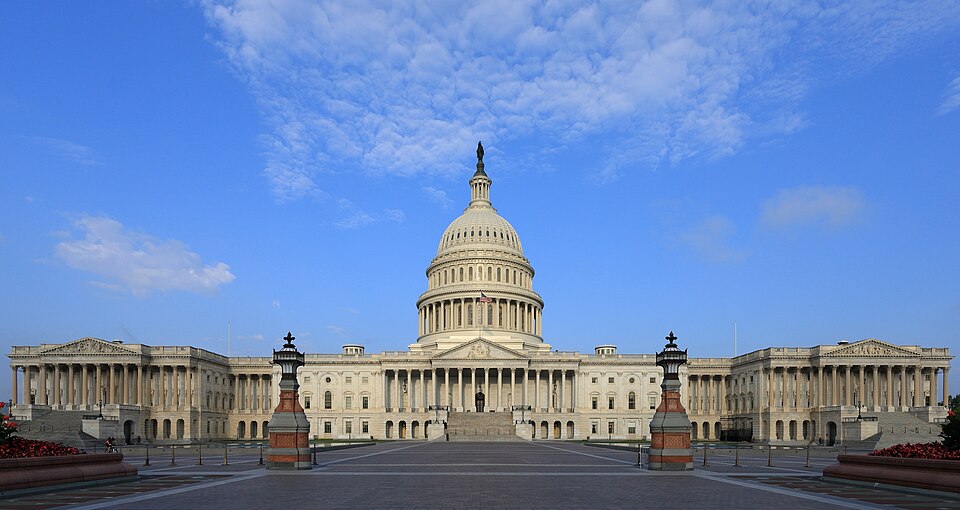
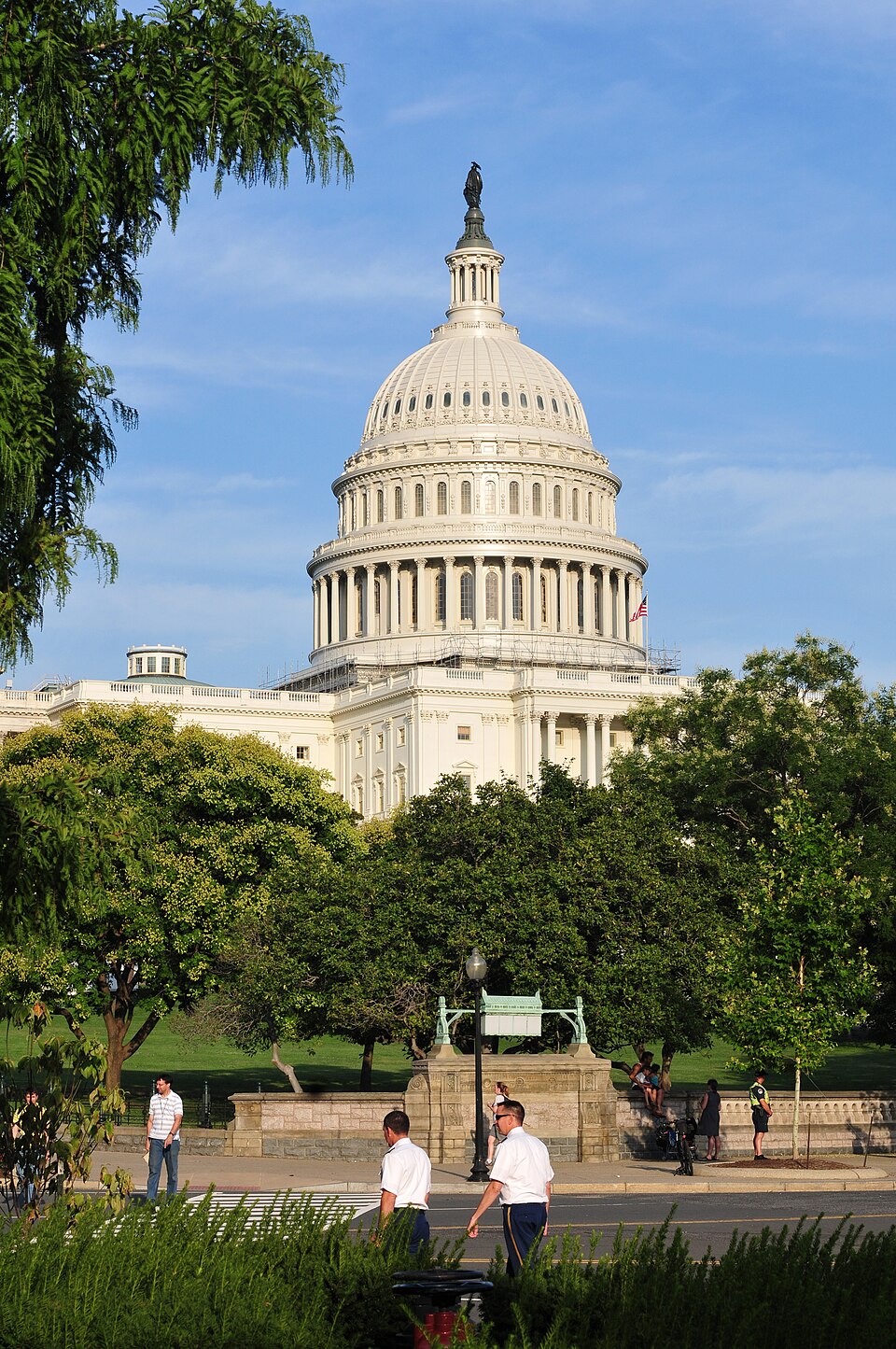
Photo: Martin Falbisoner · CC BY-SA 3.0 · Wikimedia Commons Rising at the eastern end of the National Mall is the United States Capitol, the seat of Congress. It no longer sits at the geographic centre of the city, yet it is still the point from which every street number and all four quadrants of Washington are counted. Congress first met here in November 1800, when the capital moved from Philadelphia. The building was partly burned by British forces in 1814 and fully restored within five years. Look up at the massive dome, completed around 1866, just after the Civil War. The House sits in the south wing, the Senate in the north.
Lincoln Memorial

Photo: Martin Falbisoner · CC BY-SA 3.0 · Wikimedia Commons At the western end of the Mall, a classical temple honours Abraham Lincoln, the 16th president. Climb the steps past the Doric columns and step inside to meet the great marble statue designed by Daniel Chester French and carved by the Piccirilli brothers. On the walls you can read two of Lincoln's most famous speeches, the Gettysburg Address and his second inaugural address. These steps have their own place in history: on 28 August 1963, Martin Luther King Jr. delivered his I Have a Dream speech here, at the end of the March on Washington. More than seven million people visit every year.
Washington Monument
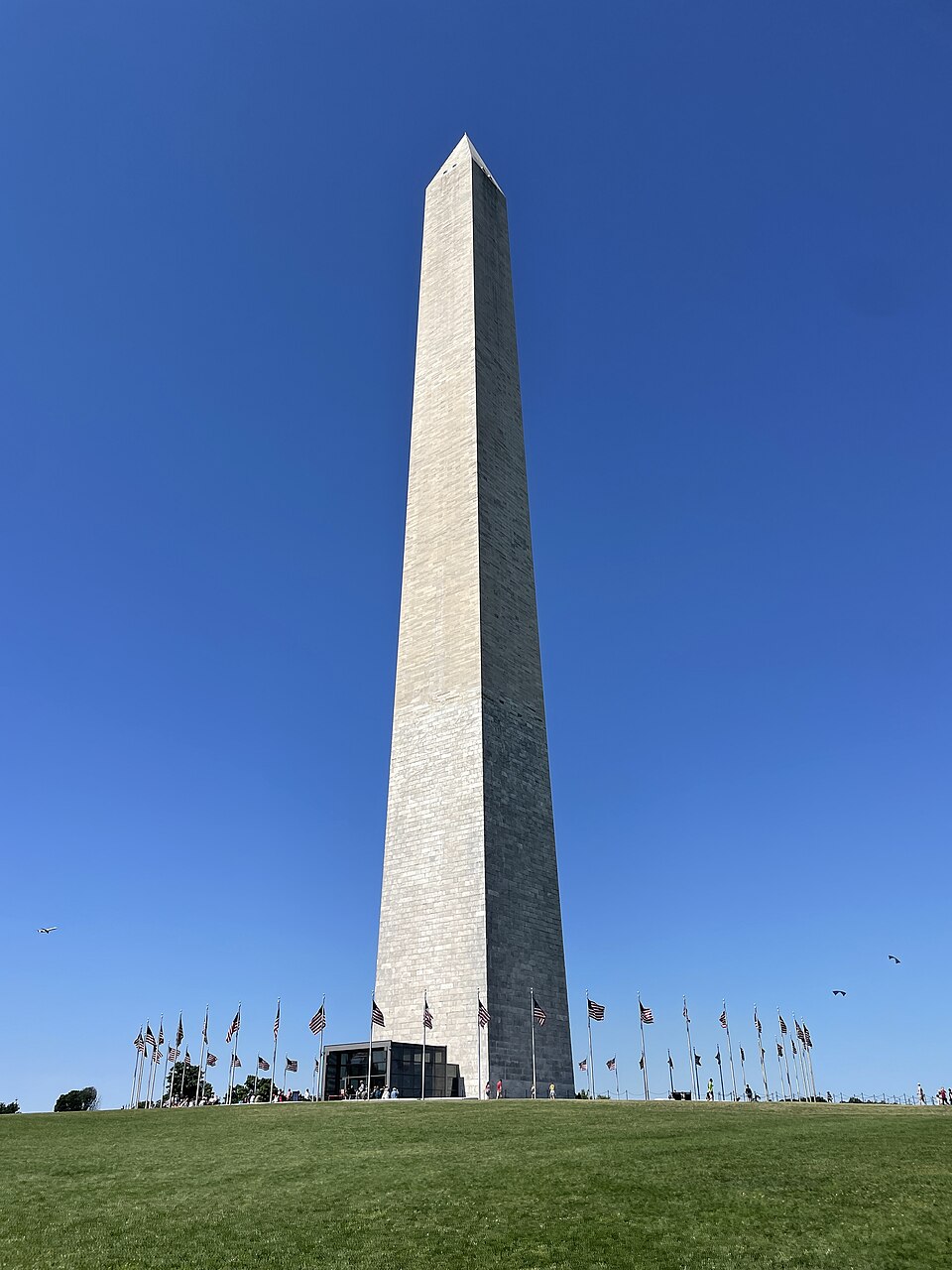
Photo: Greyfiveys · CC BY-SA 4.0 · Wikimedia Commons Look up at this white stone obelisk, 169 metres tall, built to honour George Washington. It took a long time to finish. Work began in 1848, then stopped from 1854 to 1877 because of money troubles, a power struggle and the Civil War. That is why the outside is faced with three different kinds of white marble. When the stone structure was completed in 1884, it was the tallest structure in the world, until the Eiffel Tower overtook it in 1889. Around its base, 50 flags fly in a great circle, one for each state.
National Mall
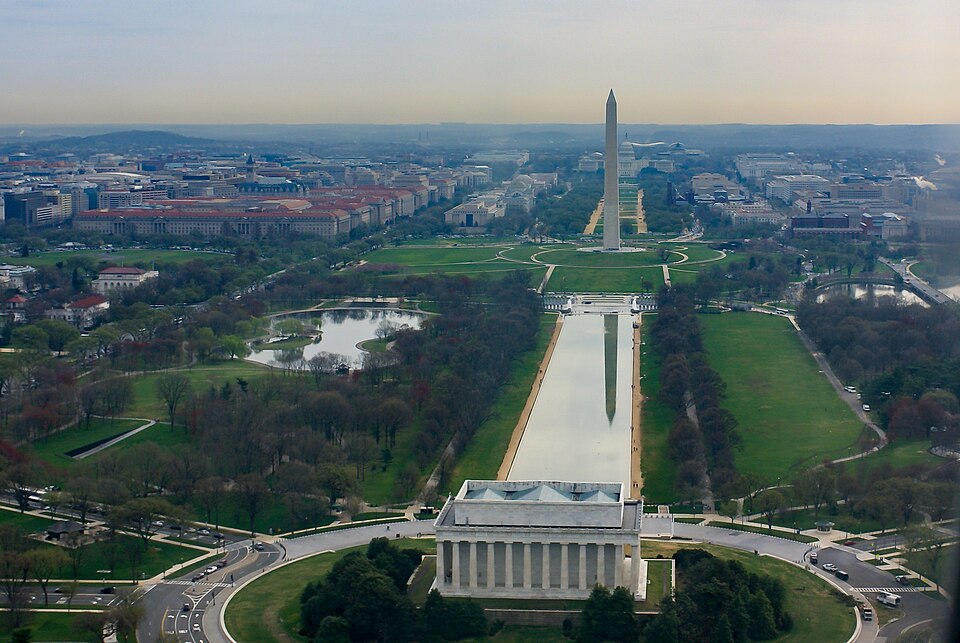
Photo: Matti Blume · CC BY-SA 4.0 · Wikimedia Commons Now stroll out onto the National Mall, the long landscaped park at the heart of the capital. Its core runs from the Capitol grounds in the east to the Washington Monument in the west, lined with museums of the Smithsonian Institution and federal buildings. Pierre L'Enfant imagined this Grand Avenue as a democratic and egalitarian space, unlike royal palace gardens such as Versailles, which were paid for by the people but kept for a privileged few. His idea has certainly come true: around 24 million visitors walk here each year.
Jefferson Memorial
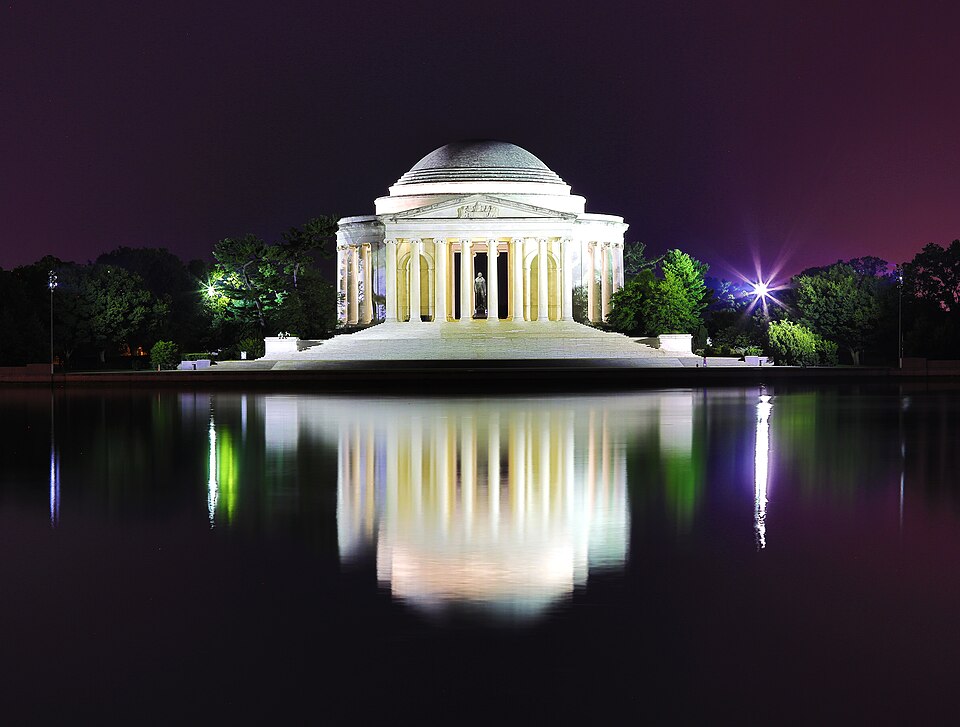
Photo: Brian Hamfeldt · CC BY-SA 4.0 · Wikimedia Commons On the shore of the Potomac, in West Potomac Park, this domed memorial honours Thomas Jefferson, principal author of the Declaration of Independence and the third president. It was built between 1939 and 1943 to designs by the New York architect John Russell Pope, who drew inspiration from the Roman Pantheon and from Jefferson's own rotunda at the University of Virginia. Step inside and you will find quotations chosen to capture his ideas. One surprise: the bronze statue of Jefferson was not ready for the opening and only arrived four years later, in 1947.
Arlington National Cemetery
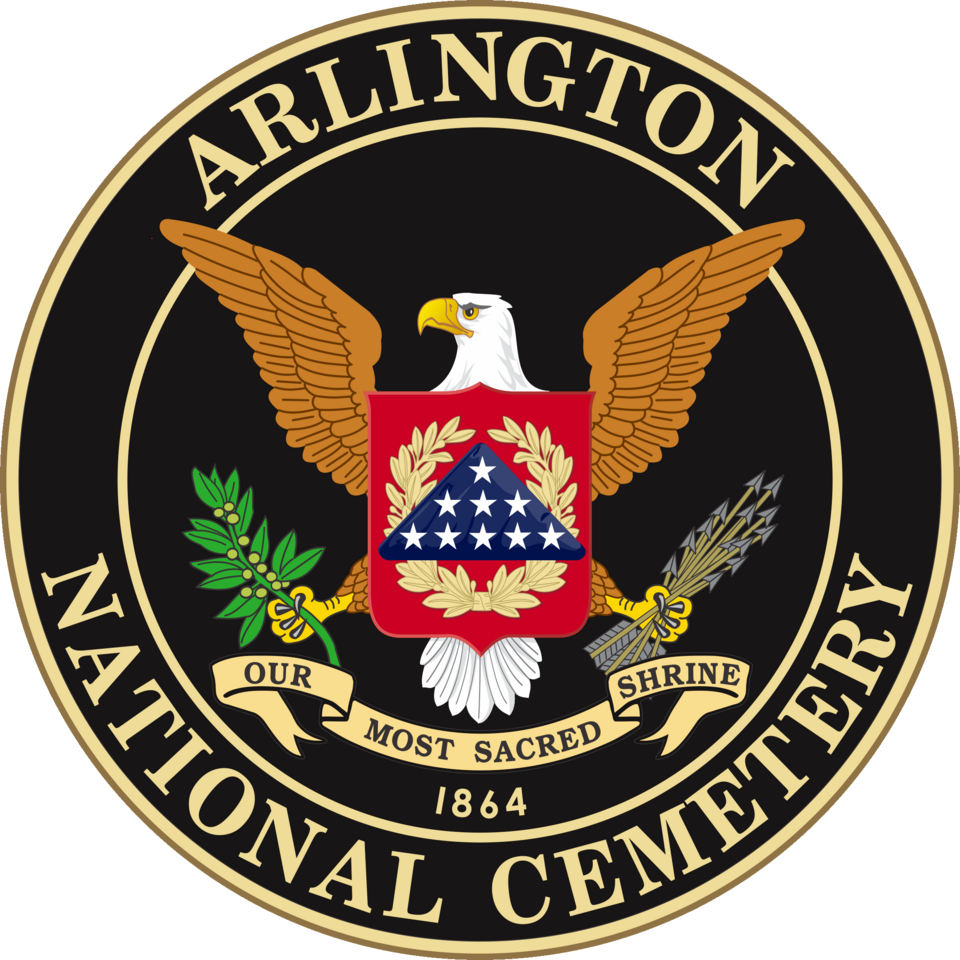
Photo: The Institute of Heraldry · Public domain · Wikimedia Commons Across the river in Arlington County, Virginia, lies Arlington National Cemetery, the largest in the national cemetery system. More than 400,000 people rest here, across 259 hectares. The cemetery was founded on 13 May 1864, in the middle of the Civil War, on the Arlington Estate. That land had belonged to the family of the Confederate general Robert E. Lee, and the federal government confiscated it after a tax dispute over the property. Walk gently here: funerals are held on most days of the week.