 Sofa VoyageSuomeksi
Wellington

Welcome to Wellington, the capital of New Zealand, at the south-western tip of the North Island between Cook Strait and the Remutaka Range. It is the world's southernmost capital of a sovereign state, and also the world's windiest city by average wind speed, so hold on to your hat. Māori oral tradition tells that Kupe explored the region in about the 10th century. The city's grid plan was drawn in 1840 by Captain William Mein Smith, famously without taking the hilly terrain into account. Wellington has been the capital since 1865 and is often called the country's cultural capital. Let us begin.
Sights
Te Papa

Photo: Ulrich Lange, Bochum, Germany · CC BY-SA 3.0 · Wikimedia Commons Step into Te Papa, the Museum of New Zealand, whose Māori name means the treasure box. It opened in 1998 when the National Museum and the National Art Gallery merged into one. Te Papa works under a bicultural philosophy, telling the living stories behind its cultural treasures rather than simply displaying them. That approach clearly speaks to people: on average more than 1.1 million visitors come through its doors every year.
Wellington Cable Car

Photo: Takeshi Aida from Hong Kong, Hong Kong · CC BY-SA 2.0 · Wikimedia Commons Climb aboard the Wellington Cable Car, a funicular that runs from Lambton Quay, the main shopping street, up to the hillside suburb of Kelburn. The trip takes about five minutes and rises 120 metres, passing through three tunnels and over three bridges at a constant steep grade. The track is almost entirely straight. The only curves are at the passing loop in the middle, at Talavera station, where the two cars meet. At the top you step out beside the Botanic Garden, with views over the city and harbour.
Zealandia

Photo: Tony Wills · CC BY-SA 3.0 · Wikimedia Commons Welcome to Zealandia, whose Māori name means the garden of Tāne. It was the first completely fenced urban ecosanctuary, where 225 hectares of forest are being restored. Introduced mammals have devastated much of New Zealand's native wildlife, so a pest-exclusion fence surrounds the sanctuary, turning it into an ecological island. The effect has spilled beyond the fence: sightings of native birds such as tūī and kākā have greatly increased in the city's suburbs, and the idea has inspired similar fenced sanctuaries across the country.
The Beehive
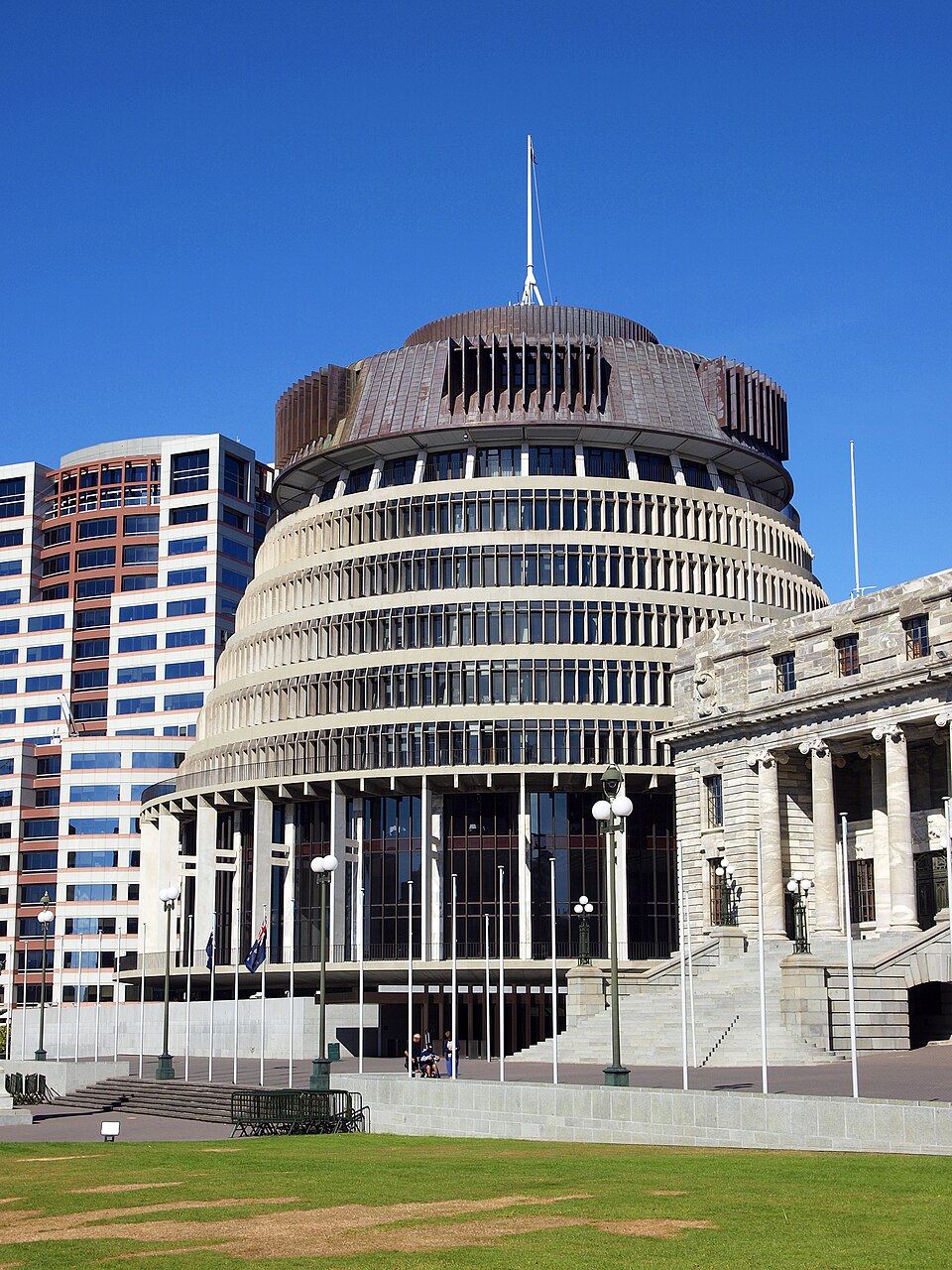
Photo: Ulrich Lange, Bochum, Germany · CC BY-SA 3.0 · Wikimedia Commons There is no mistaking this building. The Beehive, the Executive Wing of the Parliament Buildings, takes its nickname from its shape, which recalls a traditional woven beehive called a skep. It was built between 1969 and 1981, and government ministers have had their offices here since 1979. The name has become shorthand for the government itself, and the 9th floor means the prime minister's office, while Cabinet meets on the top floor. Since 1992 the Beehive has appeared on the twenty-dollar note.
Wellington Botanic Garden
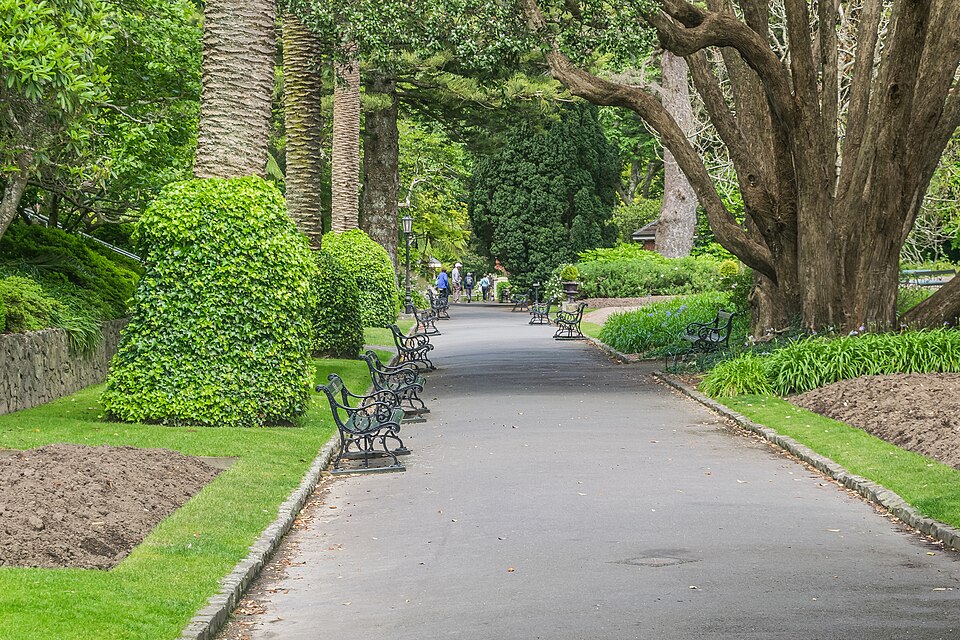
Photo: Krzysztof Golik · CC BY-SA 4.0 · Wikimedia Commons Wander now into the Wellington Botanic Garden, 25 hectares in a valley between Thorndon and Kelburn, which you can reach from the top of the cable car. Long before it became a garden, this land was used by the Ngāti Te Whiti hapū of Te Āti Awa for growing and gathering food. The botanic garden was established in 1868. Here you will find protected native forest, conifers, an extensive rose garden and large sculptures, and native birds flit among the trees. It is classified as a Garden of National Significance.
Old St Paul's

Photo: Szilas · Public domain · Wikimedia Commons Close to Parliament stands Old St Paul's, consecrated in 1866. For almost a century, until 1964, it served both as the parish church of Thorndon and as the provisional cathedral of the Anglican Diocese of Wellington. Step inside and look up: the building shows how 19th-century Gothic Revival style was adapted to colonial materials, and it has been described as one of the best examples of timber Gothic Revival architecture in the world. Although no longer a parish church, it remains consecrated and is a much-loved venue for weddings.