 Sofa VoyageSuomeksi
Windhoek
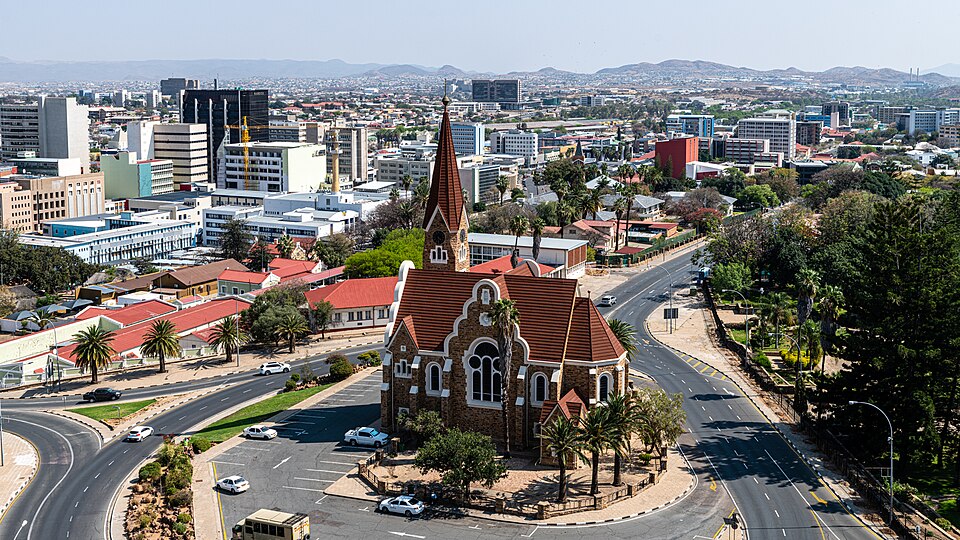
Welcome to Windhoek, the capital and largest city of Namibia. It sits on the Khomas Highland plateau, around 1,700 metres above sea level, right in the geographical centre of the country. The city grew up around a hot spring known to local pastoral peoples. Jonker Afrikaner, Captain of the Orlam, settled here in 1840 and built a stone church for his community, but wars later left the settlement neglected and destroyed. Windhoek was founded a second time in 1890, when the territory was colonised by the German Empire. Today it is the country's economic, political and cultural heart. Let's begin our walk through its landmarks.
Sights
Christ Church

Photo: Diego Delso · CC BY-SA 4.0 · Wikimedia Commons In front of you stands the Christ Church, a Lutheran landmark designed by the architect Gottlieb Redecker. It was built as a symbol of peace after the wars between the Germans and the Herero and Nama, and was originally known as the Church of Peace. The foundation stone was laid in 1907, and the church was dedicated in 1910. Its walls are quartz sandstone from near the Avis Dam, while the portico is Carrara marble from Italy. Look up at the 24 metre spire: its three bronze bells came from Germany, inscribed with the words Glory to God in the highest, Peace on earth, and Goodwill towards men.
Parliament Building
Photo: Parliament of Namibia · Public domain · Wikimedia Commons This elegant building with its Neoclassical front is the seat of both houses of Namibia's Parliament. Locals know it as the Tintenpalast, German for Ink Palace, a nod to the vast amounts of ink used by the officials who once worked here. Gottlieb Redecker designed it as an administration building for the German colonial government, and it was built between 1912 and 1913. Its history carries a painful weight: the work used forced labour by Herero and Nama people who had survived genocide and been held in concentration camps. Since independence in 1990 it has housed the National Assembly, surrounded by the much-loved Parliament Gardens.
Alte Feste
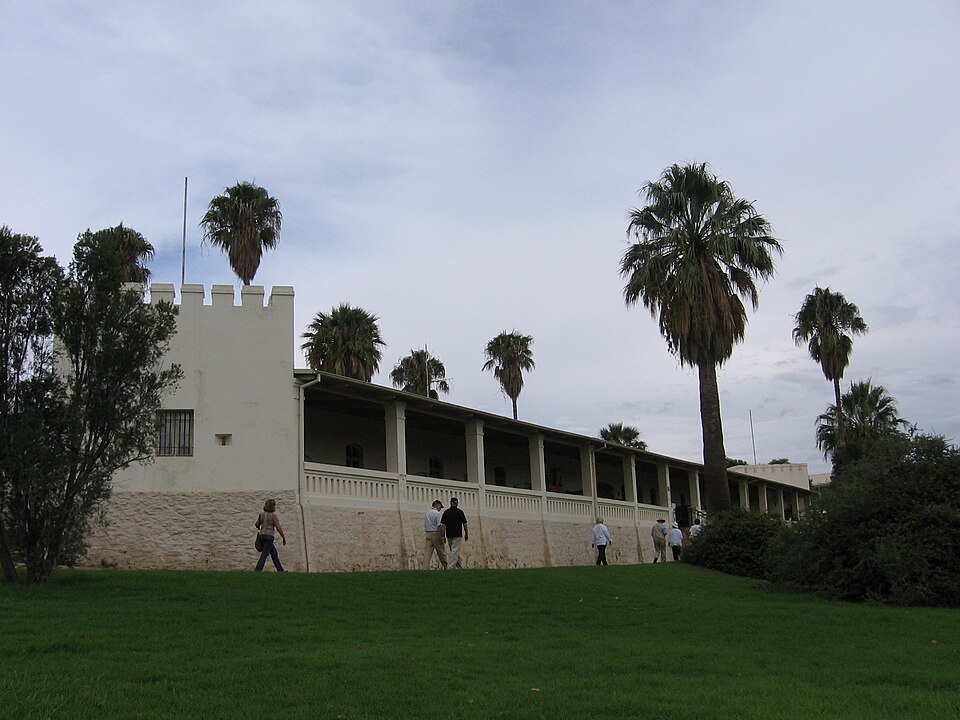
Photo: Alexander Johmann · CC BY-SA 2.0 · Wikimedia Commons Before you rises the Alte Feste, the Old Fortress, the oldest surviving building in Windhoek. The city itself grew up around it. Captain Curt von François designed it as the headquarters of the German colonial force, the Schutztruppe, and its foundation was laid in October 1890. The fort has an inner courtyard enclosed by high walls, with quarters for the troops inside and four towers. Its final layout was only completed in 1915. Here is the surprising part: despite its military purpose, the fort was never involved in any military action. Today it is a museum on Robert Mugabe Avenue.
Independence Memorial Museum
Right next to the old fortress stands a strikingly modern building, the Independence Memorial Museum. Its story focuses on anti-colonial resistance and Namibia's national liberation movement. It was designed and built by Mansudae Overseas Projects, a North Korean firm that also created Heroes' Acre. People have compared its shape to a potjie cooking pot, a coffee pot, and even a molar tooth. Two statues flank it: one of Sam Nujoma, Namibia's first president, and the Genocide Memorial. The museum was inaugurated on 20 March 2014, the 24th anniversary of the country's independence.
Heroes' Acre
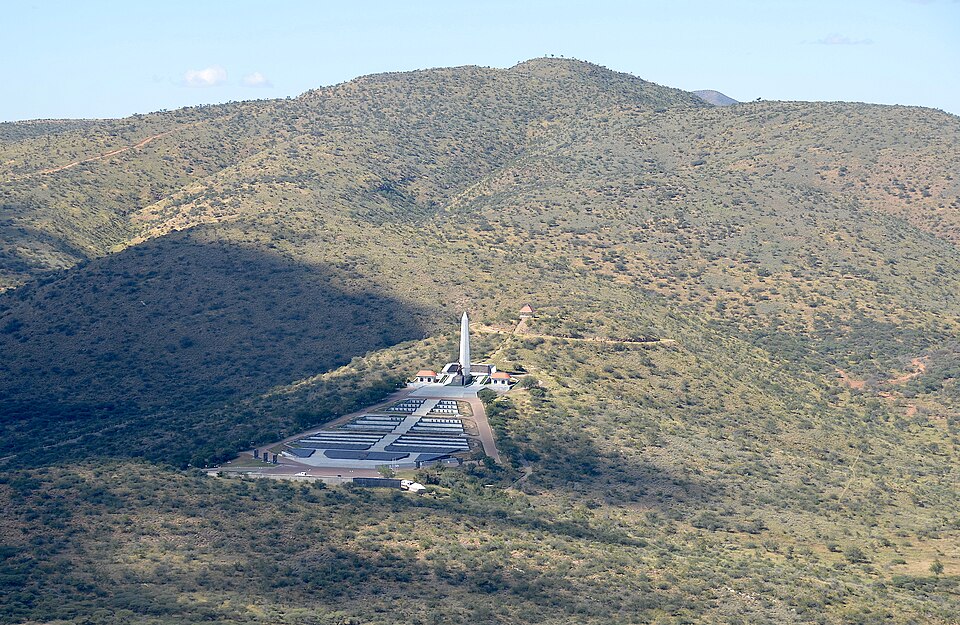
Photo: Olga Ernst & Hp.Baumeler · CC BY-SA 4.0 · Wikimedia Commons We end in the quiet hills 10 kilometres south of the city centre, at Heroes' Acre, Namibia's official war memorial. It opened in 2002, created to foster a spirit of patriotism and pass it on to future generations. The site is laid out as a symmetric polygon, with a marble obelisk and a bronze statue of the Unknown Soldier at its centre. There are parade grounds and a grandstand for 5000 people, and the burial site holds 174 tombs. Like the Independence Memorial Museum, it was designed and built by a North Korean firm, Mansudae Overseas Projects.